In this version of Pay to Call, I share some higher quality photos I took in Portsmouth last week.
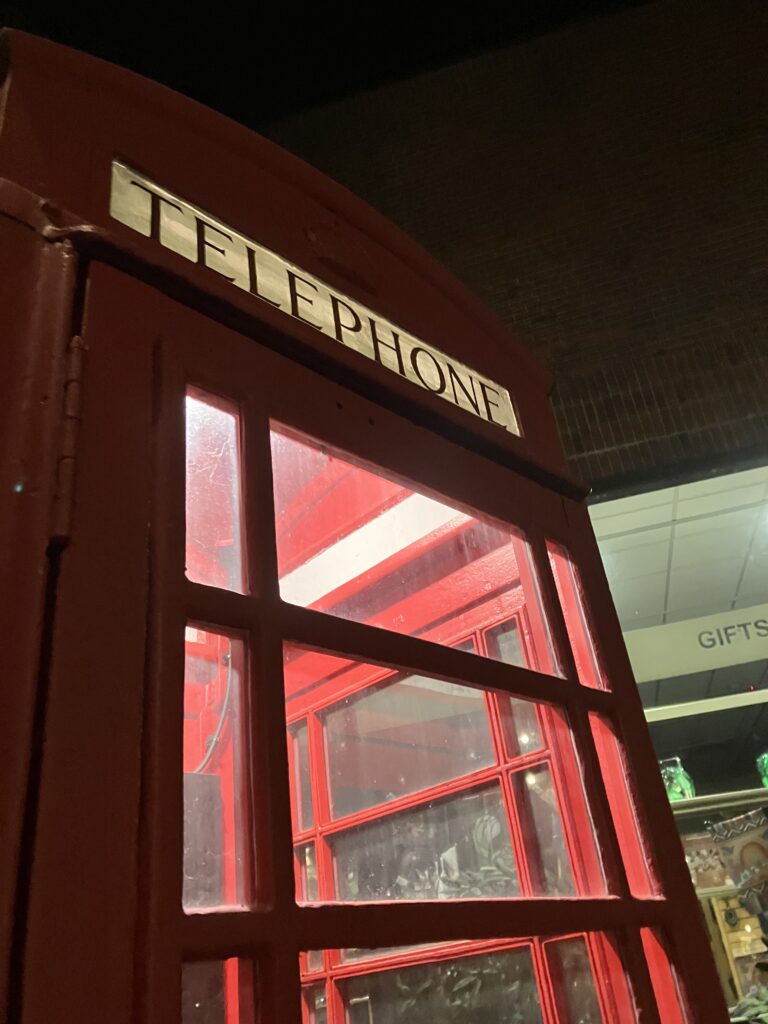
In New Hampshire we have dying pay phones, places like Intervale has been dead for over a year now; and telephone booths are rare, but still seen, but the phones do not work.
“Telephone Boxes” as it’s called to our English Friends across the Pond are seen in my state too, one by City Hall in Manchester, the Massabesic traffic circle, on the East side of the city, and I’ve seen one in Portsmouth. All 3 do not have pay phones, and they are completely sealed or screwed shut.
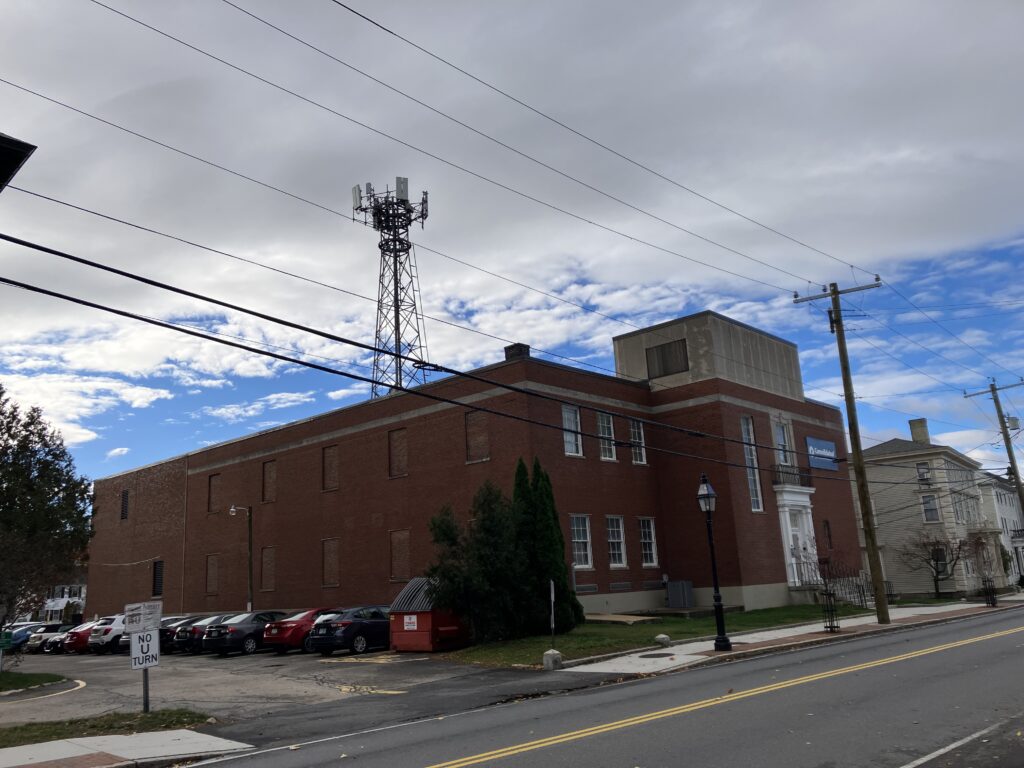
Since I last shared central offices in New Hampshire, the ol Primary Local Exchange Carrier has changed hands some more. However when FairPoint absorbed into Consolidated Communications, they did much needed improvements such as new fleet vehicles that dated to when Verizon still owned the lines as well as enhanced security (like signage) from the actual Central Office buildings, to even the remote ones that now people that-know may-know a 4ESS switch maybe living on that hut-shaped building.
Portsmouth is one of the cute, but fancy coastal cities next to Portland, Maine, Provincetown Massachusetts or a coastal town in Rhode Island. It’s charted as a city, but it’s smaller in population by much less than the town I live in.
The irony is this central office built in 1953 is very antiquated. Out of the hundreds of businesses in Downtown Portsmouth none appear to be using legacy dial tone. Many have YeaLink, Snom, Cisco SPA, Polycom or other Voice over IP/Session Initiation Protocol services
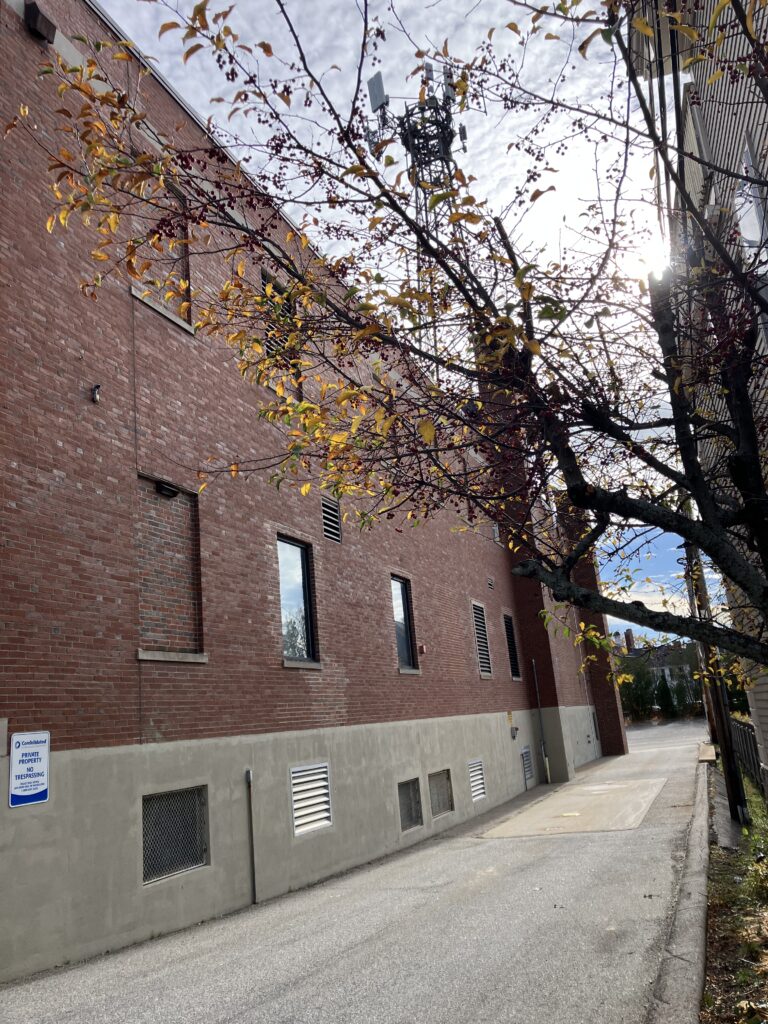
Which may explain why the ol tower for the Long Lines services to connect long distance calls between Manchester, Lawrence or Portland looks more like a 5G tower.
The signature windowless facility is about a mile away from the state’s border on Islington Street. The best view is from westbound heading away from Downtown into the town of Greenland.
It’s that time of year where for those-who-know-me knows I go a little silly on Halloween.
Dial a Joke had been a running concept for Your Humble Curator for years. A lot of trial and error and ideas come and gone. A huge part had to do with hardware and how to make that work. Since I am pivoting away from technical (there’s a crapload of other content on the Web and social if you want to nerd-out); it’s important to understand:
In an area with many young, and many old, the former probably have never touched anything that resembles an office (or anything remotely close to a) telephone other than a school.
Kids that are under the age of 12 probably have are not aware of hearing tones, busy signals, etc.
Almost a month ago when the news of John C Dvorak who had done dozens of columns in the tech press since the early days of the P.C., part of some people felt it was the end of an era. Dvorak had a lot of hot takes on lots various elements of technology.
When I was producing a tech news segment, I was tasked by myself acting as an assignment editor, to go find a few samples of some magazines from my own collection. I had many PC Magazine and PC/Computing which was an IT focused mag in the late 1990s. I have an entire collection of Mac User from 1986. I sampled one of three magazines so I could get it out over the air so to speak. Continue reading →
This reel from the Museum’s Instagram is the 1970s Snoopy and Woodstock Telephone. Something on my wishlist for years finally became mine in 2023 when the NH Telephone Museum selling their old items from their collection
Sold from the Bell System but made by a competitor. American Telecommunications Corporation, General Dynamics bought Stromberg Carlson two decades prior and by the 1980s ATC faded off as most of the telecom unit of GD became Comdial.
It isn’t to say anyone who still had these could just go to the Phone Center Store if there was a problem.
The test call of the alleged invention of Alexander Graham Bell to his assistant Thomas Watson from his Boston, Massachusetts office on this day in 1876.
Today marks the centennial and a half of the invention that was originally to help the hard of hearing for everyone. Long before Gary Kildal vs Bill Gates, or Mark Zuckerberg vs the Winklevoss Twins is was Grey vs Bell. As my country is celebrating it’s 250 years (for better or for worse), the telephone is pretty vintage too. Throughout the year, I will be posting on and off small historical notes beyond Western and past Northern, and focus on the little known facts of it.
My life was a burning hell in the last couple of years. My beloved grandmother passed unexpectedly thanks to our crummy healthcare system that as a whole is a cluster. Not to mention another family member dealing with mental illness is dealing with early stage dementia putting my mother as a new caretaker. As a result of being supportive of my family, 2024 like the previous 3 vaporized as if it didn’t happen.
Personal things aside, as the lucky 13th anniversary approaches in June… TMOT is being completely rebuilt as an archive of work created from 2012 to 2019. During this time, major changes to the direction of the archived site has occurred, and there will be crackdowns to abusers of this platform that took years to build.
In late 2022, TMOT moved hosts from one cloud to another. The domain for a while was a sub-domain but has been at clickford.net/telephony and is expected to be it’s permanent home on the Web for the distant future. (So you can bookmark it.) No present certificate, but that’s a work in progress.
In life, there should be some hard boundaries:
The direction of TMOT is mostly on the subject of telephony on an individual level. Devices like private branch exchanges and key telephone systems are cornered-off to separate sections on the site. Why? Because we do not celebrate allaboutism, meaning all you care about is PBX systems, Avaya PBX systems, Avaya Red PBX systems after 2002, etc. Because I was too open it backfired. But it’s not to say the history of telephone networks shouldn’t be excluded. Many of the innovations from on premise systems could be applied to modern day, but in the VOIP world, that has been raped by allaboutism. (And despite it being on a self-hosted WordPress – THIS NOT a “web-log” or “blog” – thanks much!)
Multiplatform approach. While the iTheme focused on the persona, it was time to make it easier for any device, and any platform. So now the site is reactive to whatever device and resolution you’re consuming
Cellular friendly photos. Now compressed and fits under a megabyte, makes it easier for people on the go… why the hell did Joe The UCX Guy not get that?
Any advice on modern day systems (made after Y2K including VOIP, Cisco and Asterisk is on my personal site… ahem not related to any of my existing clients or employers) again to keep a boundary of what TMOT should be.
Like on WordPress.com, the accidental success on TMOT was the Search Engine Optimization; and in the coming months in the final work to finish the archiving, will be ensuring people get what they are searching for.
The PBX really became something of an on site telephony product by the 1980s, even though the concepts began in the 1970s. The advent of the integrated circuit along with programs, made these ol electromechanical relics to become obsolete. And I say “become” because it would be a long time coming for that to happen. ROLM out of the left coast, had developed military spec computers and dabbled into telephony, they had gotten into the business by the early 1970s. They became successful, then came Northern Telecom (later Nortel).
A standard looking ROLM telephone from the mid 1980s to even today at some sites.
The Computerized Branch Exchange or CBX was obviously a registered trademark to ROLM and brought the concept of a box making and answering calls and users would have devices that they could use to answer or place calls. Want to call out, you hit a button like 9 or 8 like you did in a Centrex setup. The system could route calls per to what a number was pressed, and block it or rout it to another set of trunks to save money on long distance.
Northern had introduced the SL1 PBX in 1975 (but not to be confused with the X11 platform since 1988 and the Avaya fusion of the 2010s). The SL stood for Stored Logic, or just code living on chips with a programed software. The SL1 was not friendly to a manager of machines, but for engineers, as well documented on this site for a number of years. This plagued into the Meridian 1 days. At this time most electronic and digital PBX systems were not as simple to choose. the SL1 PBX for an example came in about 12 varieties, between software options and hardware choices. It wasn’t like an Option 11 could cover 500 users, with 60 inbound lines today. Lot of this had to do with the computing of the 1970s.
Mitel was one of the first companies to introduce digital desk phones that allowed multiple line and feature access. Their system was called the Superswitch, and the phones were called Supersets (this is where the “Superkey” comes from even in their current VOIP carnation.) They wanted to make a PBX phone a bit more functional than a 2/500.
For some of the readers… you’re waiting on Ma Bell. Well AT&T’s Western Electric division was in no hurry to go digital, in fact some antidotes indicated that AT&T had plans to go into digital telephony by the 1990s… planned as far back as the 1960s. AT&T’s first PBX that was electronic in nature was the Dimension PBX, and Horizon PBX. For some lingering Avaya fanboys, the cabinets of these things were no modern marvel, unless you thought one cabinet holding 50 lines was a great engineering feat. A PBX scale from users/extensions to lines made sense from an economic scale for years, but when the electronics came in, boy did it take real estate. To power a 10 button Multibutton Electronic Telephone required 8 pairs of wiring. a far cry from the ol 25 pair, but certainly for what it could do was very limited.
Turn around for technology takes several years, by 1981 the researchers at Bell Labs started to develop a fully electronic telephone network that would make the Dimension/Horizon hot mess end. ROLM’s phone systems were mostly ol 2/500s and the fancy phones were for operators. Nortel had made digital phones as far back as the creation of the SL-1, but they made their phones mimic the infamous 1A2 Key telephone system (this explains why the Nortel Meridian phones have few line buttons, and are set up for a single phone number.)
Western wanted to be unique, and this uniqueness for users stood out from the competition, they opted for use Merlin-looking telephones, but instead of having 4 line buttons directing to the outside world, use the top left row to have by default 3 instances of personal line appearances to make the phone ring, page, etc. This would be considered “call appearances” and made these phones more attractive than the MET, which sent a bit of a mixed message in the technical sense. the MET had literally Multibuttons, but not multiple lines or appearances. One call to an MET phone at a time. Want to transfer? You had to press the Recall Button, and then press a button called Transfer, then hang up.. .and it had the infamous Red and Green color indications.
The transition away from “System 75 and 85” to Definity in a 1989 TV campaign in the mainstream media
By April of 1984, AT&T introduced the System 75 PBX, with 7400 Series Digital Voice Terminals, that were a bit superior to the MET and it took several years to fix user pet peeves with the quirks of the phones, but by 1995, the 8400 Series Voice Terminals really put AT&T on the mark leading into the Avaya years, and by 2020 Avaya became an also-ran company throwing the combined history of Nortel and Lucent and AT&T into a trashcan.
For the mainframes themselves, AT&T went to extra lengths to make the system be as efficient as possible, they developed the Information Systems Architecture (a nod to what became their enterprise/carrier services) developing a company standard of circuit boards and connectors and one large cabinet could hold 900 lines. But the System 85 was basically the Dimension PBX with with System 75 hardware. There was some differences in the Dimension-specific hardware. To run the PBX’s code, required it’s own cabinet, while the System 75 could run on a single circuit board. But to put lines and stations was equal though.
For a number of years, hospitality only used electronic PBX systems to monitor, route and direct calls per to numbers dialed, did customers get the same treatment in offices? No, they stuck to 2 wired analog phones, and the front desk typically had a digital set. Other industries may had many average users having low button phones, and more power users had the middle line, and assistants had multi buttons between 20 to 34, while the executives had the 5 to 10 button set.
The fun facts of digital PBX systems is a) the computer is technically a “phone” per to the FCC regulations on Part 68 b) and the desk phones I call just “sets” because they are regulated as Part 15 in FCC rules. c) these “phones” cannot use the regular Plain Ol Telephone provider, and are not engineered to work at home or remotely without some box. This is why I do not call these devices a “phone” but due to FCC regulation in 2018 and 2020, they see them as “phones”. The “PBX” is a computer, and it’s there where it dials out phone numbers, your “extension” is a device that tells the box what to dial using your dialpad.
Obviously by the 1990s a PBX of the 1970s that used to take an entire corner was miniaturized and could fit into a plastic “shoebox” and by taking some code and adapt it to a microcosm allowed Electronic Key Telephone Systems do function more like a PBX than an an EKTS itself. This is where the blur of what is a PBX and what should a KTS be.
By the 2000s, most VOIP vendors that had no experience in legacy voice really amped up PBX systems as opposed to Key systems. Everyone thinks a PBX, is anything that’s on site and can route a call is what everyone wants…
The Private Branch Exchange… the No Frills Approach for Saving Money on your Telephone Bills!
In the wayback of time, in the days of electromechanical switching, and you had say a 500 users… what was your options?
There was two options. Centrex and a PBX. What was the difference? One was off prem at the phone company and the other was just an identical copy of a switch, just a bit modified for an on premise environment. I should also state, that back in those days, it was not abnormal for PBX systems to be in sites less than 200 phones. The role of a PBX at the time was to have less cabling going in, allowing users to call each other by a 3 to 4 digit numbers, and be able to access to the outside world… but in those days most of the PBX was done by humans…
The operator switchboard was basically the “PBX” while in the switchrooms, was all the switching of the time whether it was crossbar or Step by Step. There was not that many features, and that didn’t come till the days of ROLM, Northern’s SL1 and AT&T’s Dimension.
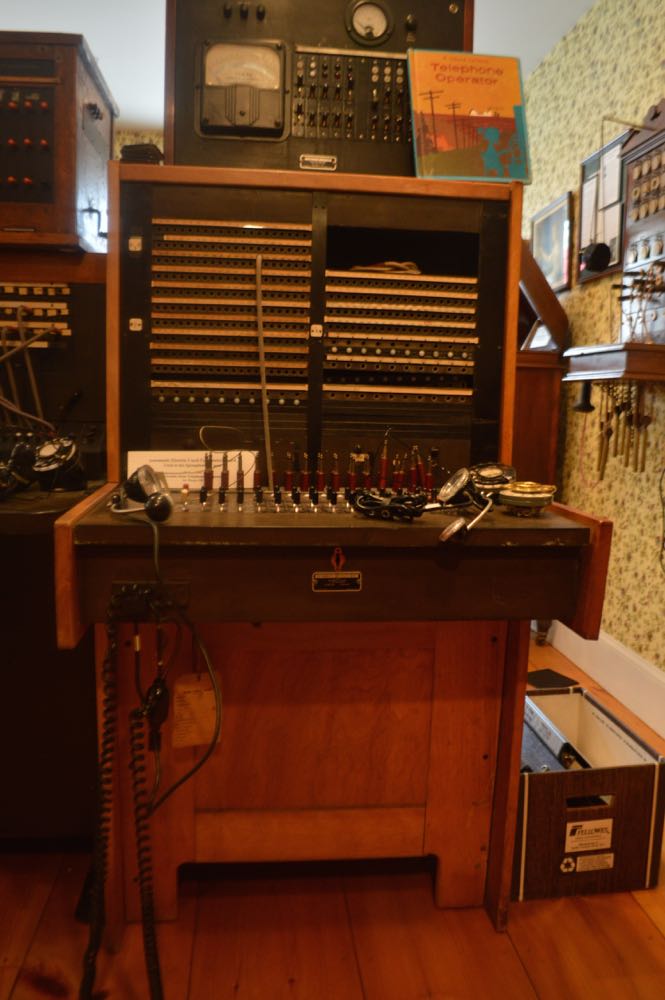
There was “Cordless switchboards” that resembled the Call Directors, but it was done in a similar fashion, a call would come into a bank of lines, and the operator would buzz the extension to then patch them in via buttons. But a cordless switchboard was still a very wiring intensive devices, with many, many pairs of wires that had to be tied directly to the console.
So what about outbound calling? Before the days of electronics, a user would “dial zero” and ask to dial out, the operator would patch that caller, and either s/he would dial, or if the operator was nice, would dial the number for that caller.
The cost of a PBX, to users to lines was still cheaper, but was mostly seen in hotels, and some businesses where handling calls were important. The 1970s that brought the ability to have multiple phones and few lines coming from the telco, also brought features like station IDs (internal caller ID), Automatic Routing Selections and Automatic Alternative Routing, and anything where a computer could hear the tones and or rotary pulses where the PBX could dial for the user, rather than an operator. This moved the dialing into an electronic mainframe, but the operator still had a role to play, to answer calls, to juggle calls, and to monitor the health of the electronic PBX, sometimes outside of the States it’s called “Private Automatic Branch Exchange”.
A lot of these PBX systems were phased out with the advent of electronics by the late 1970s, but there were holdouts up to the 90s. The White House had zero electronic systems until the Clinton administration that by the mid 1990s had installed then an AT&T Definity PBX; that only had a shelf life of 3 Presidents dual terms. By 2017, the Trump Administration had prided for having a “very secure” phone system that was a Cisco, which had been a secondary system since the latter end of the Bush administration.
If you are a Gen Xer and older, you could tell a system was a PBX or Centrex by telling it’s telephone.
Standard one line phones were common in PBX setups even in the days of electronic.
If you did see Key phones, most likely it was because they were the power users, and needed direct access to lines without operators or codes. While some say the 1A2 concept was dated by the advent of electronic systems, this was critical in places where calls couldn’t get dropped because a transfer failed. In the advent of VOIP, the physics of how a call can be captured or be answered or a line can be captured… and that can be blamed to the lack of listening to customers in the world of IP… but that happened many years later.
The Key Telephone System is becoming as obsolete as landline telephones and is becoming ill relevant like the rotary dial telephones. It’s being replaced not just with “the cloud” and Voice over IP; it’s the overall methodology how VOIP works today. The other factor is technical “professionals” who often trash customers for retaining older ideas and if anyone insists what they want they’ll be gaslighted as “stuck in the past”.
But this type of telephone system was the earliest type of system that had buttons, had the ability to buzz, ring, lock out another line if the other telephone was busy (privacy modes), and other dodads like Music On Hold and paging.
It’s easy from a historical point of view, that plain ol dial sets in offices were tied to PBX systems and multi button telephones were tied to Key Systems. Of course this is prior to the 1970s before these became electronic devices. Earlier key systems were known as “1A” series, followed by “1A1” and “1A2” systems as the years went on, these were originally developed by Western Electric, but was cloned by other vendors.