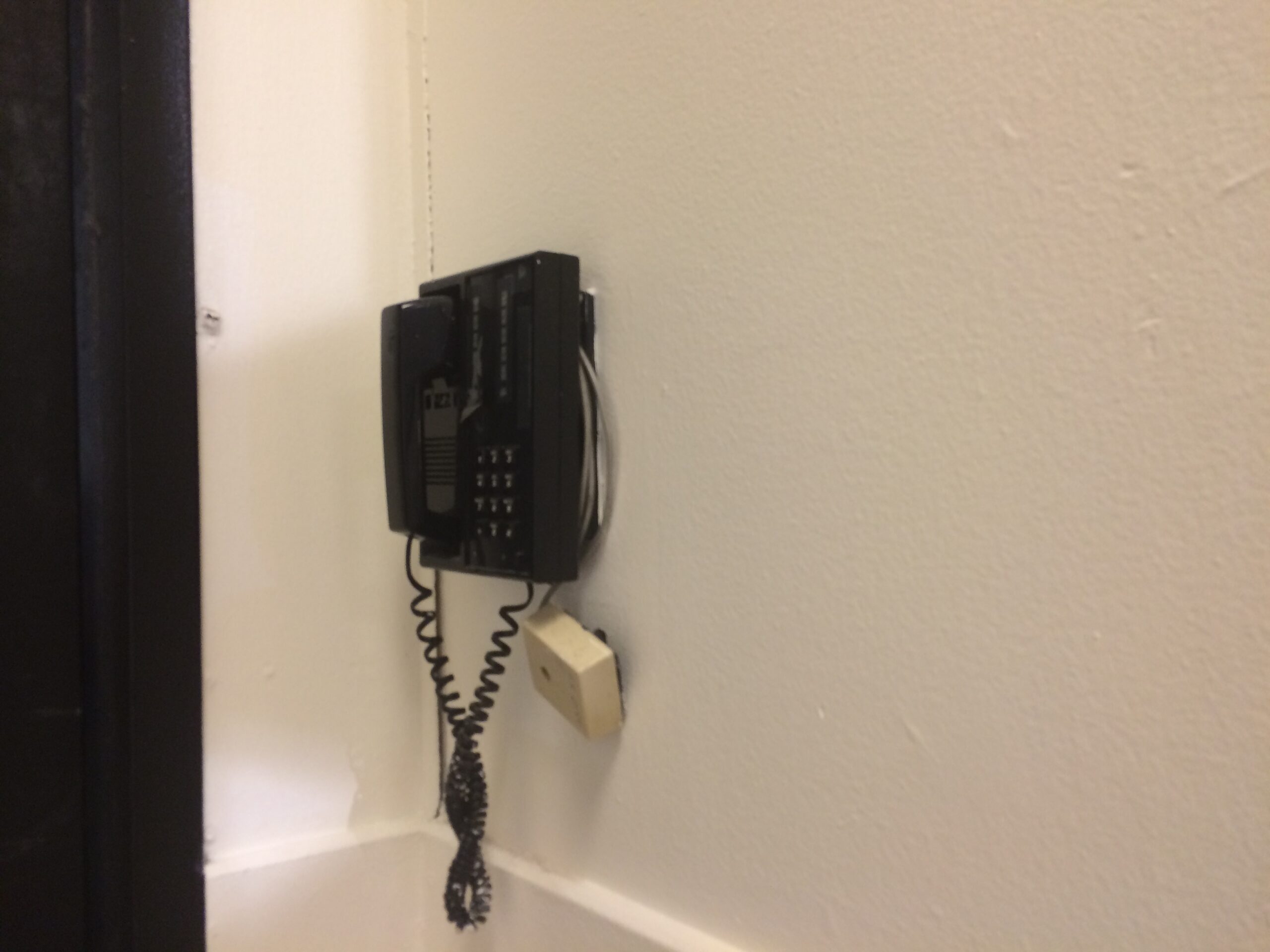
POTD: AT&T/Avaya 26B DXS Module

More of part two than anything else, for the reason that this device came with the CallMaster I got a couple years ago. Despite the size and dimensions and other similarities, they cannot work together AT ALL.

This had not worked until I got a 302B in early 2017. Wether the 302B will work is still uncertain because it came in a sketchy condition when I received it in that same time.

These “lamps” lit up like a tree because I applied power before plugging them into the four wire DCP port.

This module is called the “Direct Extension Selector” or DXS. It also serves as a classic Direct Station Selector or DSS. What makes this module unique, is the Hundreds Selector. The row 20 buttons below the numbered buttons, is almost like pages. So if you have a 4 digit dialing plan, “31” would be the “3100” range, 32 would be “3200” range. (Ironically these were original to the module, 3100s have been the range for my museum wall for a while; actually the button at “31” is actually “2” because the dialing plan in the house is 3 digits, so for the handful of 200s would be labeled “2” If you have a five digit plan, the numbers would be 3 digits. For 52655, that label would have to be “526”.

Early on in the System 75 PBX era, there were only about 8 to 10 buttons, then later models had up to 20 HGS, short for the Hundreds Group Selector, since the port counts went up as the Definity G1 and G2 grew.

Other vendors have similar modules, and even in the Avaya world, since smaller ends are totally separate technologically than the larger PBX. In the ol Nortel world, they had DSS for their 2250 Attendant console, but it only had up to 100 stations. If you wanted to monitor a bunch of sets, there was this LCD screen that was very ahead of it’s time (the idea that is) but it really wasn’t that easy to manage.

Hey SEOs! We're seeking non pricky engineers/professional information services professionals, non technical people, AND girl power! females from 18 to 35 too!

POTD: Avaya CallMaster IV

Today’s Phone of the Day is a retake of the CallMaster IV terminal for the use of Avaya enterprise grade PBX systems. These are not telephones, and they are not attendant consoles and while there is an apparent resembelence of the Call Director, these sets would not be used for “answering centers” since Voice mail had taken many of those roles anyways.

Continue reading

Phone of the Day: Avaya Red 7400 Series Voice Terminal – Macy’s 34th Street

Yours truly was Live from New York yesterday. Put it this way, I saw more Avaya Red sets this time around than Ciscos. A couple Avaya Blues here and there.

I don’t know much of the history of the original Macy’s. Macy’s went under 2 decades ago, and was sequentially boughtout by Federated Department stores that went on a buying spree of regional department stores; then in 2005 made their big buyout of the May Department Store chain of brands. Between the Federated and May buyouts Macy’s was in almost every mid sized city than prior to. Most of the Macy’s around where I live used to be the brands of Jordan Marsh and Filene’s both using/used ROLM CBX switches.

What’s interesting is I’ve been to Jordan Marsh/Macy’s stores and they had resemblance to the flagship 34th Street store, while former Filenes still has resemblance of the pre-Macy’s buyout, but by default all first level stores has that signature all white look. More non telephony related subjects to this store I set foot for the first time on the above link.

Now from what I can tell Macy’s uses an Avaya Red PBX. This one appears to go back in the System 75 days. Now I didn’t see if this thing worked, because in Release 14 (branded as 4.x)  of their enterprise PBX system, they depreciated the 7400s because the four-wire cards carried a lot of legacy code (from what I’ve read on the list serves, just dumping the 7400 DCP drivers gave Avaya some million lines of code removed.)

This particular model I forget, because AT&T made various models in the 10 year period, it may be a 7410 BIS set. Also, just because the 8400s released in the early 1990s, it was not a surprise to still have a part number (known as Comcodes or PECs) – I believe some models of the 7400 were still orderables in the first year of the Avaya spinoff (early 2000-late 2001.) If you were still on the 7400s at that point, Avaya did want you to go to the 6400 series (crap sets.)

More to come throughout the week.

IMG_5679

Video – AT&T Definity PBX Commercial

I proudly admit I am an AT&T brat. I was born 3 years after the Divesture, so my bias is strong since I never witnessed the old monopoly.  Everyone in my crazy life knows how I live and pray upon any of the equipment coming from the old AT&T and its zillions of spinoffs since.

I’d still give these systems a strong plug even when Avaya has essentially taxed companies with excessive License and Right to Use dues, as Cisco has been known to do. If you can afford it, its the best. It’s the Rolls Royce of phone systems.

In the late 80s (just probably before 1990, when they renamed their systems), AT&T ran an ad campaign actually running commericals of their enterprise PBX systems, known at the time Systems 75 and System 85. (System 25 was built upon the Merlin code so its ilrelevent for that reference.)  The System 85 was built upon code from the Dimension PBX that was made by Western Electric, and was distributed by the Ma Bell’s operating companies for businesses to lease. The System 75 was based on fully on digital telephony, the ability to use ISDN, the ability to interoperate computer mainframes and run cables on the same line as the dummy terminals. The System 75’s code and its hardware would lead into the 90s and into the last and present decade, with its 16th revision known as Avaya Aura V.6.

In this commercial a train goes into the air, as the announcer says mentions how a communications system  “can expand and expand” and ends with

“A new communications system so advance, its litterly impossible to outgrow.”

The Definity name is a contraction of “Definitive Solutions for an Infinite Amount of Possibilities” that Lucent touted in the late 90s on their respected product page.

However after the spinoff from Lucent’s Enterprise Networks division, that became of Avaya, they ruined the name by calling the newer versions of the Definity system after Release 10 “Communication Manager” to “Aura” (which I still am not sure how to pronounce) and maybe in a few years will be another odd name, as Avaya slowly became a modernist, fancy, over stylish company.