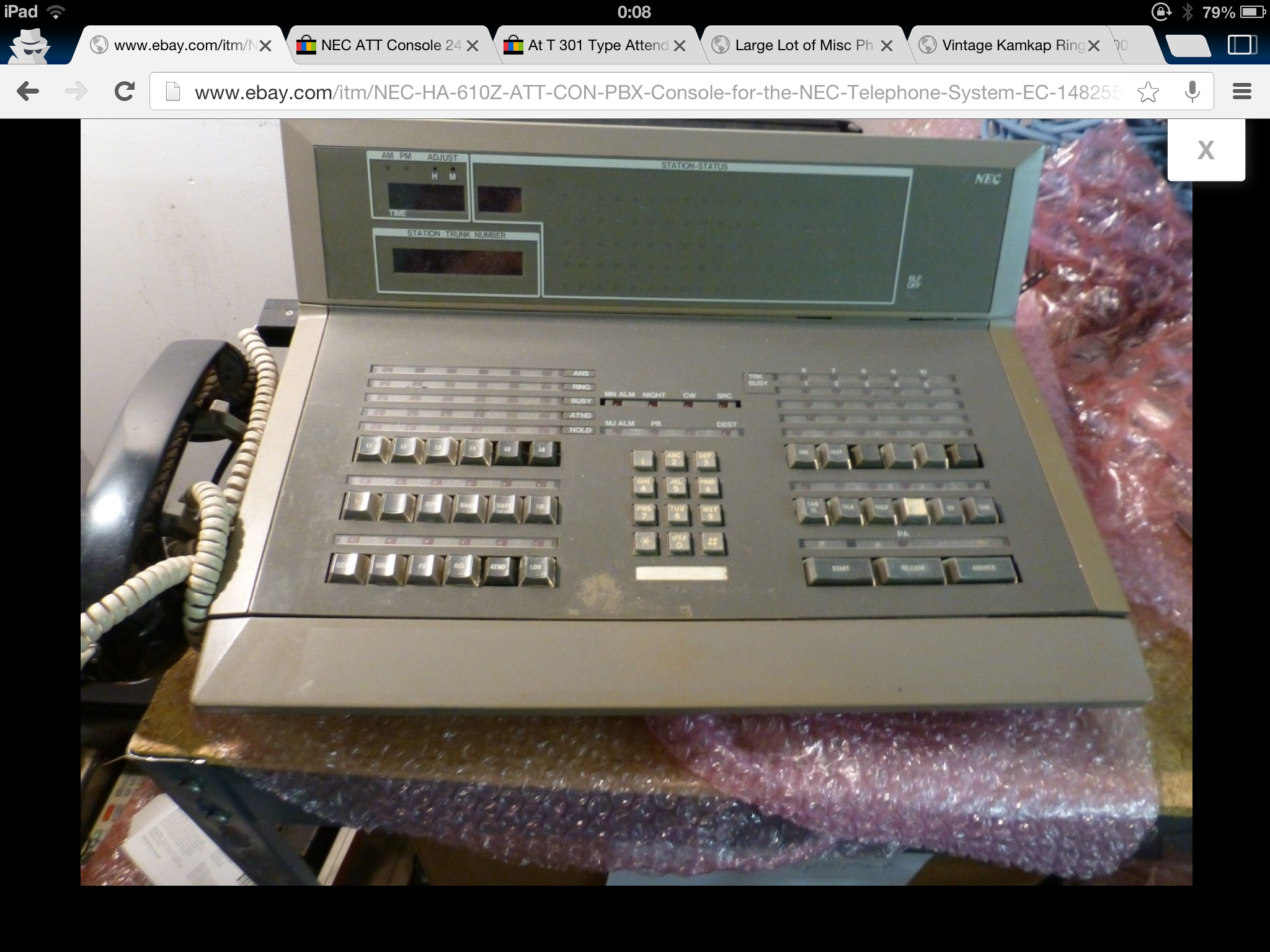
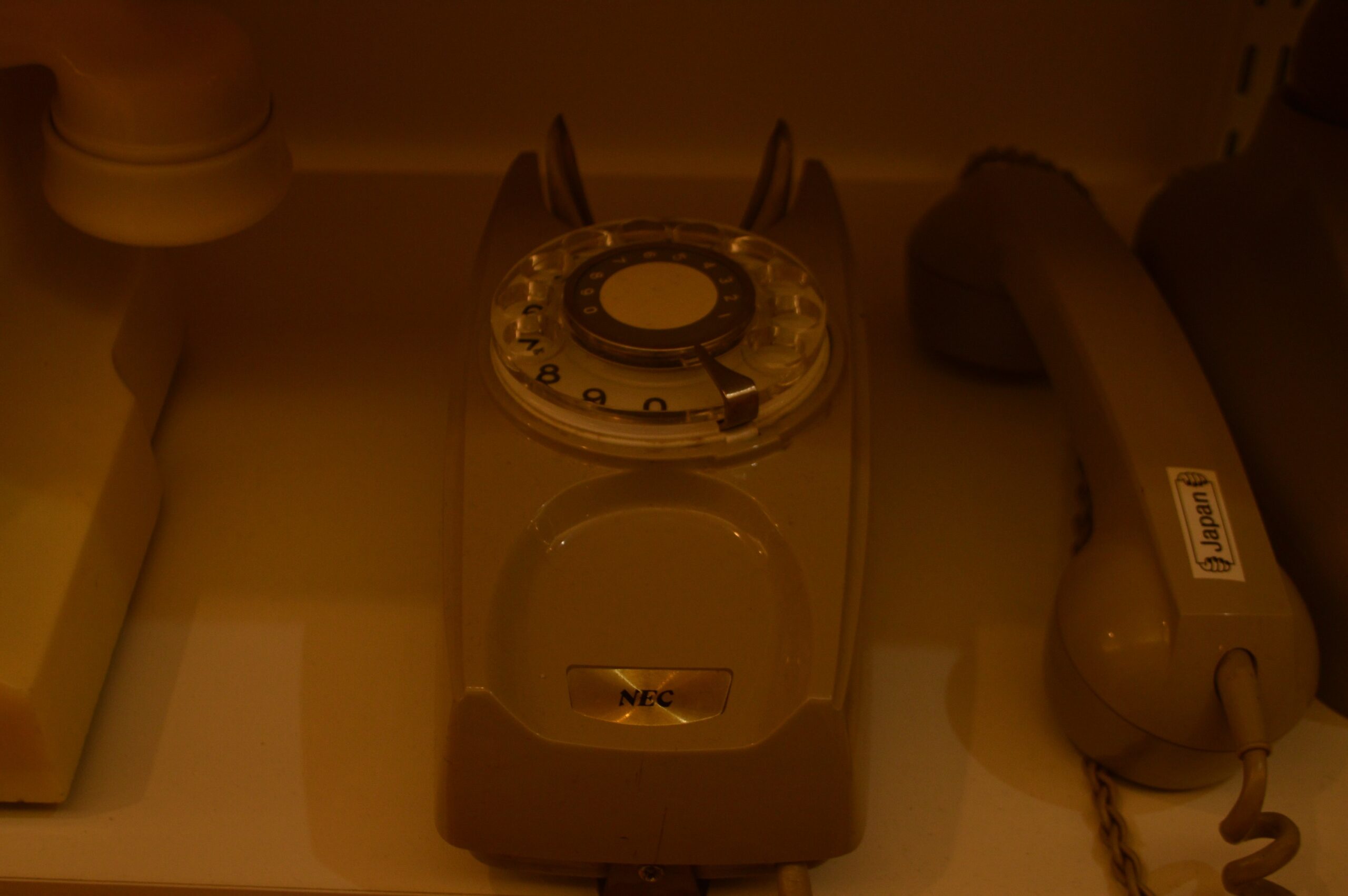
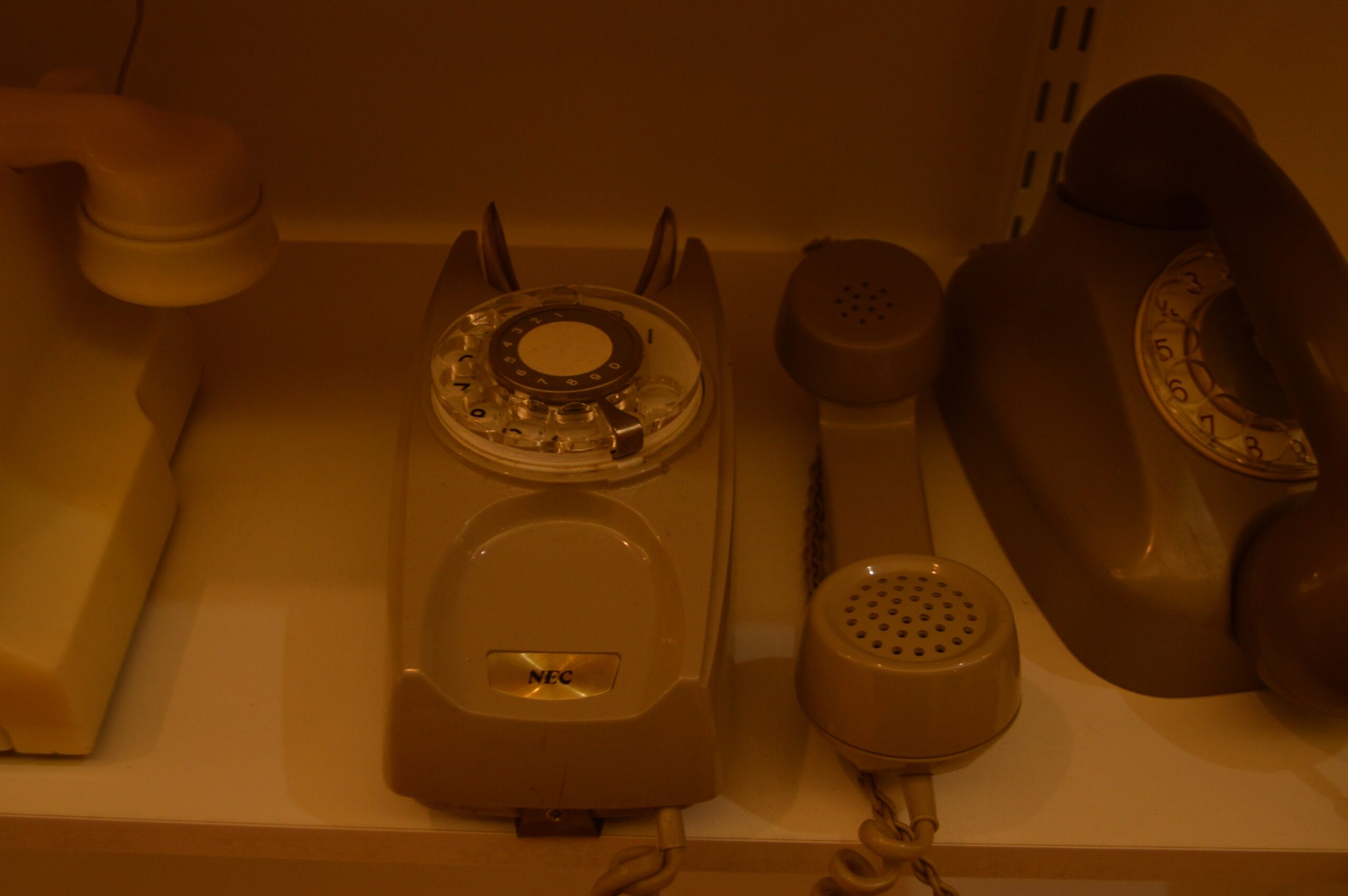
A part of Outside the Box Project (focusing on outside the US-based office telephony market)
The Japanese has roots in office telephony, that also had bragging rights. In fact ether Japanese based or made products was the go-to that many frugal customers in the States used. It is not abnormal to see NEC (not so much of their predecessors because of the age) still in service.
There were three major companies that would become part of the larger Nippon Electric Corporation (best known as NEC.)
TIE
TIE Communications was based out of Sheldon, Connecticut, with American brains but to lower the costs to customers, all their equipment was made offshore in Japan. First sets were analog Call Directors that were made with cheaper parts. By the late 1970s, they went onto the electronic bandwagon. Growing up in my old town in New Hampshire, the town hall and the local schools had used the TIE systems. (For a side note, if anyone remembers the TV series Las Vegas, while they had modern looking Cisco VOIP sets, the ring tone itself, was a canned sound effect coming from a TIE set.)
TIE’s average customer was under 30 sets audience.

Nitsuko
Was a Japanese based company that actually acquired TIE by the mid 1990s. Nitsuko devloped the DS1000/DS2000 hybrid PBX platform. But as the 1990s came to an end, NEC, would in turn buyout Nitsuko.
Sphere Communications
NEC’s full circle into American consolidation occurred yet again by getting into a softswitch business. By the mid 2000s, NEC was still a legacy, full 2 wired digital system, but their IP offerings wasn’t software based. A company in Illinois called Sphere Communications had some market domestically for a Windows NT based call management system called the Sphericall. NEC decided this would be the go-to system for their legacy NEAX system and later became the Univerge media gateway/media server platform.
NEC
While TIE wasn’t a Japanese company per se, it’s easy to roll them all into the “Big 3” KSU Guys from afar. NEC had a significant US install base and offered PBX systems vis-a-vis the NEAX line and competed against Nortel’s Option 51 and 61, Avaya’s Definity ECS, and Siemens’ 9571 PBX. NEC had a huge presence in the under 200 ports under the Electra line. You will see often on eBay stores selling troubled Electra sets. I guess there was a period of time that NEC wasn’t following their country’s norms of high quality standards. Trivial rejects included the speakerphone not working, and stuff like that.
The Modern Day “Shoebox” KSU
While the North American KSU vendors ditched the stereotypical KSU that looked like a shoebox, the Japanese continued after AT&T’s Merlin, Partner and Nortel’s Norstar, the only difference was it was electronic.
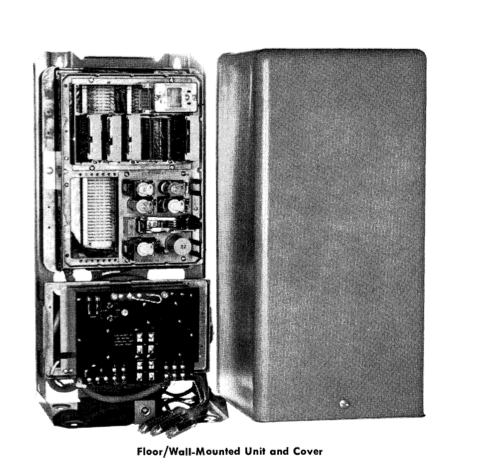
What they did was:
- An open box format. So RTFM if you don’t want a few hundred volts taking your life!
- Circuit boards were akin to PCI, NuBus, or the other expansion cards seen in PCs.
- In and outputs were all on one board. Compare this to the more domestic vendors where the respective RJ21 or RJ 11 jacks were in a dedicated space and “dumb”, because the expansion cards would enable it. Or if it was a AT&T Partner, these modules were all enclosed. In short, you had to be very delicate when you did changes to the system’s components
Panasonic, and Toshiba also had huge American presence, is outside the scope of this post as this post is lumped in one as they were all consolidated.

*