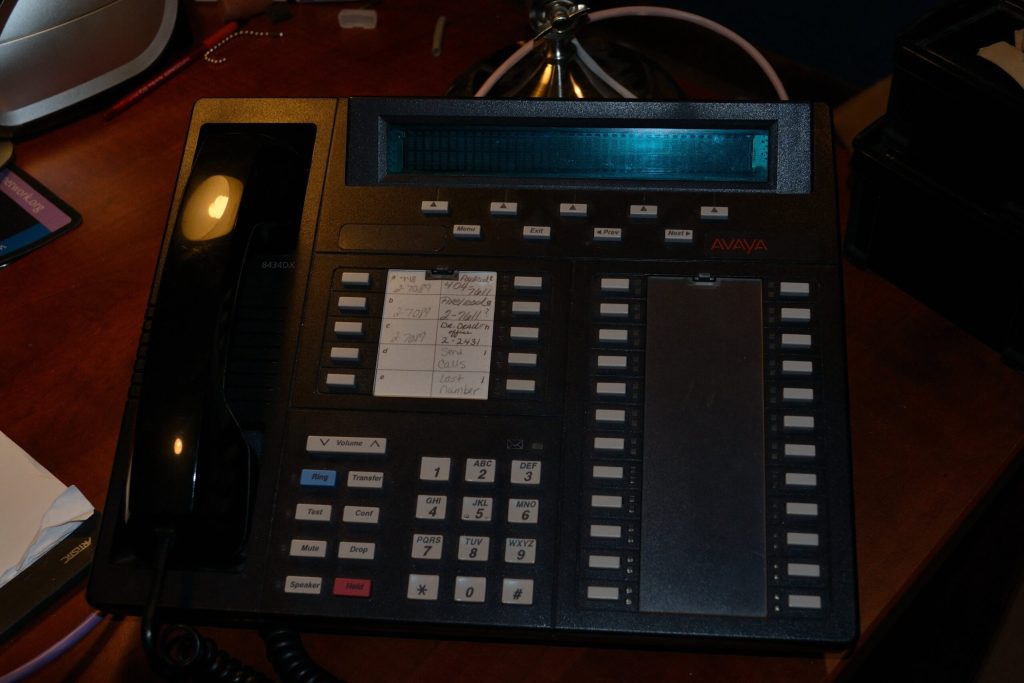
File this under IT is what it shouldn’t be. I mean, IT as in Information Technology.
A partner of mine gave me a link to a page entitled “Meridian System Tech Support Guide” written by a Nicole Hayward for some pro-IP voice provider. Joe the UCX Guy would have a field day with these types of sales traps.
Let’s take apart the post one by one and call this young lil’ whippersnapper out
It’s no surprise that many network administrators and IT professionals are seeking Nortel Meridian Phone System tech support.
Well, I mean if you’re in IT, you hate people, why would you want to manage a system that requires people skills (AND having to deal with end users?)
Released initially in 1975*, it’s been said that the Nortel Meridian is still the most widely used PBX for businesses with 60 to 80,000 lines. But when it comes to support, the hard truth is: Meridian systems are well beyond end-of-life
* Somewhat misleading, the SL1 came out in 1975, the Meridian 1 went to market circa 1990. As she implies in the last sentence, lets not let the facts get away of a good sale. She uses Wikipedia as a primary source, instead of here. (Laughing out loud!) Don’t get me started with the agism on the last sentence.
Nortel went out of business in 2009, and Avaya acquired its assets. There is no single source for Meridian tech support, but I’ve gathered a few resources and tips below. Please keep in mind: You’re probably better off selecting a Nortel Meridian phone system replacement.
“No single source” – well wasn’t that Northern’s way of using vendors for non Fortune 500s? Whatever. Like the UCX system. All you need is a server replacement. All gateways and digital and IP stations made in the last 25 years will work, young miss. instead of some crappy phone service that that basically emulates tip and ring over IP to be honest. I gotta do a SIP article sometime soon.
On the common system failures, this girl confuses the M1 line to the key based Norstar. (And yes I’m being crude, because there are women out there who do love TDM phones and can be much more intelligent than some millenial) Again, sales have no damn clue about telephony at all.
-
System Programming Failure – “The Nortel Norstar system utilizes a super capacitor (super cap) for maintaining the programming data in memory. The problem is that the supercapacitor has a high incidence of failure as it ages. There are no outwards sign of failure (nor any way to test, other than unplugging the system) as it’s only there as a data “backup” system.” [Kremlacek]
IT people or ones with aggressive sales backgrounds are very manipulative. If she ever worked for me, I’d press her for harassment charges, with her kinda tone that shows below.
If you have prior experience with Meridian equipment, manuals may help. Otherwise, don’t try this at home, folks.
What, I can’t have an M1 in my house? Not even an Option 11… my goodness what planet are YOU on?
While I couldn’t find a single repository of Nortel Meridian manuals on Avaya.com, many of the past PBX resellers and business partners have published them. I found a big list of Meridian 1 Options 11C, 51C, 61C, and 81C manuals here. You can find a particular manual by Googling the system option, e.g. “Meridian 1 Option 11C Manual.”
Yeah Google may not be your best friend, ever tried SUPPORT.avaya.com? And what is this Unix reference of “Repository” – we we call it in the ‘biz a COLLECTION…grrr!
At this point, I want to become a Wookie…and I’m not even a Star Wars fan!
Among the other options, she writes about the various options, but basically rips and writes the content, and doesn’t put it into her words, like whatever Avaya’s brochure says, must be true, type of attitude.
So here goes the sales pitch:
While it’s tempting to keep your existing phone system on its last legs, consider the costs: your time, a technician service and/or Avaya maintenance contract, refurbished parts, etc. And at the end of the day, it’s a short-term fix. You are better off considering a new phone system solution, and it’s likely a hosted VoIP PBX will work for you.
Why hosted VoIP? If you were getting along fine with the basic phone system functionality that the Meridian PBX offered, your organization will be floored with the capabilities that a cloud VoIP providers offer.
Um, excuse me? Do you even have a clue how many features the M1 has, or are you judging on the original SL-1 specs from 1975? Oh wait, there’s more!
Switching to hosted VoIP can be done in a matter of days. Most hosted VoIP solutions, like OnSIP, have 50+ phone sytem features, utilize your existing LAN, and require no investment in equipment beyond the phones.
There is over 300 end user features on the M1 and I am not even CLOSE to being a Nerdtel fanboy, Nicole! There you go, these scare tactics + sales makes customers creep out and cave into some dummy millenials who can’t tell from tip vs ring, or the functionality of a true PBX vs some Asterisk type. Good luck cutting over to a “hosted” solution for 8,000 ports (an average port count in an M1 setup.) These IT and sales people want to sit at their workstations and not get them fingers dirty in those lovely 66blocks with hard wired telephones.
Of that, lets turn this sales pitch, to something relevant to the Museum, if you walked away in the last calendar year learning something new about telephony, please return the favor with kind feedback or a donation or something on the Wish List. I’m love to get tiny compensation to take time out of my busy live to try to fill the Web of something other than the Political Correctness of Technology known as Information Technology or PCs. I stride to be 99.999% accurate and clear of all the exhibits and posts before it gets published.
*