This was taken recently at a local Books A Million. I first heard of them when I traveled to D.C. in 2002. They took over the space once held by Borders since they went bankrupt around 2009, specifically I am not sure because I do not frequent Concord.
Avaya
Phone of the Day: Nearby Kohls | Undisclosed location
This was taken at a local Kohls, just a little north of where I live. This is located in massively redeveloped area of box stores when it was just all trees. I can’t remember when it was built, I’m going to bet before the 2009 bankruptcy of Nortel. (Remember a similar post of noticing Mitel sets of their alleged “Do we stand by our man?” post bankruptcy mentality across any former Nortel sites.) Newer stores went with the “screw them” approach of building new stores with Mitel and older stores still run Avaya Blue.

Phone of the Day: Avaya 9608 IP Terminal – Fenway Park
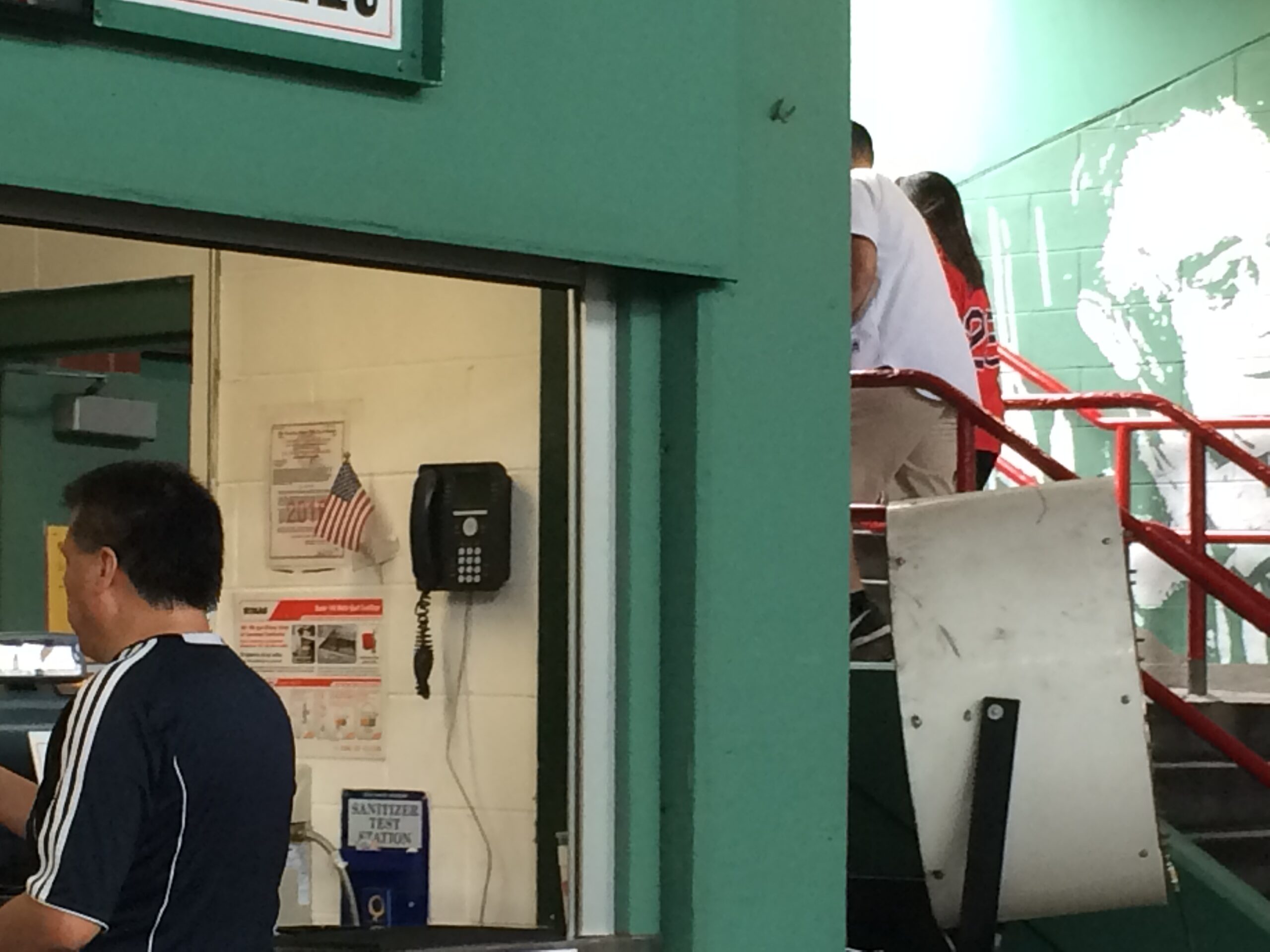
I noticed this fine Avaya IP telset yesterday when I went to the historic ball park on the East Coast for the first time to see a Boston Red Sox game. I’ve been to the part a few times before for non Sox events. When I toured the place in 2005, I’ve noticed 6408s in the press box.
Avaya Windstar Van – Lego Edition – 2008
I have not shared my Lego creations or my passion on this site, but because it blends into this subject, I’m posting this.
I built this around 2008, about the time I finished school and had some time on my hands. In my grandmother’s basement (where I used to live) was where my Lego stuff was at that point in time. As with any bustling little Lego community, fire trucks, police cruisers, news gathering vehicles and street sweepers, construction vehicles and interconnect vehicles. (I own at least a hundred kits, at least a couple dozen “bulk” buckets and/or storage containers featuring Lego pieces and not to mention buying bulk pieces at the Lego Store – read below and acquiring early American pieces on eBay or thrift shops.)
This vehicle represented Avaya at that time. Most of Avaya’s support fleet were white colored Ford Windstars with the Avaya logo located on the side and back. Using Avery labeling, I printed them out that way. (I strongly suggest printing in photo paper on a photo printer for better results.
When I was about twelve, I broke a in house rule of keeping kits seperate to any other bricks I acquired separately. As a result many kits that I had as a preteen were already wrecked and rebuilt into other things. The reason was there was no Lego Store at that time and there was no such thing as Pick a Brick where you could fill up a cup that could look like candy and getting random Lego pieces. (Its not the bricks that matter, its the special pieces.
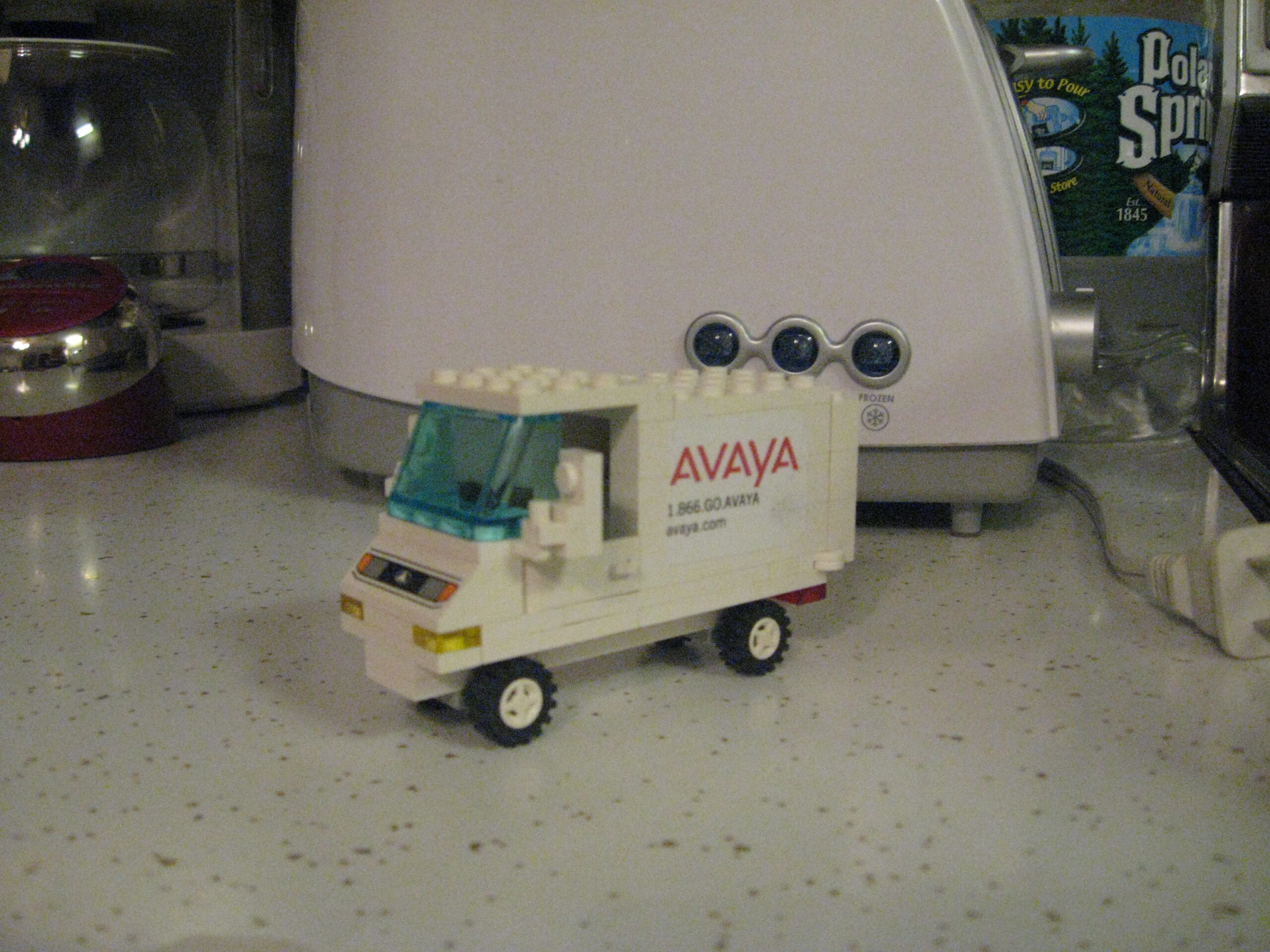
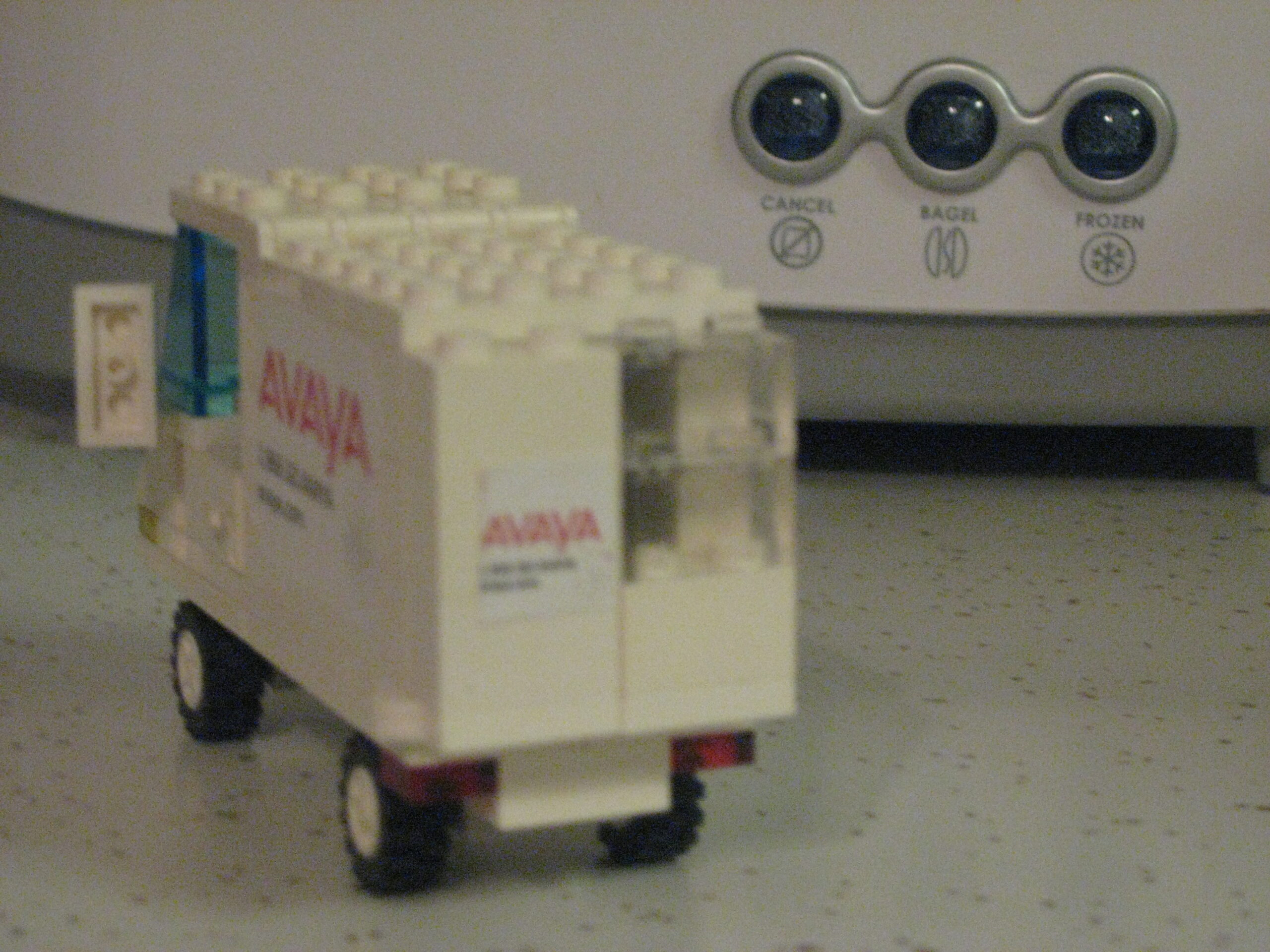
No foot long boards or Merlins living in the back of this truck sadly, mostly was driven empty.
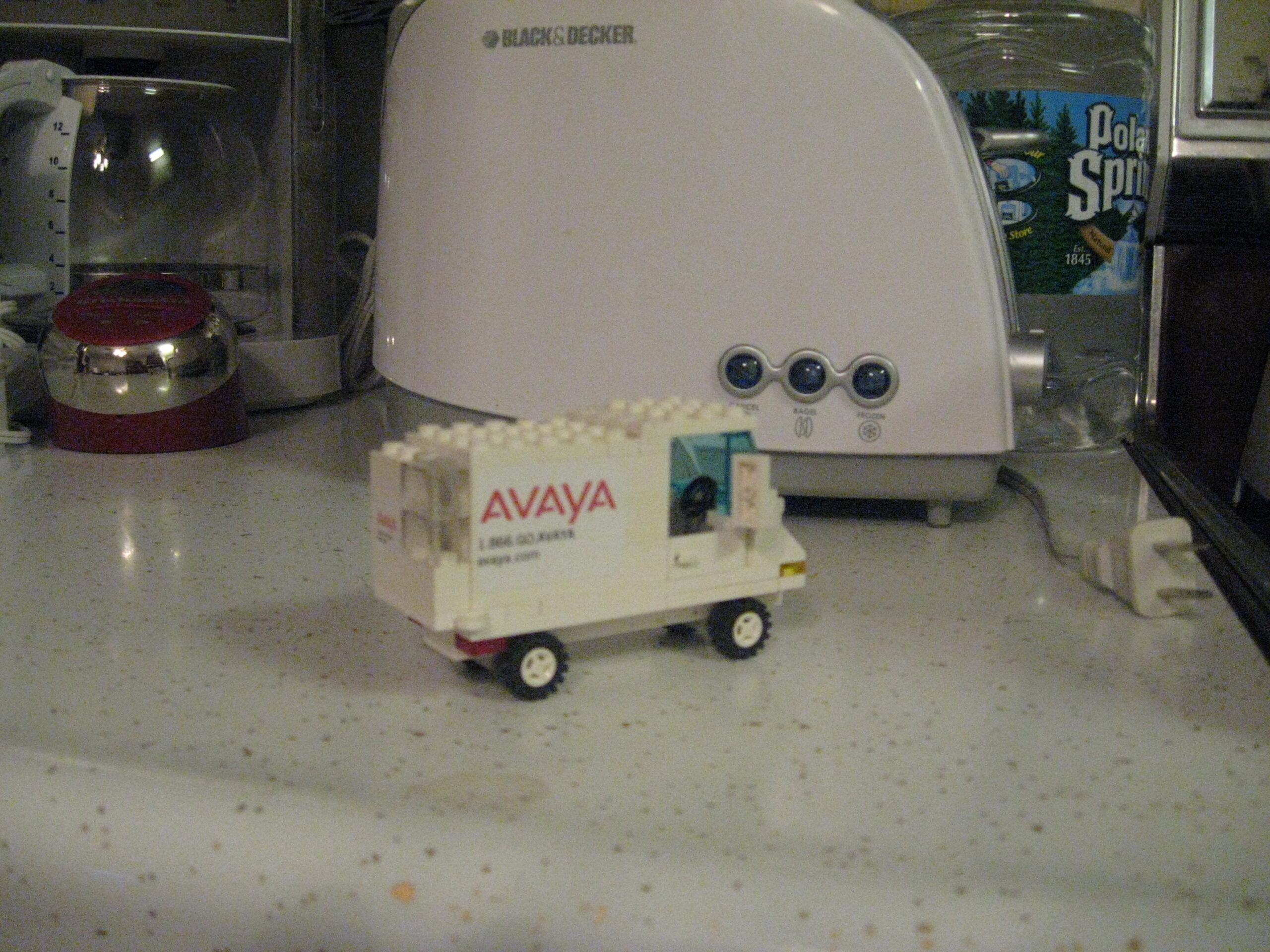
As you could tell, the back were just regular 1×2 stud bricks attached on a hinge piece that I didn’t have many spares to. The vehicle is not even remotely close to a Windstar. But talking to professional Lego people, and employees of a local indoor Legoland, the “minfigure” scale is very difficult as they are by default 6 feet tall. (In recent years, they made petite size figures – ones with no moving legs, and finally other figures like infants have come to the world of Lego.)
The van has since been wrecked because a) Avaya has changed their decals shown here; and b) most minifigs in my little world don’t use Avaya or even Cisco, they have their own little vendor called Clicktel. They had already given up on Avaya way before the real world finally cried “surrender!”
Rants: E911 (again!)
I typically don’t support British talkers on American TV; but John Oliver is apparently good when it comes to technology and the government. Net Neutrality can be debatable; but think E911 is something that can be agreed upon.
Anyways here’s the video and my two cents after:
At 3:45, he quotes the National Emergency Number Association’s “estimated 70 to 80 percent of 9-1-1 calls comes from wireless devices.” I’d think it’s safe to say, that a vast majority of “landlines” are actually from VOIP services that should be coming from your physical address. Seconds later, he claims that 9-1-1 came from billing addresses. That’s if you don’t have it sent to say a PO Box, and he was half true – because many Centrex lines came from billing addresses not the plant address. But Centrex isn’t his audience.
This is very true. If cloud services and apps exist; then why can’t these apps that can track you become appliances in 9-1-1 PSAPs and plug in via SIP? Believe it or not, this upgrade is basically just a change in the software. The hardware is illrelevent. You could still have digital or analog sets taking calls, it’s on what the computer screen is what counts.
Then there’s the announcements of saying “all operators are busy” this allegedly refers to short staffing; but I’d lay on the side of caution – if there was a spike of emergencies or crises featured in this montage, then I’d side with that over his “understaff” claims.
Those “butt calls” calls placed add also calls placed during performances of “love” is another reason why 9-1-1 fails. It’s too easy to call. Sure if you’re in an emergency in panic, it’s nice to hold 9 or whatever to get 9-1-1; but this is probably how some PSAPs are overloaded. Even in enterprise settings, people like Avaya Blue’s own Mark Fletcher have been in bed with the FCC to force hotels to prevent using a trunk access code to dial out for 9-1-1. Or what he has done at Avaya to force businesses out of their will to have the government tell how private companies should have 9-1-1 programed on phone systems. To me this is beyond inappropriate and is an overreach of government and taking the common sense that is often missing in IT to begin with. By supporting very technical rules that can change at any time and threatening your users of lawsuits if you don’t comply is also sobering. These types of actions are only enabling the faceless careless IT departments to be even more careless and anti users.
I digress. For enterprises, they have had similar issues like how consumers have cut the cord to wirelines; because VOIP is “mobile” and IP is not location dependent. I can have a data drop be tied to a switch, but the switch doesn’t care that I am on the 4th floor in the 6th office; in legacy PBX systems, it was programmed via the PBX of specific locations that could pass through to the 911 as a “supplemental ANI” service.
Cisco has encouraged adds moves or changes by unplugging the set and place it to a new location to make it easier for non telecom professionals to avoid doing proper changes by remapping a users’ MAC address from one cube to another. MAC remapping is too much labor for the IT department that doesn’t respect telephony. And this actually can cause even more problems for users trying to dial emergency.
I think John Oliver is right, we have taken 911 for granted. Maybe we shouldn’t take it for granted for a change. Maybe people who actually oppose changes forced by the alikes of Mark Fletcher to actually stand by their private branch exchange and stop having the government dictate how private businesses use their private phone system. Maybe “Fletch” could be better off selling snap-in apps to give better location information to these same PSAPs as Oliver has suggested. If the facts are true that Avaya Red and Blue have 50 percent of the PSAP install base; maybe they should be selling these appliances or applications, and services (i.e. through a cloud) instead.
*
POTD: Avaya 8403 – 34th Street Macy’s, NYC
I thought this was an 8410. Till I zoomed in. I did see 8410s (ether D or B as in Blank) throughout the 34th Street Macy’s.

POTD: Macy’s 34th Street – Avaya Red 8403 DCP Terminal
Yesterday, I posted pics from my trip to Manhattan on Saturday. To my surprise I saw a lot of Avaya Red terminals despite Cisco selling VOIP sets like they are generic IP devices that corporate accounts pay little to none (allegedly) for.
The 8403 is a display-less set, designed for “walk up users” (to use a modern day cliche) or people who do not need functionality of a fully blown 8405 or 8410 terminal. The set supports up to 3 call appearances and if a user desperately needs features with indicators, one can program a feature (or two) but the set would act as a single appearance terminal.
It’s cousin set is the 7401, because it shares similarities to the 12 button personal features assignment. Someone can have up to 12 functions for abbreviated dialing, features, etc by hitting the Feature button and hit a single digit on the dial pad. There wasn’t a similar set till the late 2000s when Avaya released two sets, the 1403 and 1603 both for DCP and IP respectively, but ironically this require both to be run behind an IP Office, and not their enterprise PBX systems. It’s not to say one could reload firmware with the 1603 with some SIP firmware (which I believe it can work) and run it against Avaya’s SES services, and claim it to be a generic SIP set. These models furthers more irony because the 8403 was incompatible with Merlin systems anyways.


My Collection: A Definity AUDIX Board!
Update: 02-23-15 at 9:20 pm We’ve gots some problems… Presently tried to follow all the instructions but the board appears to be booting up but the ASA and even TUTTY (Putty + AT&T Terminal) clients are stuck in the BSOD. According to historic documentation, the LEDs are working as they should after boot, so maybe something failed at the connector side. I sure hope I didn’t “break” it…
So I got another surprise gift from Jason that was sent on President’s Day. I just received it a couple hours ago. This Definity AUDIX board is an integrated voice mail system for the Definity platform. These are no longer available and were designed in small environments. It was on the market for most of the 90s and probably up to 2001. The replacement would be an external PC or now a Modular Messaging running on a server class PC or an Aura virtual appliance. The beauty of this tiny board is it gave customers in small sites the power of the bigger AUDIX system. And hopefully I can hear the AUDIX lady once I get into the thing!
So much for that cutover back to the Cisco huh?
Rants: Nortel Admins, Nortel Types and Plain A-Holes
WARNING: Today’s post contains potential unfriendly and vulgar language. Reader Discretion is advised.
This site is a museum, a task to catalog history of telephony technology (and post the stuff you can’t find anywhere else on the web) to pass down to a dumb population who could care less about the time before they were born or understand where we got to today’s communication. And to accept the fact that the same device sat on a desk or hung on a wall for an a average of a generation, whether its right or not is up for discussion outside this site.
We have a zero tolerance for “bleeding edge of technology”, just because some new thing is in fashion, doesn’t mean its going to work right away, never mind be in vogue tomorrow.
One of the reasons why I’ve disliked Nortel was the they had a reputation for being Nerdtel, whom nerds would be interested in telecom. Just like in the PC world, you got those nerds, who will throw tons of TLAs down your throat whether you like it or not or just throw buzzwords without even being questioned. Some people in the PC industry also believe in Political Correctness, you get the “group-think” mentality if you don’t subscribe to the future of technology, you get a similar treatment of “you’re a racist” if you question an African American in power.
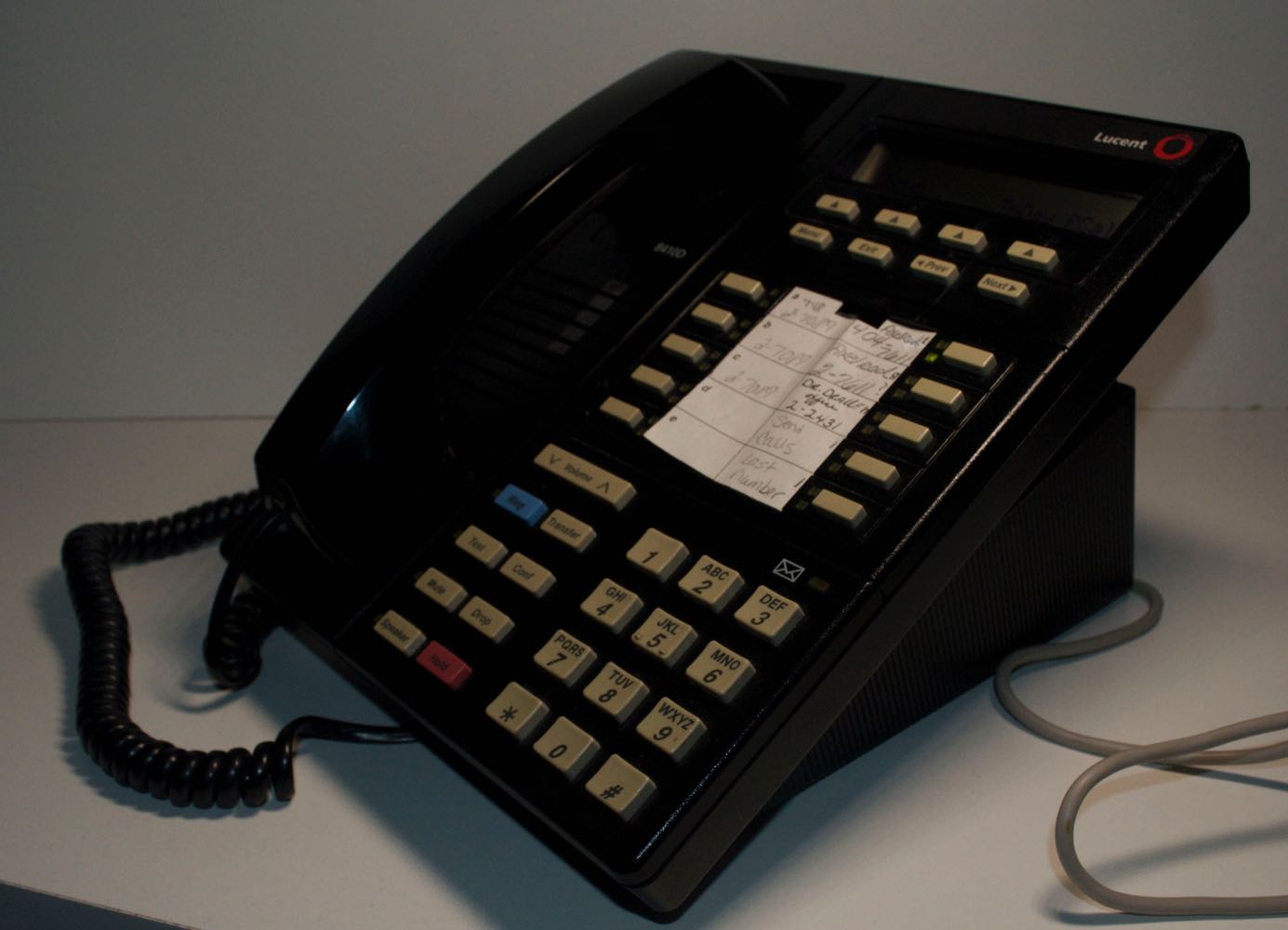
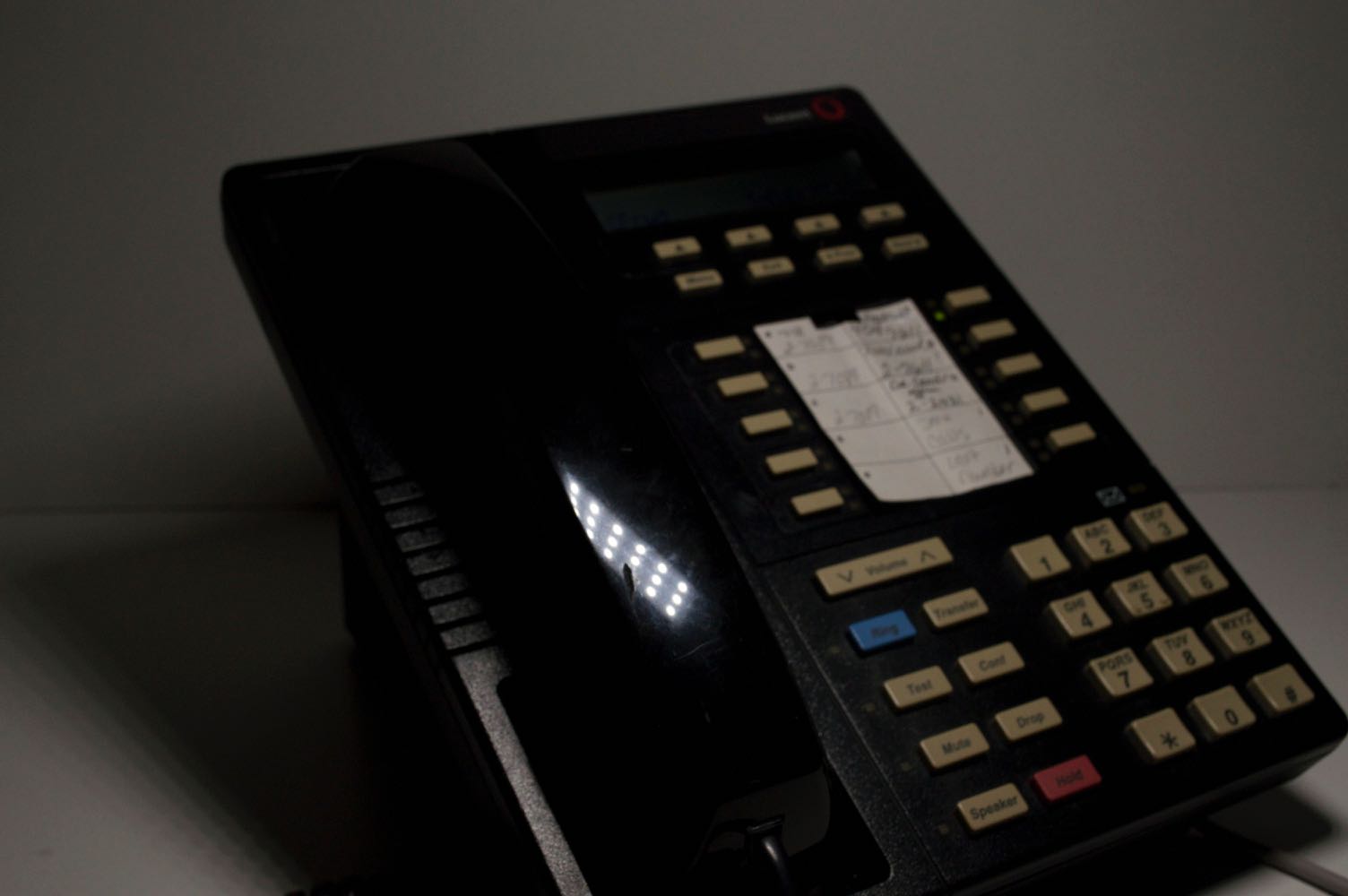
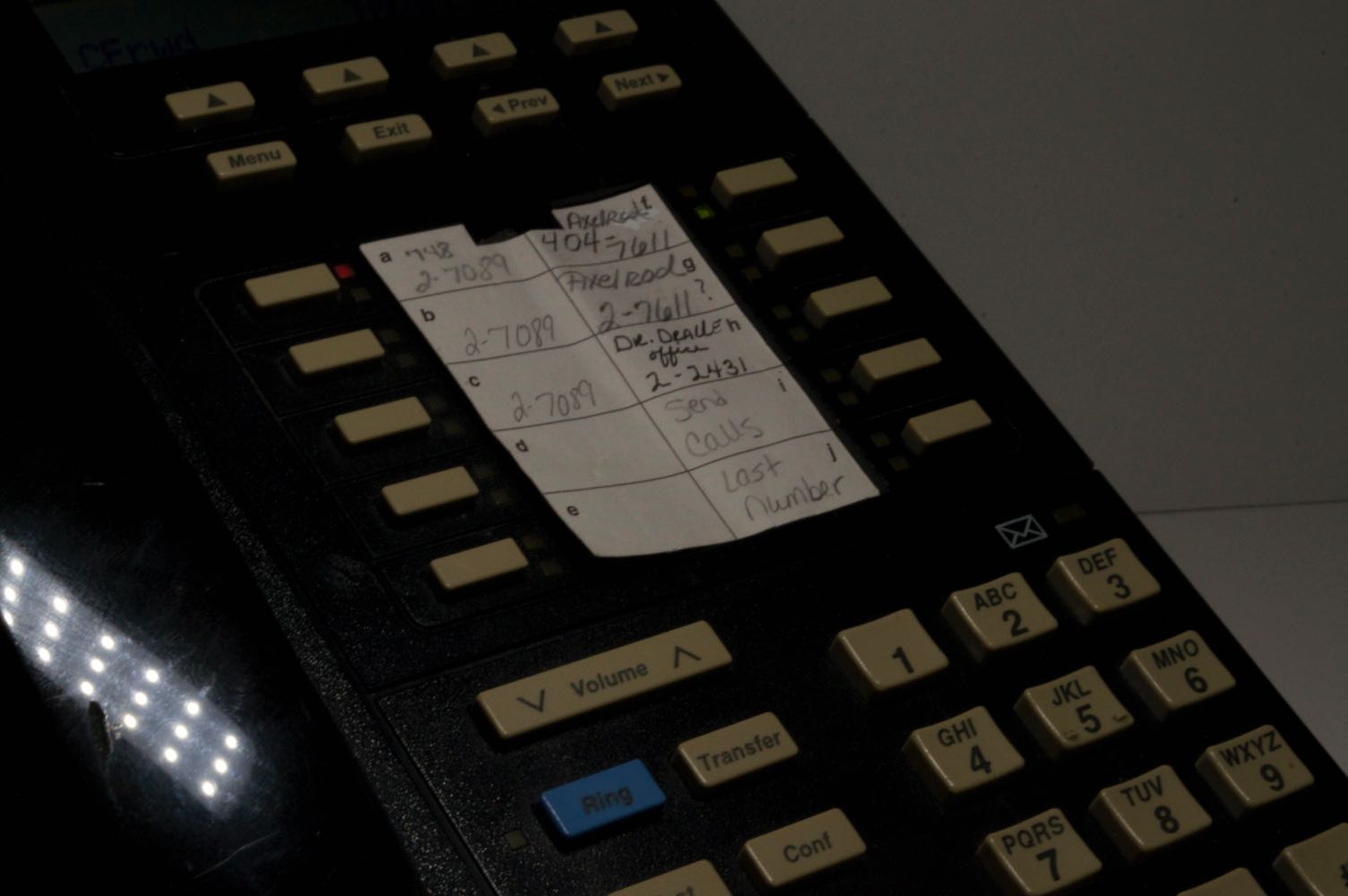
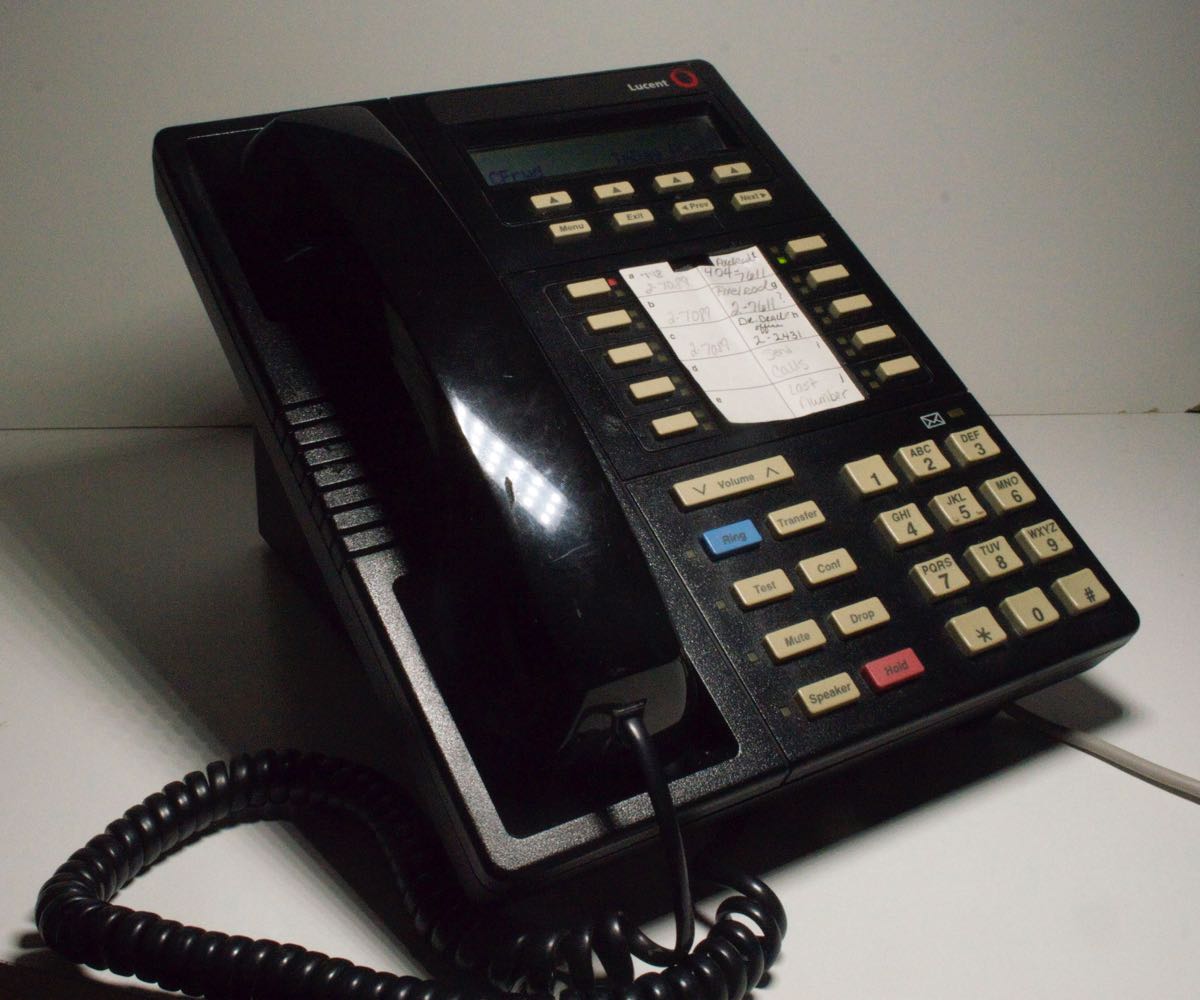
My Collection: The Avaya 8410 Voice Terminal
Today I’m showcasing my newest phone (prior to the last post) that is the Avaya 8410 Voice Terminal.
I’m not that creative in naming gadgets in cutesy names like dogs or cats like how people name servers, but I’m calling this one The Donald. As in Donald Trump. That guy was a long time user (to this day) a user of the 8410 terminal. What’s funny is the phone still has an AT&T label. He also uses his Spokesman speakerphone adjunct to have clear handsfree communication, even though the integrated microphone does well too.
This was courtesy from Jason, who gave me his old Definity PBX. The terms of the transfer did not include an 8410 set, which came to my surprise. He told me through email that he threw it in because there was space in the large package. More on this at a later time.
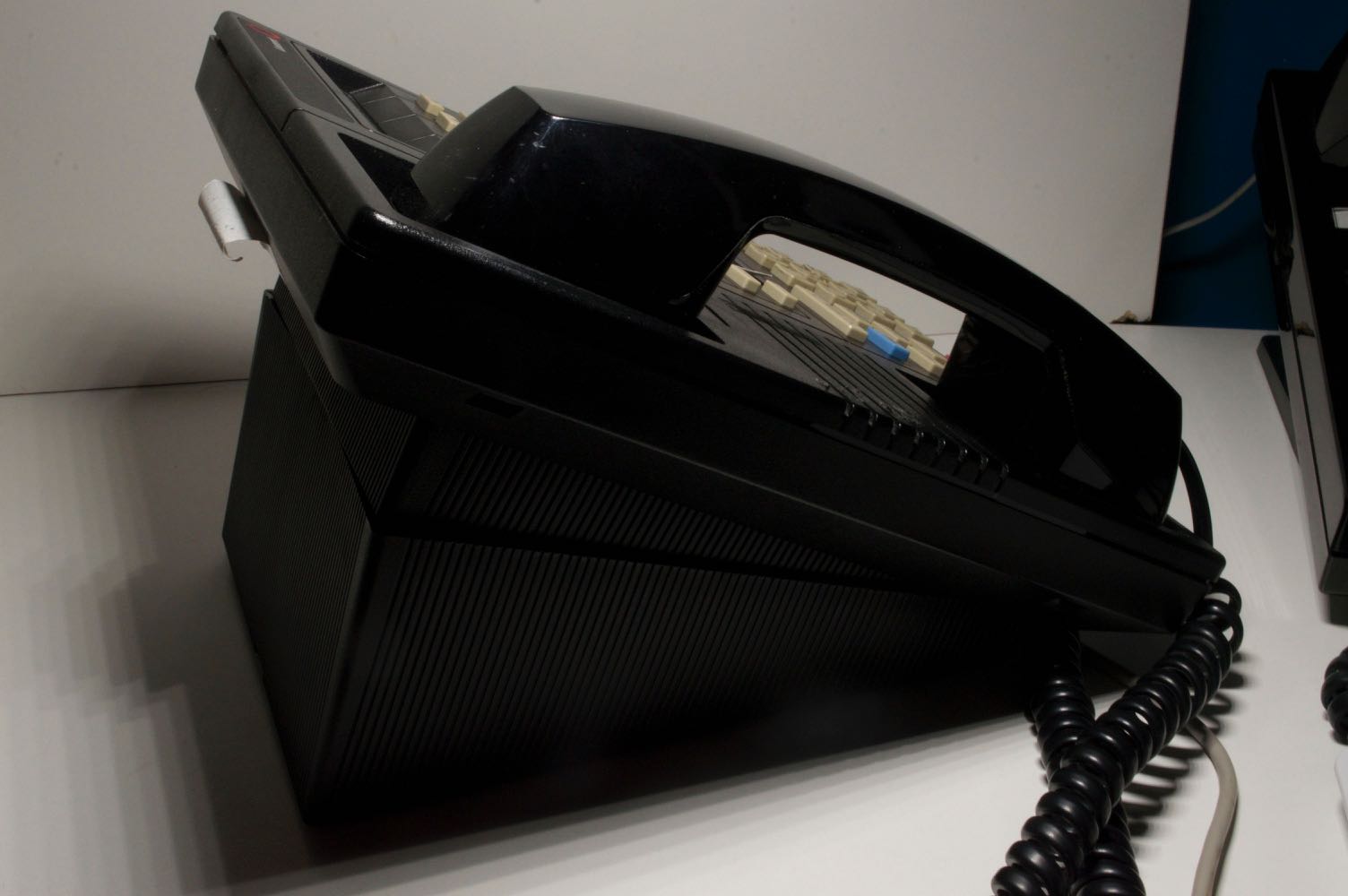
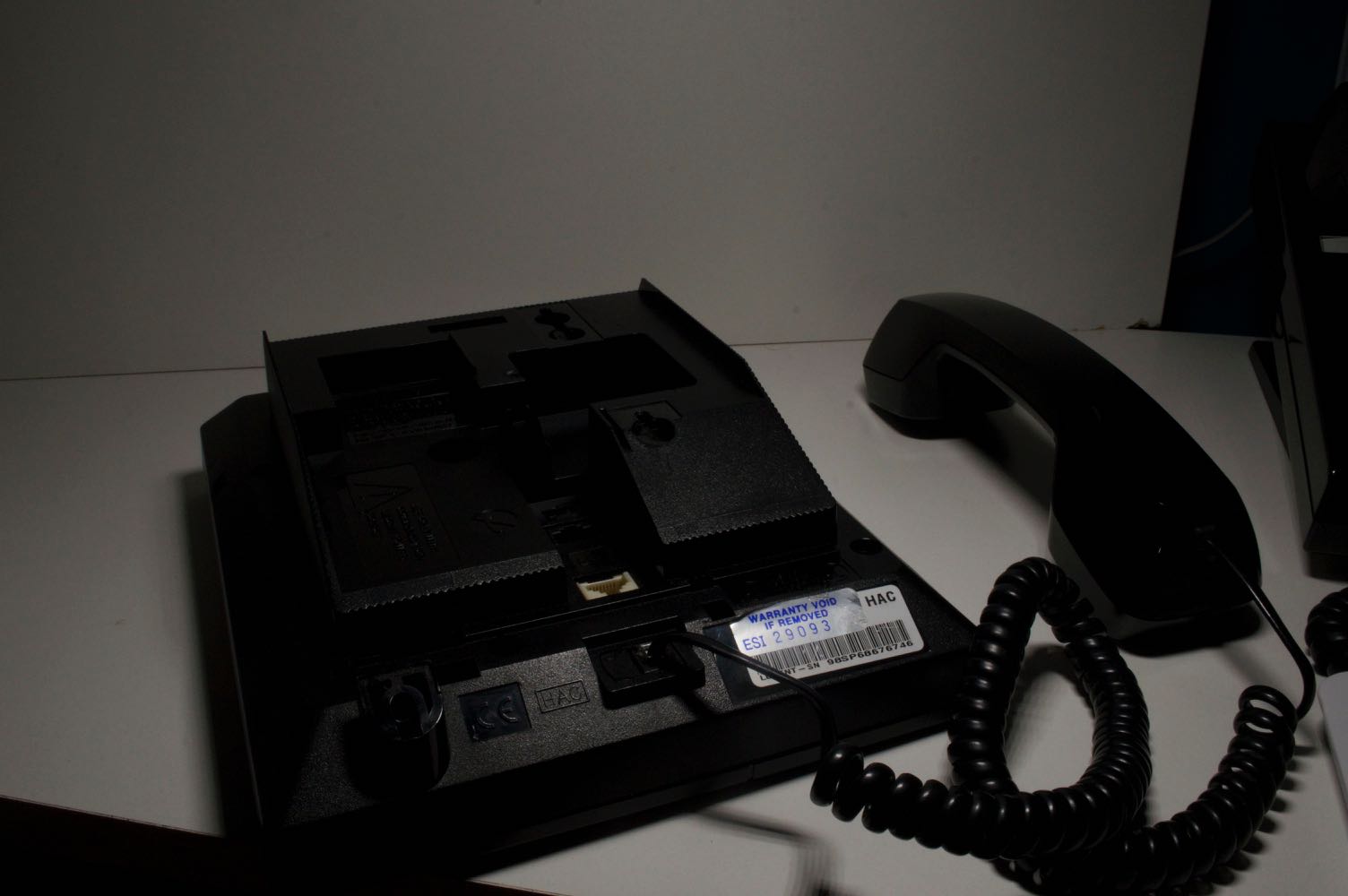
A closeup to that mic.
8410s were originally sold by AT&T, then sold by Lucent and then to Avaya. First generation sets were made in the States (likely at the Shrieveport Works – where most of the enterprise sets were made); when the End of Sale was issued by Avaya around 2003, the terminals were made in Mexico, despite plastic molding stating it was made here.