I should do a series on this specific Last Mile box because I’ve taken it when it’s been clearly open (and during the RBOC strike and people were caught tampering with them) and when loose wires the craftsman forgot to take with him.
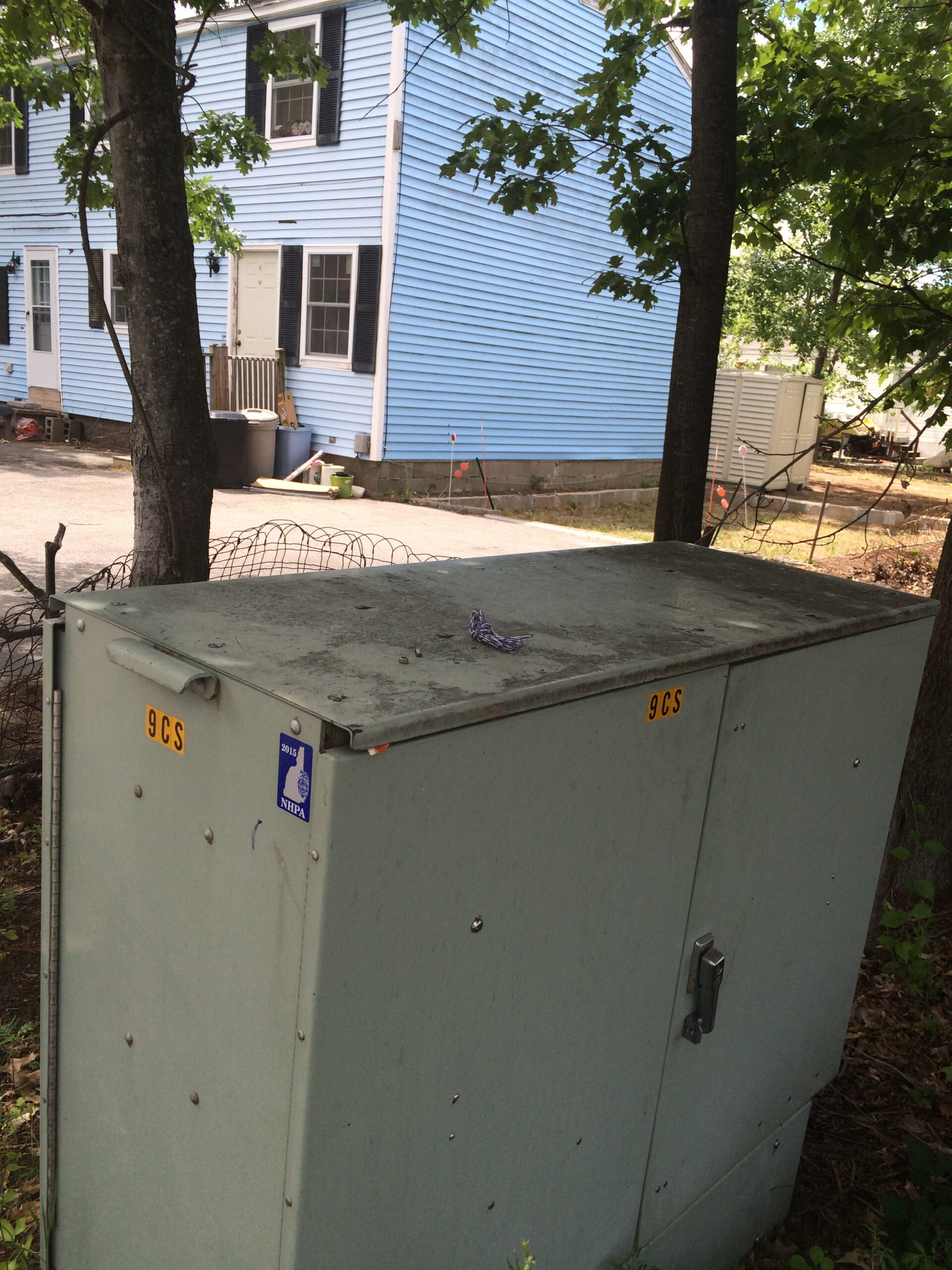

I should do a series on this specific Last Mile box because I’ve taken it when it’s been clearly open (and during the RBOC strike and people were caught tampering with them) and when loose wires the craftsman forgot to take with him.
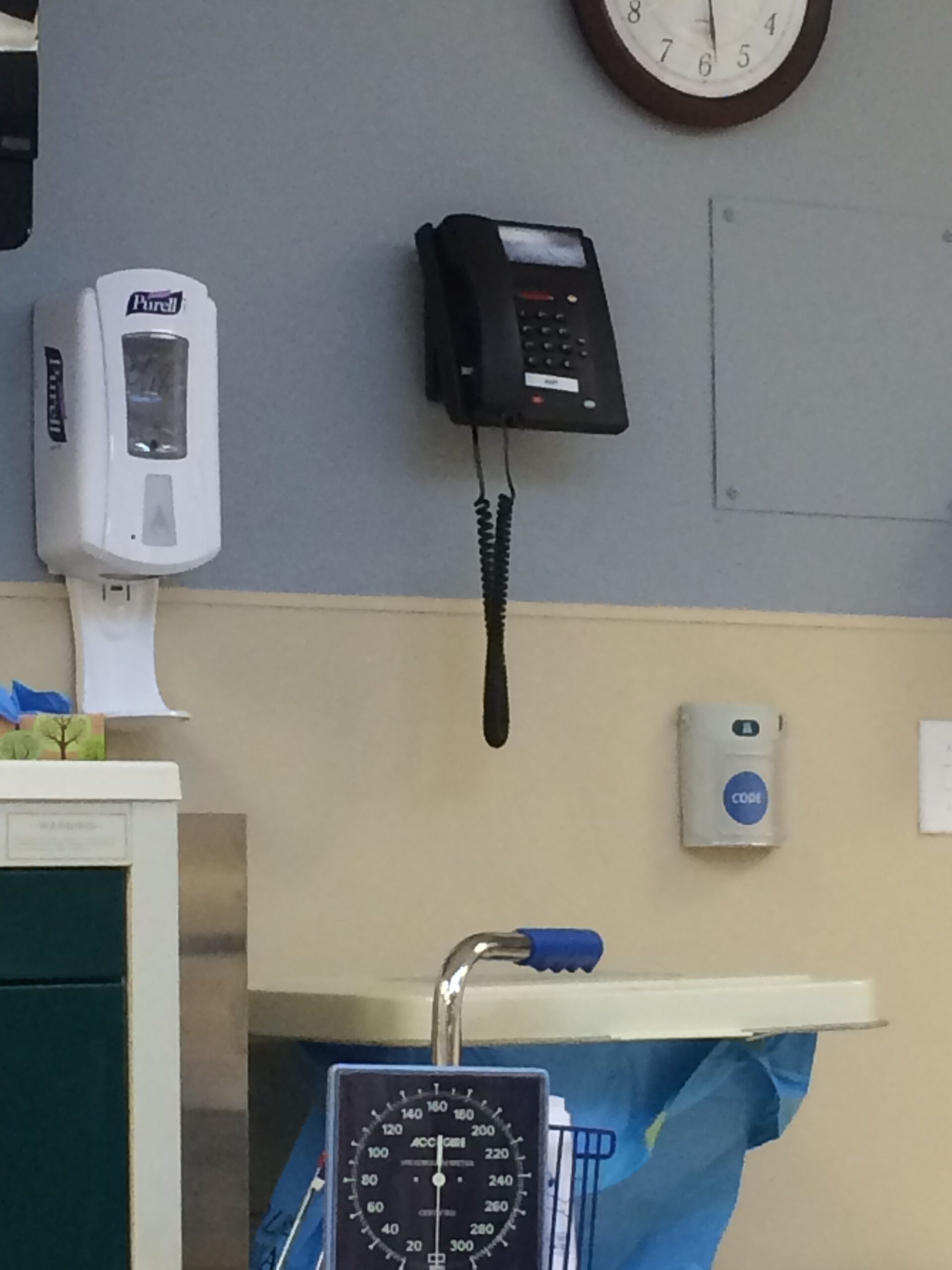
Taken at a local oncology facility in March. Fortunately the person I was with got iron infusion, no chemo or what have you,
The times I spend in Concord, is to do business, or attend meetings, etc. I don’t tour my capital city. One day last month, my mother had to attend a meeting and I decided to go along with her. I walked on Main Street and realized how interesting the city was – despite living here for my entire live.
There are several “squares” (i.e. common spaces on private land) just off Main Street. Reminds me vaguely of Faunel Hall, especially if you see some of the store fronts on the alleyways.
In this ten minute video you can see me build out the museum that took nearly six months from vision to completion. This timelapse video of nearly two full hours during two days in January and earlier this month showed how much work it took to put in the hardware bought from the local Home Depot using a Closetmaid solution as well as swapping out the telephone sets and finalizing the look.
More to come.
*

In today’s Phone Of the Day I recently took this picture of a Mitel IP 5212 set (if memory serves me) at the Bedford NH store. This Kohls has a few IP telsets and boatloads of analog sets all across the sales floor. There are no sets near the fitting rooms. This store was built within the last five years around the time where perhaps Kohls was in a position of like a dysfunctional marriage: Do I stand with my man? (i.e. sticking to Avaya.) Don’t forget in early 2010s there was a bunch of doubt whether if Avaya would continue in supporting an overrated brand of telephony equipment. There is probably many reasons why in newer stores (of which popped up in my area, as their stores came to my area around 2002 – of which the Norstar 7200s are still in use in those locations) and other reasons such as higher maintenance contracts if you go through Avaya directly and the change of the user interface. Continue reading
I typically don’t support British talkers on American TV; but John Oliver is apparently good when it comes to technology and the government. Net Neutrality can be debatable; but think E911 is something that can be agreed upon.
Anyways here’s the video and my two cents after:
At 3:45, he quotes the National Emergency Number Association’s “estimated 70 to 80 percent of 9-1-1 calls comes from wireless devices.” I’d think it’s safe to say, that a vast majority of “landlines” are actually from VOIP services that should be coming from your physical address. Seconds later, he claims that 9-1-1 came from billing addresses. That’s if you don’t have it sent to say a PO Box, and he was half true – because many Centrex lines came from billing addresses not the plant address. But Centrex isn’t his audience.
This is very true. If cloud services and apps exist; then why can’t these apps that can track you become appliances in 9-1-1 PSAPs and plug in via SIP? Believe it or not, this upgrade is basically just a change in the software. The hardware is illrelevent. You could still have digital or analog sets taking calls, it’s on what the computer screen is what counts.
Then there’s the announcements of saying “all operators are busy” this allegedly refers to short staffing; but I’d lay on the side of caution – if there was a spike of emergencies or crises featured in this montage, then I’d side with that over his “understaff” claims.
Those “butt calls” calls placed add also calls placed during performances of “love” is another reason why 9-1-1 fails. It’s too easy to call. Sure if you’re in an emergency in panic, it’s nice to hold 9 or whatever to get 9-1-1; but this is probably how some PSAPs are overloaded. Even in enterprise settings, people like Avaya Blue’s own Mark Fletcher have been in bed with the FCC to force hotels to prevent using a trunk access code to dial out for 9-1-1. Or what he has done at Avaya to force businesses out of their will to have the government tell how private companies should have 9-1-1 programed on phone systems. To me this is beyond inappropriate and is an overreach of government and taking the common sense that is often missing in IT to begin with. By supporting very technical rules that can change at any time and threatening your users of lawsuits if you don’t comply is also sobering. These types of actions are only enabling the faceless careless IT departments to be even more careless and anti users.
I digress. For enterprises, they have had similar issues like how consumers have cut the cord to wirelines; because VOIP is “mobile” and IP is not location dependent. I can have a data drop be tied to a switch, but the switch doesn’t care that I am on the 4th floor in the 6th office; in legacy PBX systems, it was programmed via the PBX of specific locations that could pass through to the 911 as a “supplemental ANI” service.
Cisco has encouraged adds moves or changes by unplugging the set and place it to a new location to make it easier for non telecom professionals to avoid doing proper changes by remapping a users’ MAC address from one cube to another. MAC remapping is too much labor for the IT department that doesn’t respect telephony. And this actually can cause even more problems for users trying to dial emergency.
I think John Oliver is right, we have taken 911 for granted. Maybe we shouldn’t take it for granted for a change. Maybe people who actually oppose changes forced by the alikes of Mark Fletcher to actually stand by their private branch exchange and stop having the government dictate how private businesses use their private phone system. Maybe “Fletch” could be better off selling snap-in apps to give better location information to these same PSAPs as Oliver has suggested. If the facts are true that Avaya Red and Blue have 50 percent of the PSAP install base; maybe they should be selling these appliances or applications, and services (i.e. through a cloud) instead.
*
The Museum is having a low in terms of new features. Here we go with, Stretch, Stretch and Stretch by finding something to fill up for the lost posts. I thought since the 8434 telephone from Avaya was one of the attractions to this site, that I’d post it’s brochure from the time I found deep on the Avaya hosts.
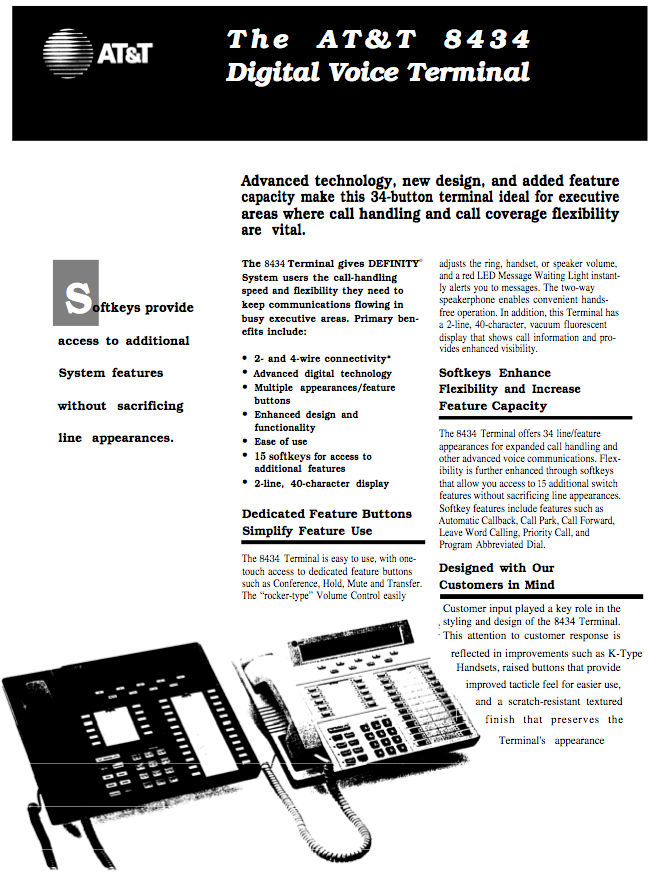
The copyright is from 1994 from AT&T and it doesn’t indicate the DX suffix. The 7400s were well popular in the early 1990s. The most funny thing about the world of Avaya Red (then AT&T) was most phones used were within that decade from the mid 80s to mid 90s. Many Avaya Blue shops still had those wedge SL-1 telsets in production even past the 21st Century. The MET sets (that kinda had the resemblance the first gen SL1 sets) were made around the same time, mid 1970s. Not sure if AT&T had aggressive buyback offers or just simply those quasi digital sets couldn’t do things like multiple lines.
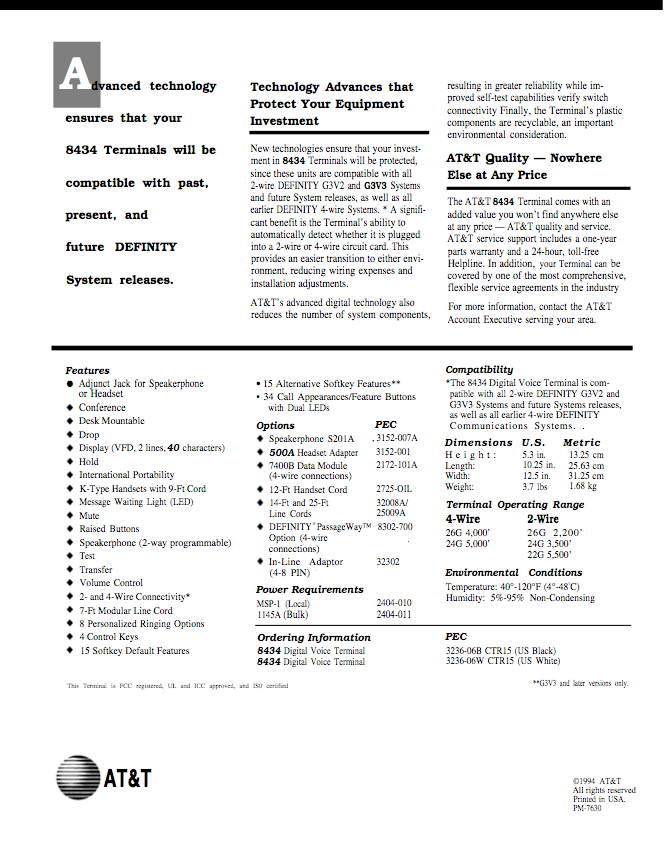
As much as I liked the 7400s because it shared the Merlin shell; the 7400s were kinda like the Ciscos of the 1980s. Overpriced and underperformed. Most first gen sets (made from 1984 to like 1988) had no ability for integrated speakerphone (known as listening only); displays were add ons, and it was known for its proprietary “R” handset and tactile buttons other than the dialpad. Volume was a dial wheel, as well as it’s display contrast. Isn’t that interesting, analog controllers to a digital telephone? By about 1988, the BIS (Built in Speakerphone) series appeared for both Merlin and System 75/85 users, as well as hard buttons for line and features, and models for call center and dedicated display (7406D and 7407.) For the people who didn’t like the futuristic looks, the 1990s came with something that resembled more like an “office telephone” – Enter the 8400 Series.
Similar to the whole AUDIX saga, AT&T’s documentation was very lousy from the 84 breakup to the Lucent spinoff. Because information is very scarce, I’m going to bet the 8400s were introduced to the market around 1993/94; and not 1990. If I am wrong on the year of introduction; then it would be safe to say; by that time; these sets were starting appear on desks as time went on.
To prevent the reader from being constantly bombarded with repetition of history, please click on this link for additional information
In recent weeks, the world’s newest Whole Foods Market opened in Bedford, NH. Built on top of the legendary Wayfarer Inn (known more during the Primary Election years), it’s also within hundreds of feet of the now torn down Macy’s.
As proof from Joe the UCX Guy from Chicago, many Whole Foods stores are Cisco shops. Interestingly, the WFM in Nashua, just miles on the Everett Turnpike, is wired for TDM telephony using Toshiba’s Strata system (opened in 2014 to replace a former Market Basket.) Building was totally gutted and rebuilt mostly from the ground up.
The store in Bedford is mixed with 7942s and the 6902s at the cashier’s lane. Paging works, as teenage girls don’t know how to lower their octaves and learn how to page professionally.
The 7900s are still in the market, despite the more cheaper quality sets being deployed more and more. The 7900s are in a depreciation mode. Current generations are all multi lines, Java based and/or colored displays and I was surprised to see a 7942 because I believe its End of Sale.
I snapped two pictures, one showing how much characters you can use to describe your telephone extension. If the characters can’t fit on the top black colored indication bar, it will break the description up in two screens


Personally, these devices are just “endpoints” – they are PCs acting as telephones. Sure Mitel, and Avaya and others sell the same thing (and acts the same way), but for sales people or the accountants, its just another device attached to the Internet and it shouldn’t be treated special like a office telephone. These phones are not easy to manage outside of expensive Cisco solutions or if you like to code and reverse engineer – be my guest! I feel like the 7900s were always a 2554 with Internet connectivity and a great audio quality of its SCCP signaling.
Other than that, Cisco just keeps on winning on selling “free” gear and report them as “profits” by smooching up to the CIOs and heads of IT departments at the Fortune 500 companies. You think I am kidding???
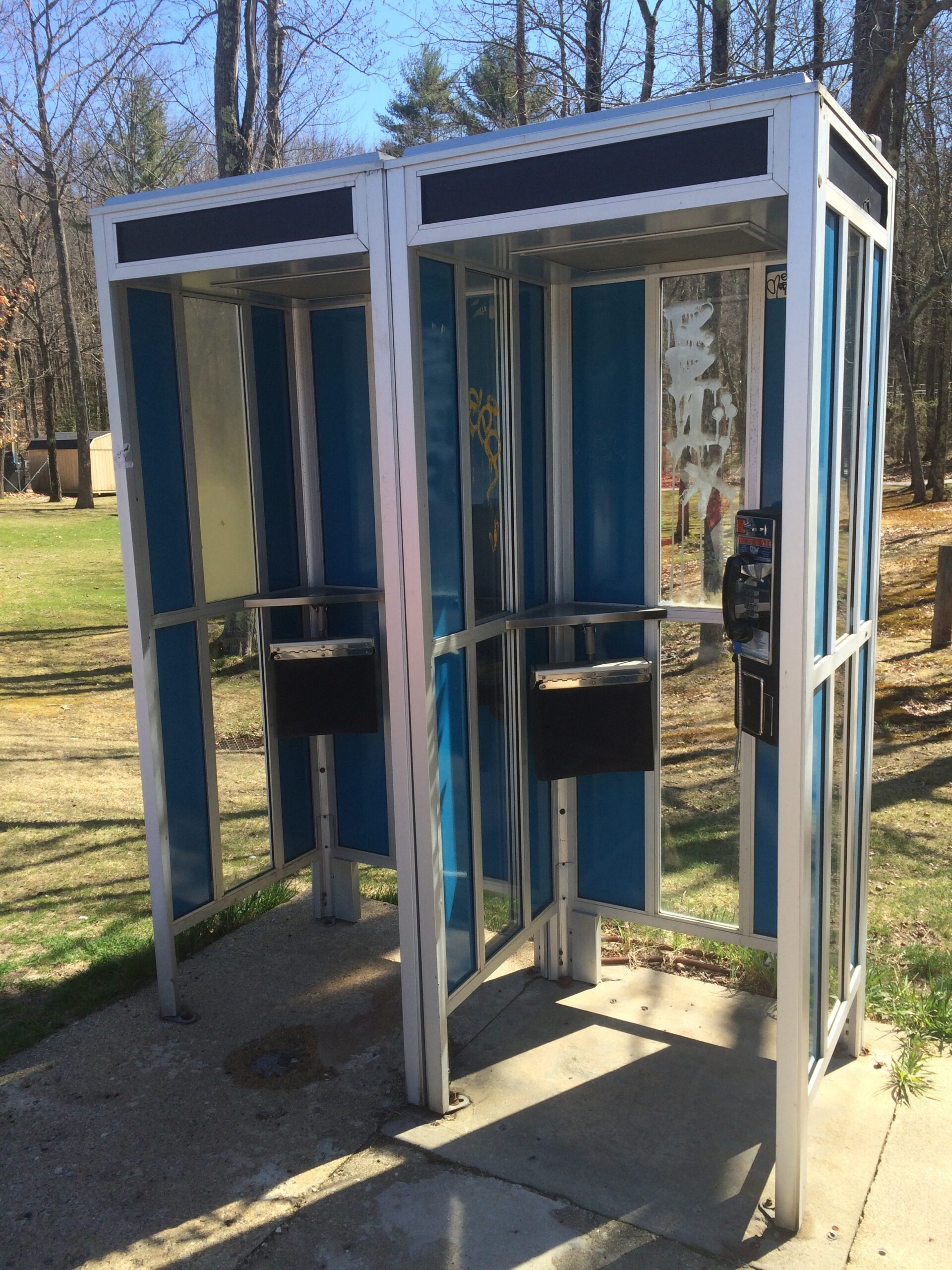
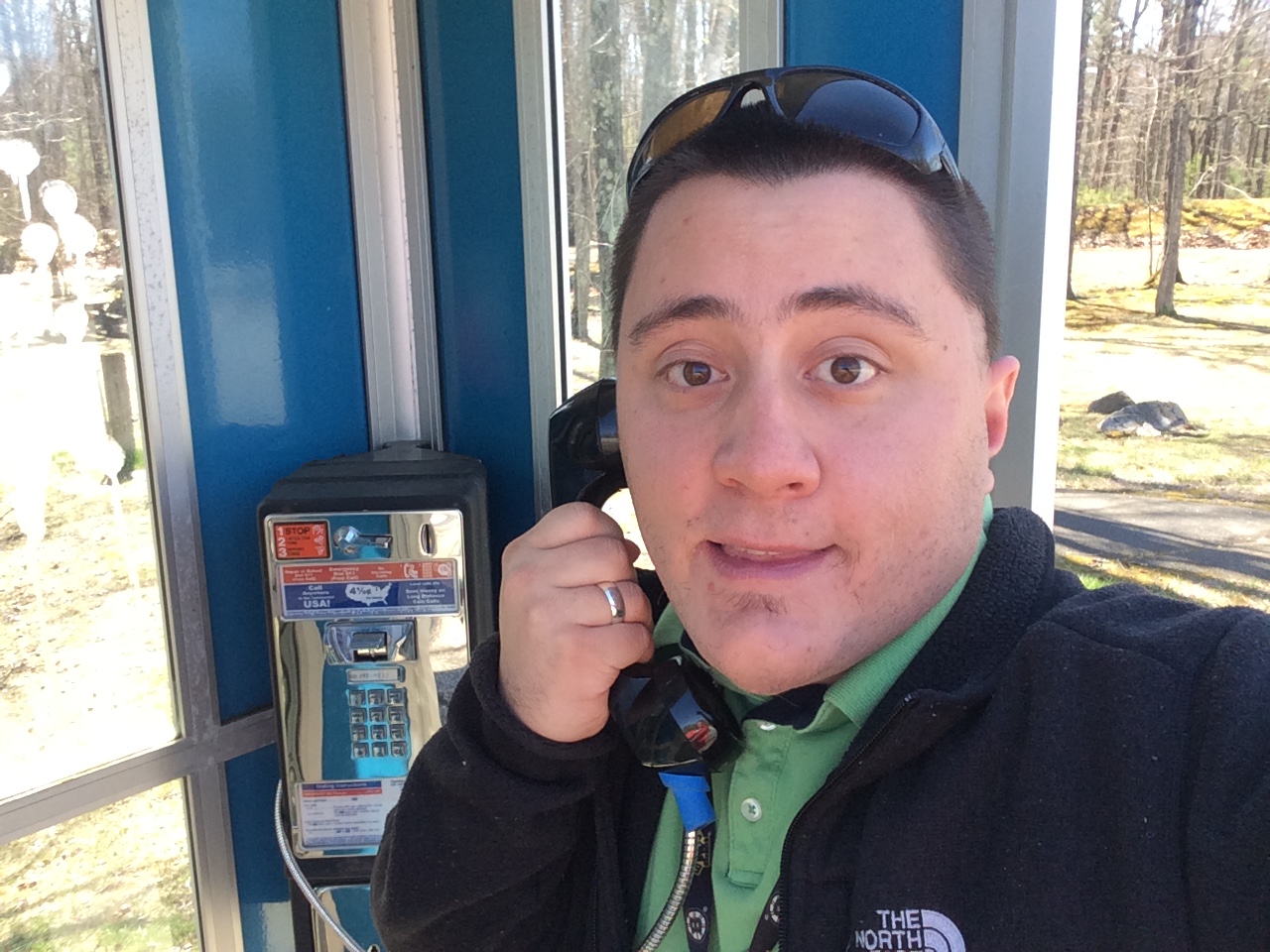
Just about 10 miles from Concord (the capital city of my state), is a rest area on Interstate 93 northbound in Canterbury, New Hampshire. These telephone booths are common on state property (remember Cannon Mountain?) What may have been Verizon managed, is now managed by a CLEC. Both booths do provide dial tones as you can see in my selfie in the next image.
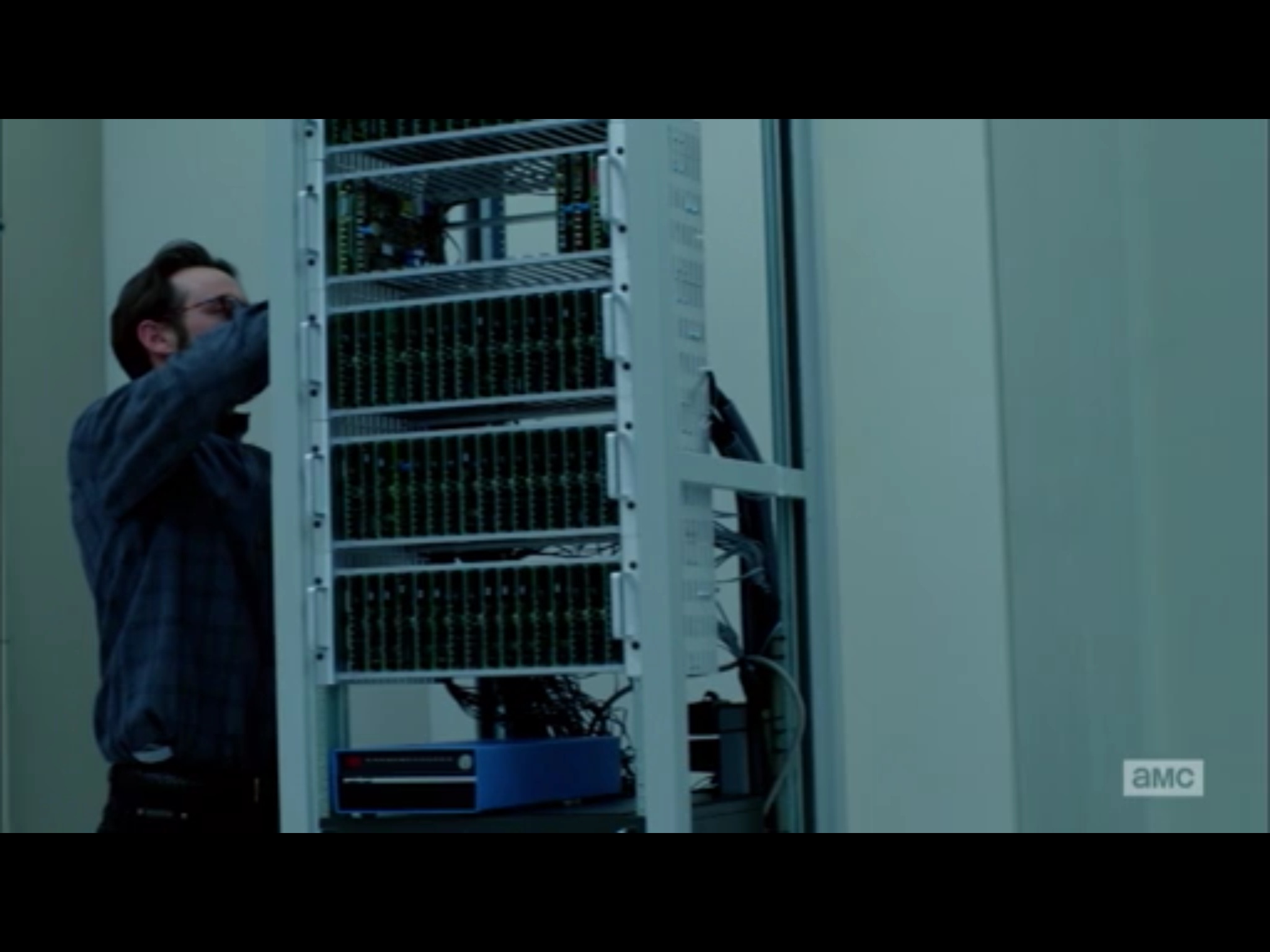
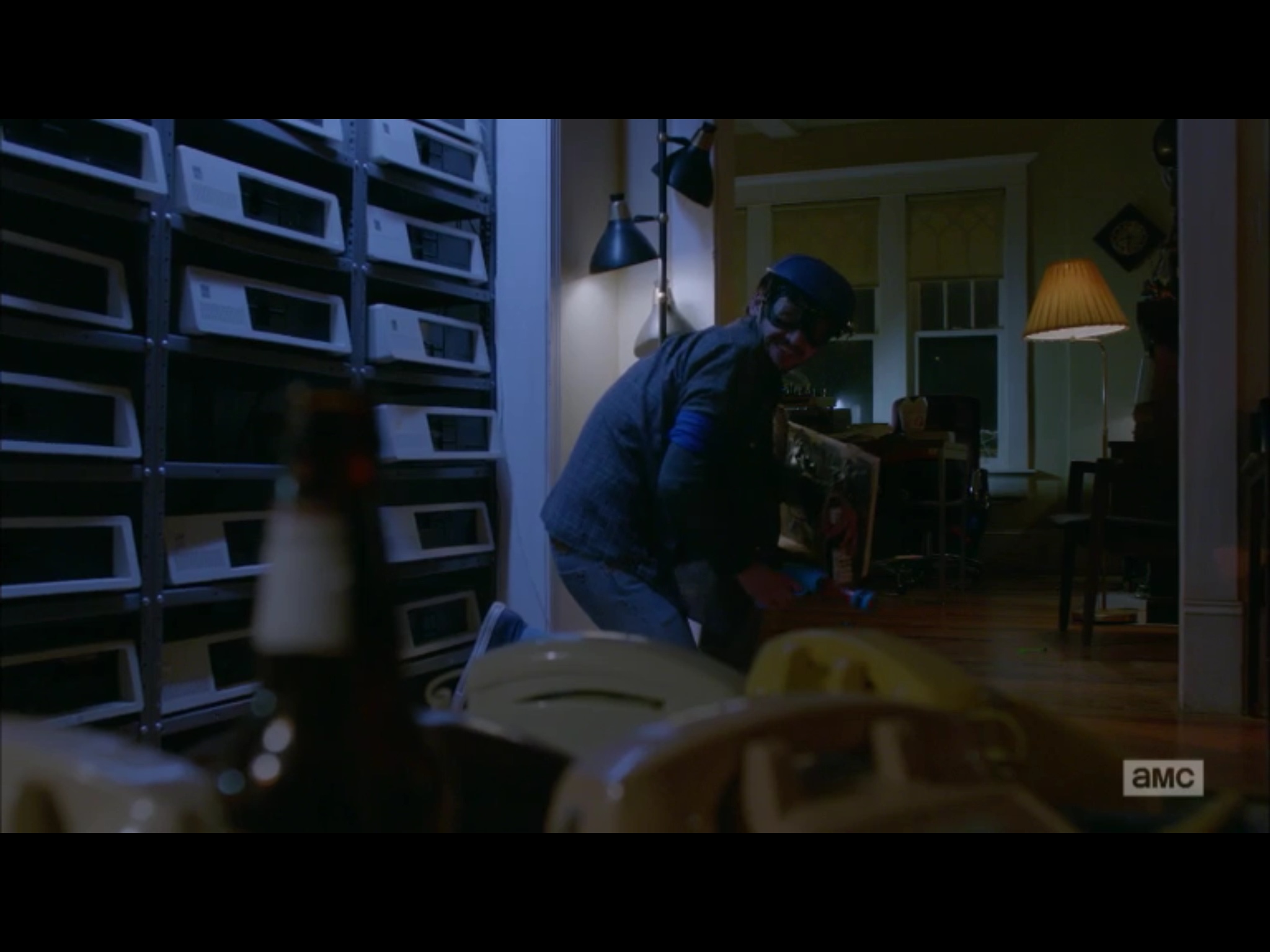
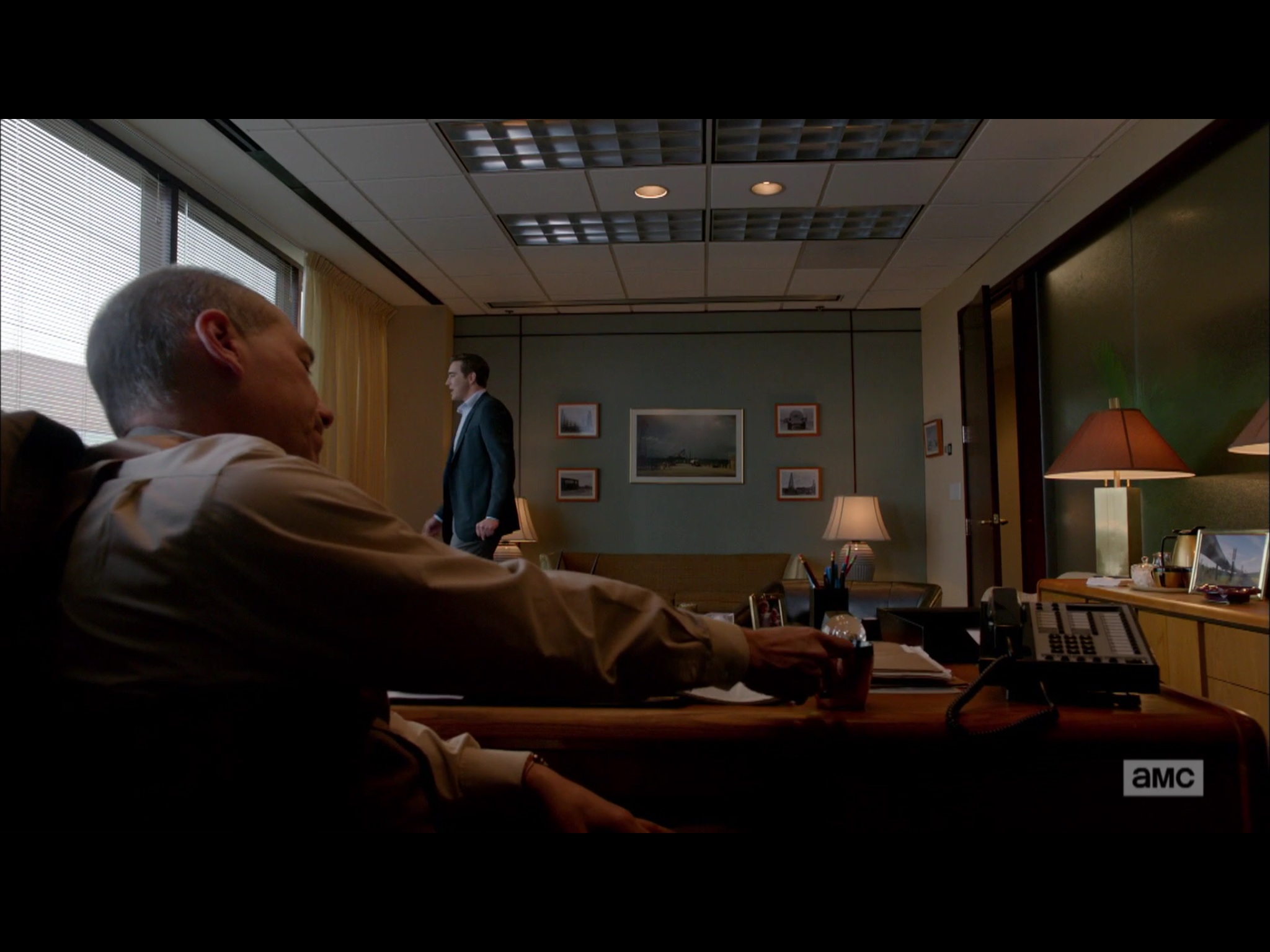
This is one of my favorite cable dramas on TV. This series, Halt and Catch Fire (first runs during the summer on AMC) is a fictional drama set in the 1980s where a mainframe computer company took a risk of getting into the PC business and put the company out of business because the PCs totally canalized the fictional Cardiff Electric. (A contributing factor was the characters hacking into a bank which resulted the FBI to seize all property.) The main character, named Joe has resemblance of a non technical, but salesman like demeanor of Steve Jobs.
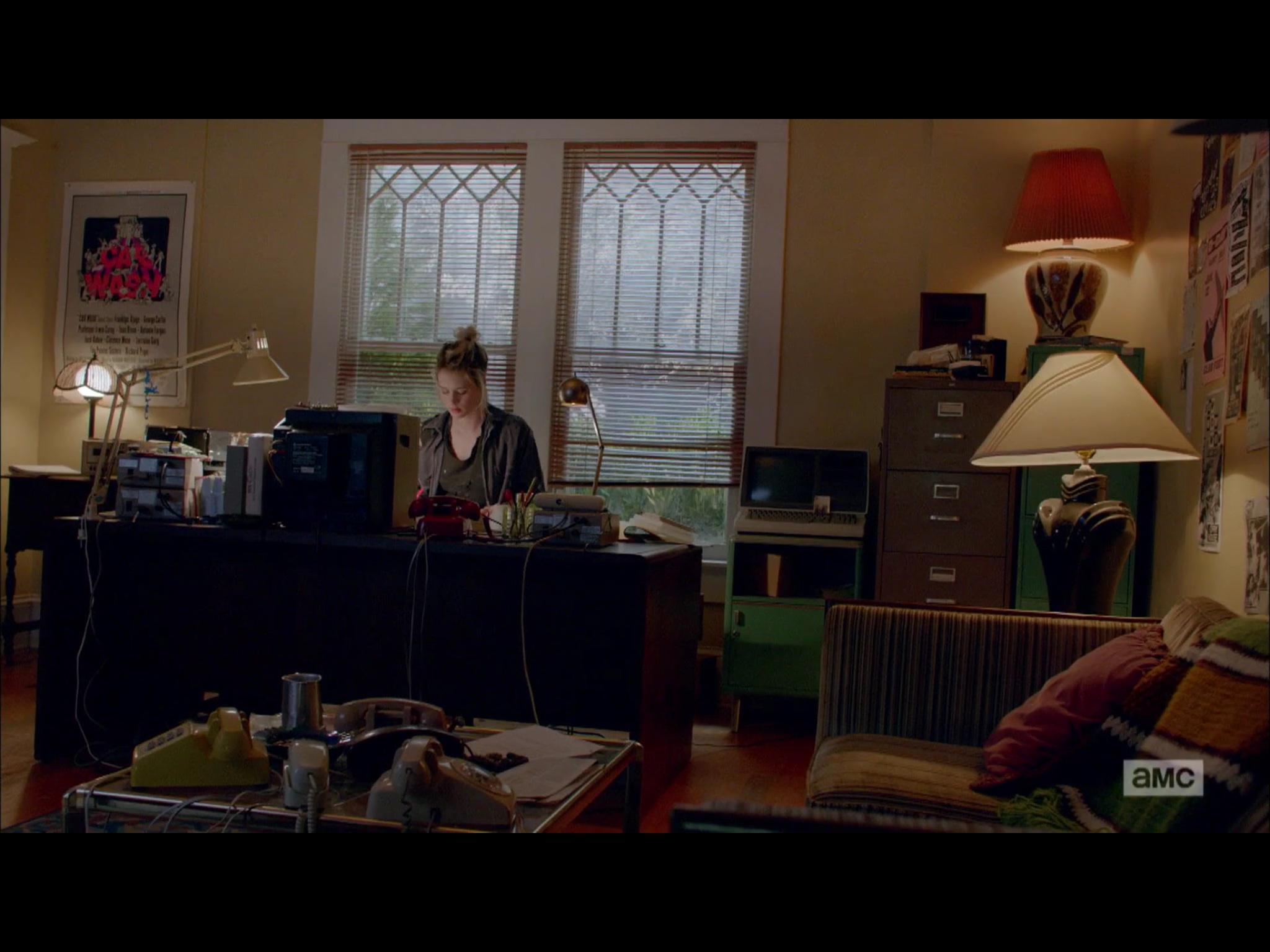
The other main character is a woman, named Cameron who is a gifted coder who was the #2 to Joe. She helped reverse engineer the IBM PC’s ROM BIOS. (In fact the way it was portrayed in the series had resemblance of Compaq’s successful attempt.) If I remember correctly, the Season 1 ended, Cardiff goes belly up, then begins working for “Southern Lines” – a spoof of Southwestern Bell – it showed her working in an office with white painted walls with the blue and yellow stripes resembling the Bell System! With other dramas on TV, there was a love interest and in season one they had an on and off again relationship. After Cameron realized that the phone company was covering up the fact the central offices could handle data up to like 300 bauds, her next ideas was to start up a new venture. In Season 2, she broke up with Joe out of revenge and created a bulletin board service/online game startup.
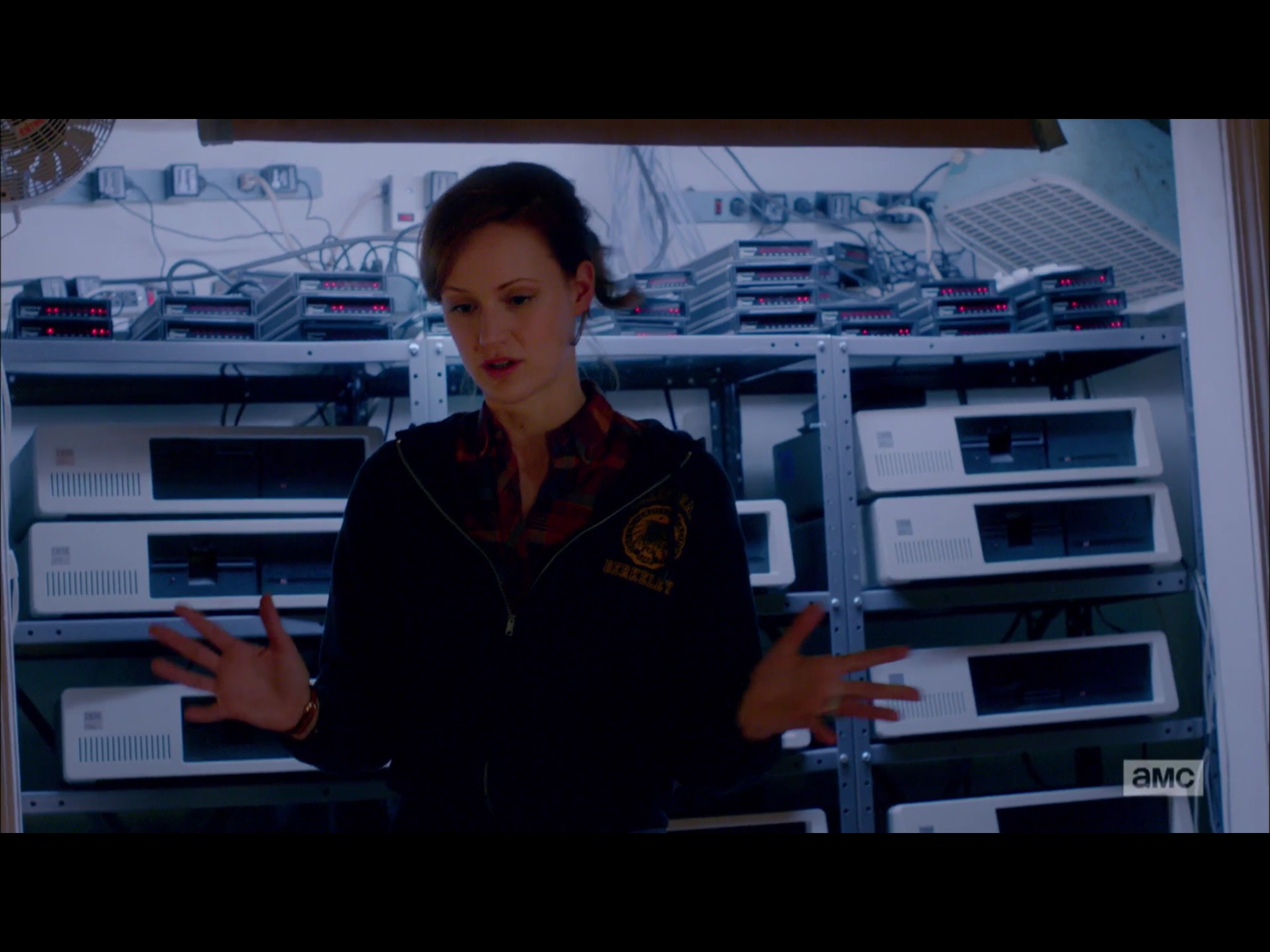
This one had more of a telephony taste, and of such here are some images from Season two grabbed off my iPad last summer.
Not to sound like a TV snob, but I like fictional shows that don’t mix real with fake. Don’t get me wrong, I love Silicon Valley, the problem is when they mix the narrative of current real big businesses with fake startups and the lines blur so badly, an average viewer may get confused of what’s real and what’s fake. Worse is integrating real reporters from blogs like Re/Code, Techcrunch, etc. The writing in Halt takes place a over generation ago and mixing anything fictional is clearly stated if you know enough of the history of PCs and or mainframes and they keep the real people or companies to a minimum unlike Silicon Valley, which is why I like watching these types of series instead.