Back in 2013, I acquired an Avaya 4610 IP set. However, not to long after the acquisition, I’ve found out that this was a special version. A very strange one to say the least. I would’ve retuned this to the eBay seller as a “Not as Described” claim but I don’t like pulling that unless I really have to.
For a period of time from 2006 to 2008, Avaya marketed (albeit with limited fanfare) a peer to peer IP phone system called the One-X Quick Edition. To be honest, I never understood the brand.
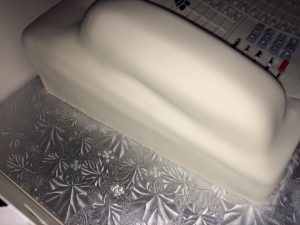
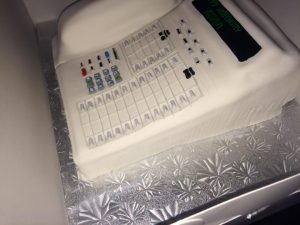
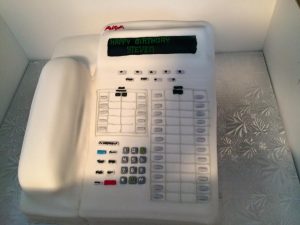
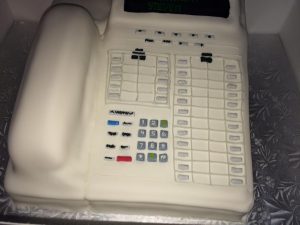
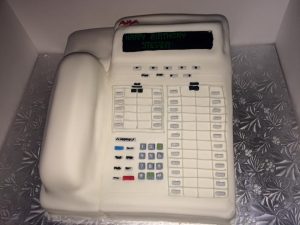
Your humble curator turned 30 last month. As a result of the big deal, I had requested to have a special birthday cake. This year, I wanted something to resemble a office telephone. I had turned 25 at the time when the Cake Boss had built for Avaya, an actual cake casing of their IP Office 500 Control Unit and one of the 16 or 9600 sets. The phones and control unit really worked with all the cake covering it.
Mine was a little simple (or complex)
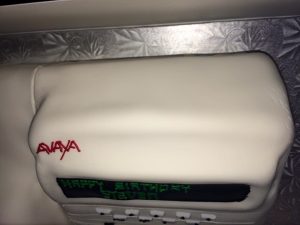
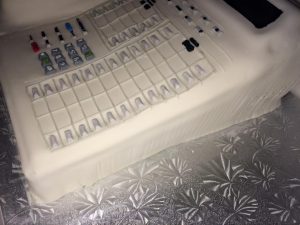
So my mother got a special order at Frederick’s Pastries (a well known baker North of Boston/Suburban NH), of a two layer, gold cake, with strawberry filling, with, white frosting mimicking the “Misty Cream” set color, and the various elements the signature telset. You’ll also notice the side where they made the groove edges of the set. They got the Avaya logo right on too. The handset resembles the 9400 Series DCP terminals (the ones sold during the same time as the 8400 for non domestic customers that looked kinda like 6400s, some have made its away towards America in third hand markets.) They never made such thing before and they were kinda nervous at first. My mother never ordered a special order cake from scratch.
Albeit belated, when we picked it up on the 31st, they were excited and in fact the owner was on site that day when we picked it up. Given a misspelling on my name, it was great!
My gawd how filling was the cake! Took a week to finish it!
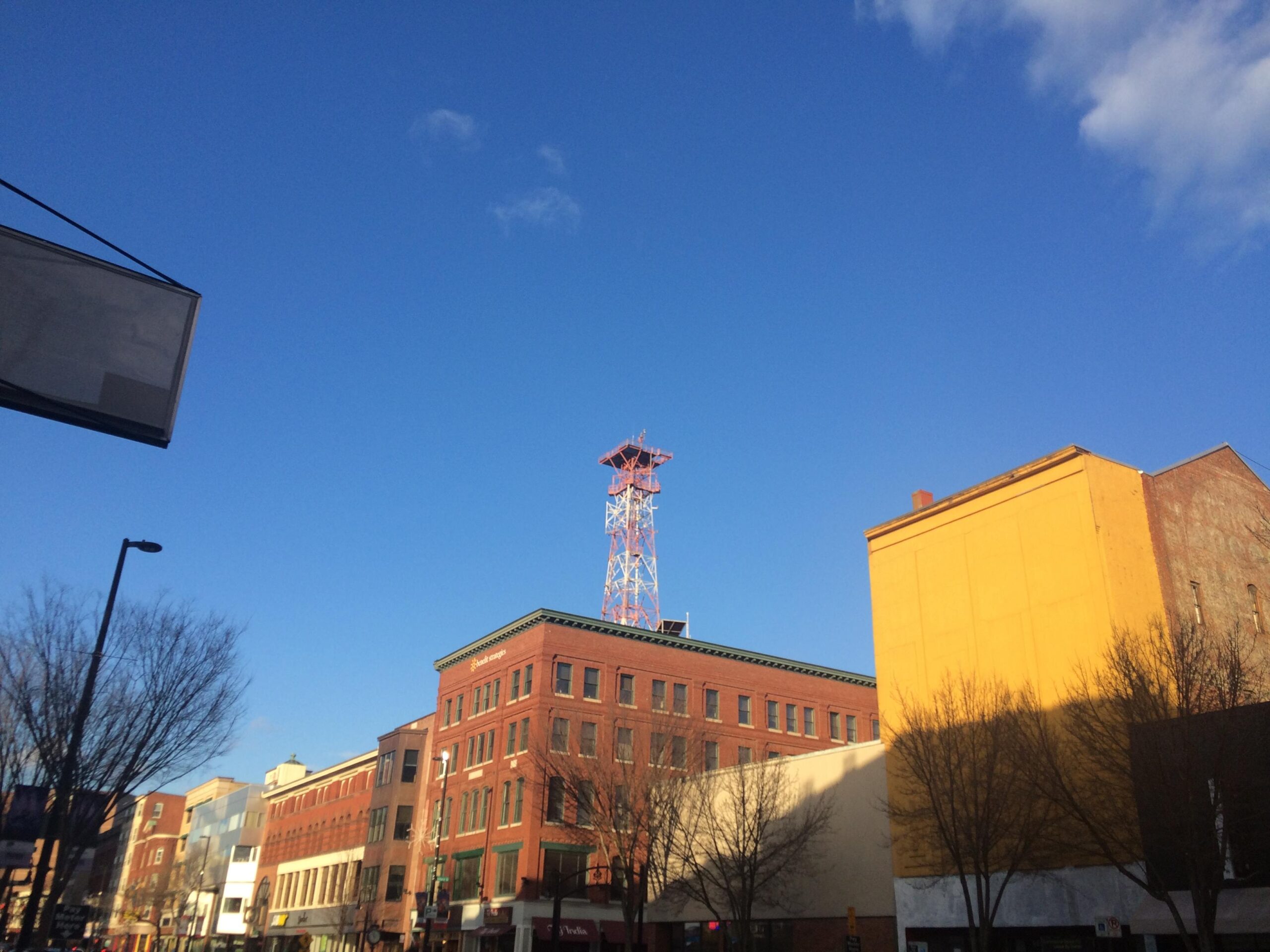
A picture of a Microwave tower that used to provide Long Lines at the FairPoint Central Office for Downtown Manchester. A post of the exterior of that building will follow soon.
I’m the last guy to critique the look and feel of operator consoles. I’m not the guy who says “lookie… at this sleek and modern design of a set that doesn’t do anything significant” crap
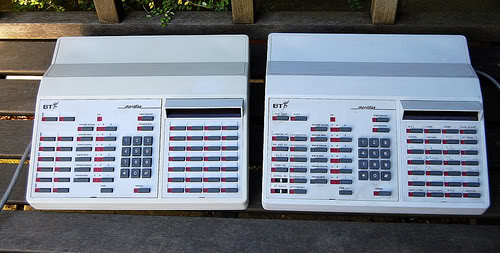
This set (again found off an eBay listing) is an operator console for ROLM based PBX systems. Despite the last patch of their flagship 9100 systems probably of two decades; some sets are still in use.
This Toshiba PBX Console was made for another system they sold before they focused solely on the Strata. From my research, in the midst of their business, they had the key system known as the Strata and a PBX system that could hold more than 300 stations. This console was incompatible with the smaller Strata
I have to say, the AT&T 301 and 302 would win on any console UI or looks any day!
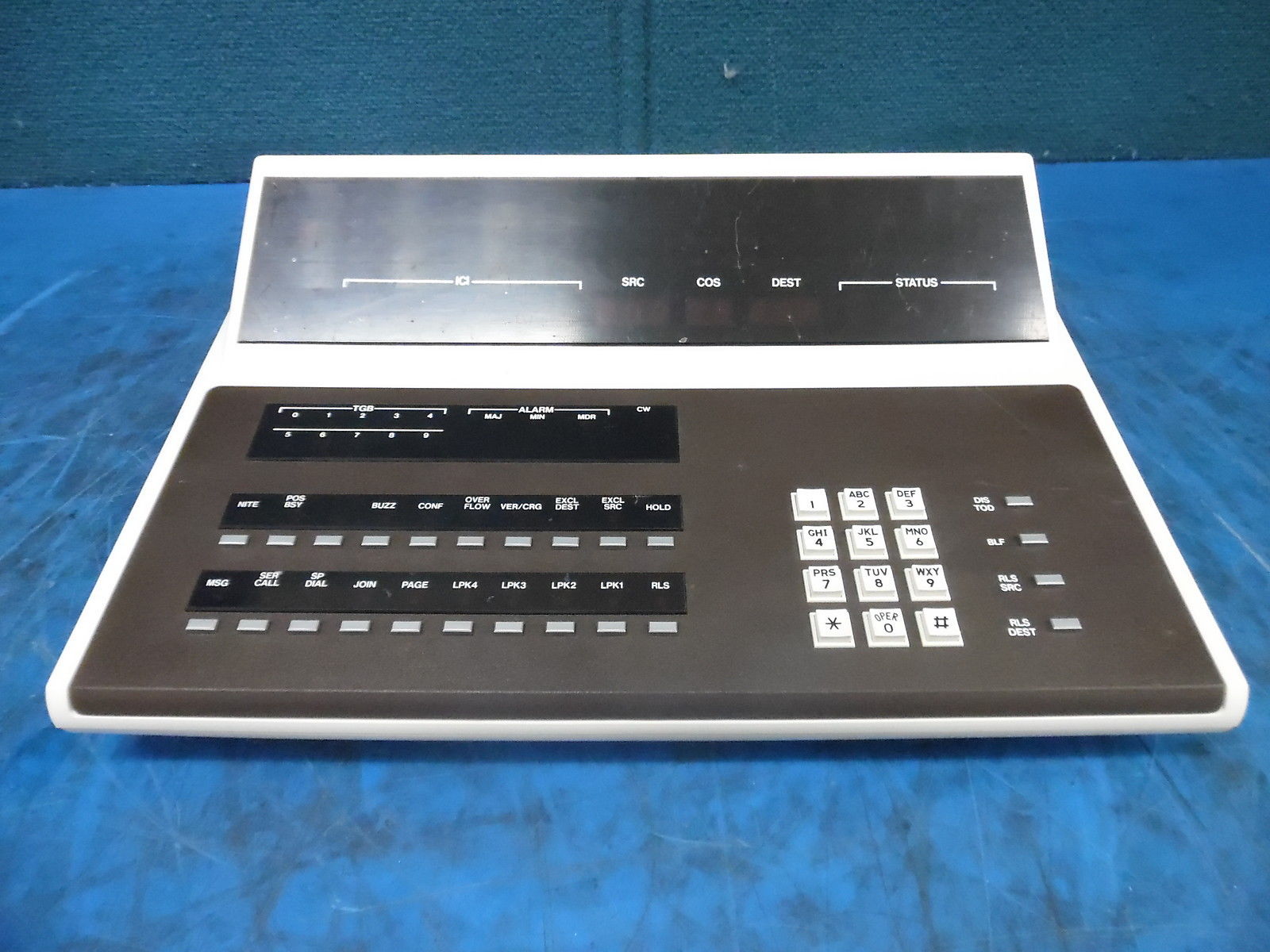
Kids, want to set up a PBX like it was the 1970s? Get your thumbs ready by playing some Atari and Pac Man, before heading to your assignment of adding a couple thousand stations and hundreds of trunks. Such finger exercises are similar to Pac Man!
Not my own Image, found from eBay
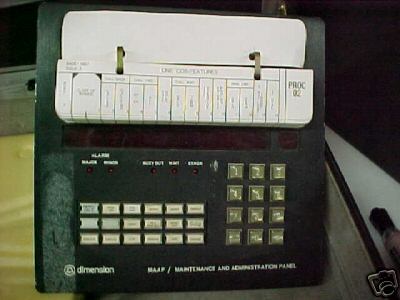
While this “console” doesn’t take calls in a business, it does however require usage to make changes. This was Western Electric’s MAAP – The Maintenance And Administration Panel, better known by it’s acronym. Eighteen buttons plus your dialpad. While such practices are common in smaller systems at an assigned extension and port; this was the practice done on larger systems “back in the day”.
It wasn’t till the end of the 1980s, AT&T sold one of their own UNIX PCs to allow MAAP to be done similar to the terminal sessions found in the System 75. Data was entered similar to a System 75, but the app would take that data then spit it out through the serial connection the similar way it would’ve been done in the MAAP, a series of commands of pressing buttons here and there plus the numbers and/or letters on the keypad.
This was effectively out of date by the mid 1990s with the introduction of the Definity ECS (G3r V5) that merged the two systems. In it’s early days of the Definity G2, through the limited documentation AT&T released, it’s preferred administrative method was the UNIX box despite support for the MAAP.
MAAPs were not uncommon. Other vendors had used a special set to do system administration. In today’s smaller systems, non VOIP multi line phones at specific wired extensions can act as administrative terminals. PBXs however require dummy terminal, Web or app based administration.
Sadly, where I live, Avaya or Nortel isn’t “alive and well” unlike another site I follow. Nortel has disappeared in my state in public and private entities in lieu of Cisco years ago and Avaya Red has slowly disappeared too.
On a Christmas Eve tradition before I was born, my family would order pizza out at the local Papa Ginos, that is local chain with more than one hundred stores around the Greater Boston region, basically in four of the six New England states. It’s reputation is fresh quality pizza of with quality ingredients. Over the years Papa’s has had exclusive marketing deals with the local Boston teams such as the Red Sox and currently the Patriots.
The chain has used AT&T products going back to the days of Western Electric. This location I had frequented growing up had used one of those 10 line 1A2 wall mount Key telephones till a cutover around 2001 to a Partner ACS system. The only ComKey I’ve ever seen in production was another store nearby, and that had cutover to a Partner circa 2001 or 02.
I’ve been to mostly the New Hampshire stores, and D’Angelo the sub shop, is a sister brand to Papa Ginos. I don’t recall them using any phone systems, the one nearby me, that I took a few years back with an Avaya van uses POTS phones.
But today, just the next block away from that same D’Angelo, I noticed this phone. Nope, its not a 9600 Avaya IP or 9500 DCP set. No, worse a Polycom VVX 310 set. (I haven’t been here for a while, some days I normally walk here because it’s not that far away from my home.)
You thought Avaya would be off the hook (non pun intended) right?
Nope! It would defeat the purpose of being the equal opportunity offender.
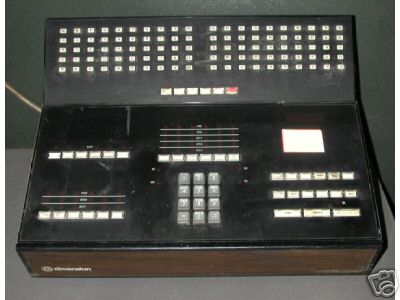
Dimension Attendant Console, circa mid 1970s. NOT MY IMAGE.
This console was made in the early 1970s for the Bell System’s Dimension PBX (and smaller versions most likely for the Horizon system.) The console was a weird design consisting of a shoebox form factor.
To the right of the set had only eight characters alpha numeric LED display. The console is filled with many indicators (the design at the time.) The console was very primitive for it’s time. No call appearances for overflowed calls. The buttons above the dialpad did act as such but they were referred (IIRC) as loopback lines.
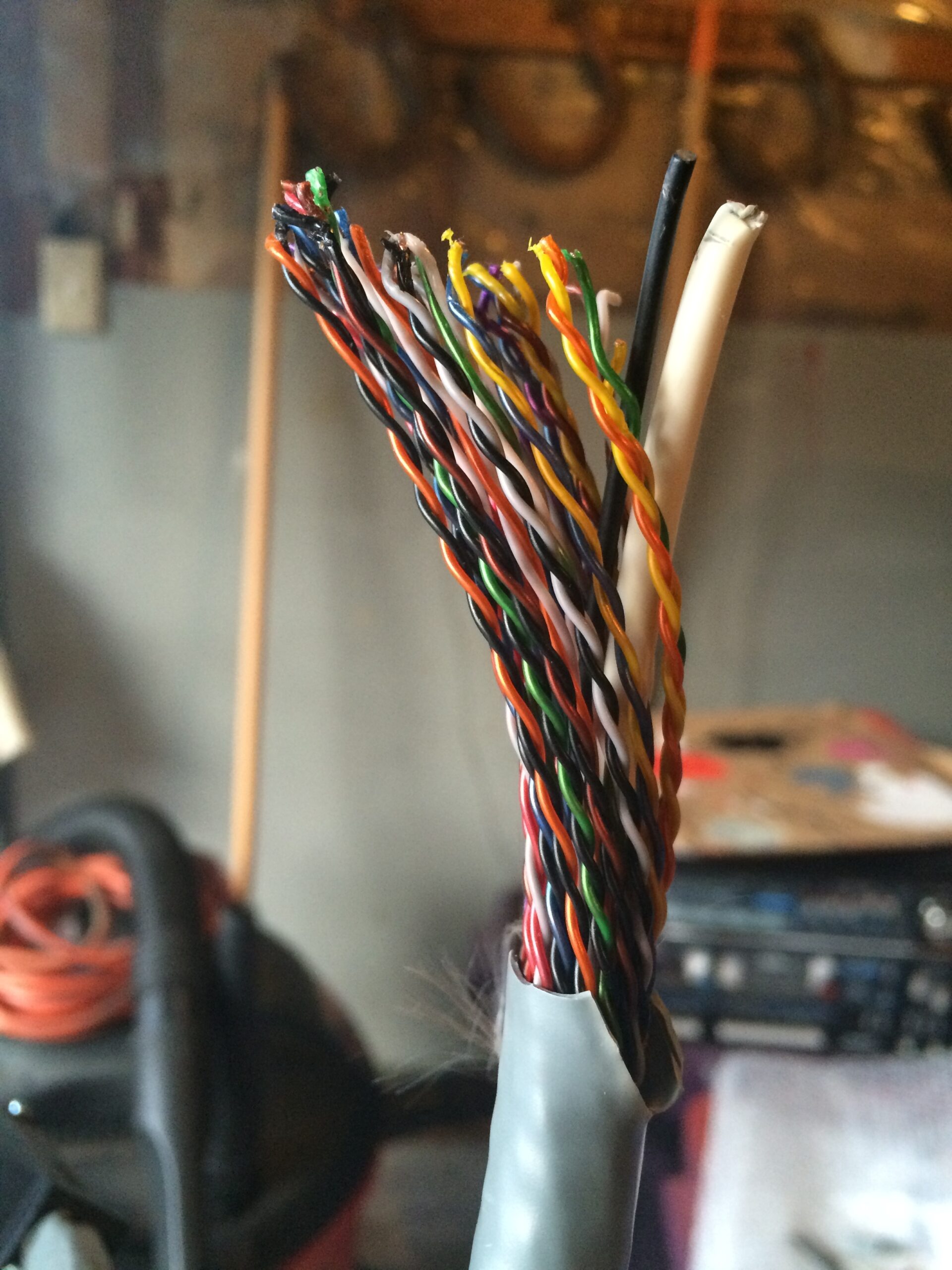
Even stranger, as with many consoles at the time, would require a straight up, direct line from a special console port on the PBX to the location of the console. What was it’s connector? You guessed it, a 25 pair Amphenol plug!
While the Dimension console did in fact have BLFs with buttons, it was a seperate option and was located on the top, picture shown above.
Not My Photo – Same Crappy Set a with new Look! (and more BLFs since the System 85/Definity G2 could support to over 30,000 extensions on a single node!)
In the mid to late 1980s, AT&T remade the set – took away the wood grain decal, mainstream of office telephones of the time, and made it jet black, to match the Merlin-like sets of the time as this console went into System 85 PBX line. If research confirms my out of experience of that PBX, the only attendant console, had to be one that was hard wired to the PBX. Unless with some reversed engineering, and some creativity, one could theoretically take AT&T’s ISDN console that was identical to the 302s, put it as an ISDN set and do it that way.
The Definity G3r succeeded the System 85/Definity G2 (aka a band-aid Dimension) in the mid 1990s. Release 5 was intended to be the combination of the 2 PBX systems, after all it’s core roots dates back to when the Bell System marketed the thing. Of the many fundamental changes, what retained were desksets, carriers, etc.; what went away was some of the user interfaces, the notorious MAAP to program the system, and the hardwired attendant console. A 302 could replace it via a 2 wire (2 pair if you wanted power coming out of the wall’s) voice drop and be affiliated in a DCP line over a dedicated attendant port. The only set that would continue with button caps at this point in the late 1980s lead into the 302 set to have similar clear plastic overlay for designation keys.
It’s strange the console given its “electronic” ability, could very well be mistaken for being some electrical box like an ol Call Director or 10 to 30 line set.
It’s one of those “I so just don’t want to remember this set”
NOT MY OWN PHOTO. No URL to trace where I found this around 2010.
Of the worst attendant consoles to exist on this planet, the vintage Northern Telecom would win hands down.
Joe the UCX Guy had featured this console and used it during his days while he attended Purdue.
These switchboards or consoles were tied behind a central office switch such as DMS series or the carrier grade PBX – the SL100 (which I believe is different than the original SL1.)
In short, central office services are much less feature rich and thats why it has little functionality.
But why in the hell it’s so honking big is beyond me. It’s one of the many consoles of those days that required a 25 pair Amphenol cable to function.