2025 Site Update!

My life was a burning hell in the last couple of years. My beloved grandmother passed unexpectedly thanks to our crummy healthcare system that as a whole is a cluster. Not to mention another family member dealing with mental illness is dealing with early stage dementia putting my mother as a new caretaker. As a result of being supportive of my family, 2024 like the previous 3 vaporized as if it didn’t happen.


Personal things aside, as the lucky 13th anniversary approaches in June… TMOT is being completely rebuilt as an archive of work created from 2012 to 2019. During this time, major changes to the direction of the archived site has occurred, and there will be crackdowns to abusers of this platform that took years to build.

In late 2022, TMOT moved hosts from one cloud to another. The domain for a while was a sub-domain but has been at clickford.net/telephony and is expected to be it’s permanent home on the Web for the distant future. (So you can bookmark it.) No present certificate, but that’s a work in progress.

In life, there should be some hard boundaries:

  • The direction of TMOT is mostly on the subject of telephony on an individual level. Devices like private branch exchanges and key telephone systems are cornered-off to separate sections on the site. Why? Because we do not celebrate allaboutism, meaning all you care about is PBX systems, Avaya PBX systems, Avaya Red PBX systems after 2002, etc.  Because I was too open it backfired. But it’s not to say the history of telephone networks shouldn’t be excluded. Many of the innovations from on premise systems could be applied to modern day, but in the VOIP world, that has been raped by allaboutism. (And despite it being on a self-hosted WordPress – THIS NOT a “web-log” or “blog” – thanks much!)
  • Multiplatform approach. While the iTheme focused on the persona, it was time to make it easier for any device, and any platform. So now the site is reactive to whatever device and resolution you’re consuming
  • Cellular friendly photos. Now compressed and fits under a megabyte, makes it easier for people on the go… why the hell did Joe The UCX Guy not get that?
  • Any advice on modern day systems (made after Y2K including VOIP, Cisco and Asterisk is on my personal site… ahem not related to any of my existing clients or employers) again to keep a boundary of what TMOT should be.
  • Any present day rants, has been removed
  • The Facebook fan page has migrated to a Facebook group to build a community, a healthy and trusted one.

Like on WordPress.com, the accidental success on TMOT was the Search Engine Optimization; and in the coming months in the final work to finish the archiving, will be ensuring people get what they are searching for.

Unboxing an ol RadioShack speakerphone

This link has been revised to show this a video post as Facebook is broke and is purging all live streams prior to 2024 and requiring all admins to download them all before they disappear in 2025

Not like the Spokesman, but a cheaper, (like Chinese cheap) from the turn of the millenium. I got it at my local Savers as I dropped off some unused 6400 sets late in September. 

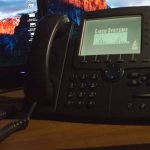
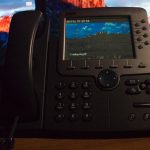
I did livestream again, but funny thing was since I have local power from the Cisco, it worked without needing the AC power wart.

`

Stromberg Carlson 1543 Wall Telephone

This was an addition in 2018 from someone on the Telephone Collector’s International Facebook group who offered to sell these as-is sets.

It has not worked yet. It’s the most vintage of all my vintage telephones. As of this writing, I tried to get it to work this past weekend, but still to no avail. The earpiece (the receiver) was easy to unscrew and open, but the mouthpiece (the “transmitter”) is still sealed shut.

It’s so vintage, that the handset cable is not coiled.

It was likely made in the middle of the 20th Century.

S.C. made some interesting industrial designs; meaning that this wall set was actually designed to be desk mounted, but with a couple of do-hickeys, flip the dial over, and the set could be hung on a wall.

Their approach to wiring was radically different to Western. The “network” didn’t use confusing letters. The same screws used to hold the shell, was used to hold the spade, a soft, rounded flat-head screw.

In fact this set had some hidden documentation literally inside the set, which on an August 2019 weekend, more than a year after I acquired the set came to my surprise.

This isn’t the only S.C. telephone in my possession.  There is another one too.  You’ll have to wait and see for that one.

#


AT&T Deathly Commercials (AT&T Merlin)

In the mid to late 1980s, AT&T used what I would characterize as deathly commercials and using fear from alleged real-life experiences. Another part of this series was the AT&T Spirit system (see here)

“Turned out our new phone system hadn’t had the whole place intimidated. No one could make it work   Supposed to make us look good, we were coming cross looking like a bunch of clowns.”

The style of the ad was very film like, with a tight shot and a loose pedestal so the camera looked as if it was a person looking at the individual. The last 10 seconds had a dark soundtrack with a stern warning “that your business phone is your business lifeline.”

From my knowledge, it is unclear what system or vendor AT&T was attacking (or attempted to mock). As previously posted, the AT&T Merlin was more designed for simplicity over any technical features, that may had not been available for all customers who would connect to the phone company for a decade longer. While AT&T is mocked by some, that marketed “Fisher Price toys” of phone systems; there is some sign that they had decent market of the US Small business market, leaving the others to the consolidated Japanese market as well as Nortel.

On a sidenote: I feel that such campaigns have not only been long gone, and since the advent and aggressive marketing borderline on backstabbing, “Cloud PBX” and Voice over IP have ultimately made business telephony less of a “lifeline” with no responsibility to defend it.

Since the 2000s, with Millenials and Gen Z coming to age, and their “Meh” attitude, if a call is dropped, they just move on, forget 5 minutes ago while they don’t have attention to realize why a call was dropped in the first place. (The attention deficit and the retention deficit that makes these people not function well in a real business world in 2019.) Not to mention they assume everyone has caller ID and insist a “missed” call is good enough for them.

#

AT&T Commercials: System 25 PBX


I know my way around the switchboard better than anyone. But this new system we got here…well it’s so complicated no one can work it.  It’s no wonder things are running amok around here. I think they should cut their losses and work from scratch.


This was one damn good ad campaign that ran on mainstream primetime programming. I mean when I was growing up Nortel and Avaya could only get their way on cable news. CNN was the highest they could go outside the 3 business cable networks. But with the rise of VOIP and other UC vendors out there that could be just as bad as 1987, you wonder if there’s another vendor out there that could do “Your Business Phone is Your Business Lifeline”

By the way: The System 25 while it sounds like System 75 is not. The System 25 was based on code from the AT&T Merlin but the catch here is could do light duty PBX. The “hybrid” boards used on the Definity PBX was actually designed for the System 25 for users upgrading from the 25 to the 75. Under 200 ports was the audience. System could stack up to 3 carrier cabinets, and the cabinets were recommended to sit on top of a desk or a filing cabinet and not on the floor. Many years later, the signature design of the System 25 carriers can be seen in modern day Avaya G650 rack mount carriers.

The System 25 didn’t have much of a roadmap. It didn’t last long as a new system and the recommended replacement was a small Definity G3 small carrier cabinet, could hold a System 25 in one wide carrier.
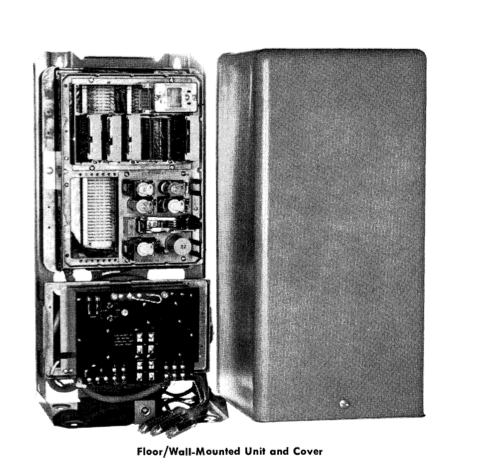
System 25 cabinets can be purchased on eBay. Without software it can’t do much, and to load them you would need data cassettes to load the software into memory. Yup it’s that old!

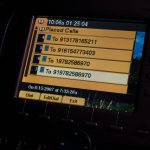
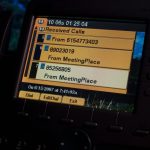
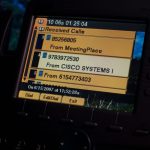
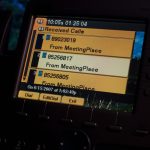
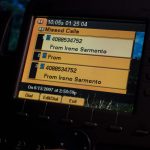
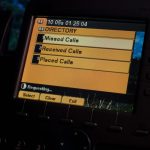
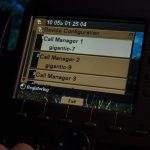
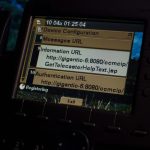
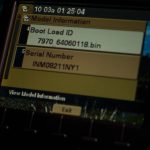
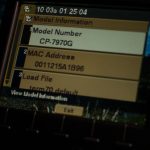
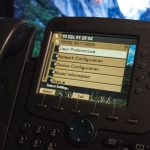
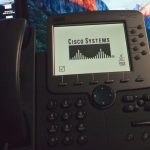
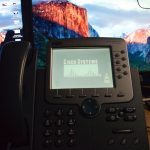
My Collection: Cisco 7970 IP Phone

This is not confused to another 7970 that was in production prior to. As of 2025, the aging 79x0s do not age well and the set is physically broken. 

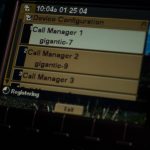
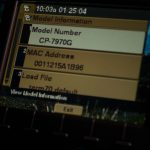
This Cisco 7970 is different than one that I’ve shared previously.  A close dear friend of mine had given this to me a while back. I don’t remember which to be quite honest the last four years has been a blur and at the same time vaporized.

The phone was given to me because her day job is a job trainer for people with developmental delays. I used to work for her and the company as well*.

The client had found this Cisco 7970 at a yard sale and thoguht to look like everyone else, he could literally Bring Your Own Device to the company. But as you know they can’t hook up any Cisco set that they don’t own and in order to hook it up, a license on their end would be required.

As a result the attraction was lost, and the set was given to me for the Museum.

This set is very old, firmware is just over 15 years old to the time of recording and it’s very likely this could’ve been a corporate phone likely at a New England Cisco branch office. I cannot confirm.


*To show how long ago, they were using a Cisco CallManager 3.1 that was still running off Windows 2000 Server edition. In the late 2000s, Windows 2000 was the default operating system in many enterprises. Windows XP SP2 was only 3 years old. SP1 was End of Life and the original XP was already EOL’d. (I tend to obsess on the technicality of the lifecycle of Windows XP, arguementively  the last best Windows NT grade operating system from Microsoft.

Obviously their systems have been refreshed and I have been told they are using OS X Yosemite at the desk. (When I was there I was using a pre Compaq era HP workstation with Windows 2000 Workstation. Same with the Cisco CallManager.

Brief History of Japanese Telephony, part two

A part of Outside the Box Project (focusing on outside the US-based office telephony market)

Japan had a huge influence in the US telephony market, which would be an understatement to admit. While Nortel had the Norstar, and AT&T (later Lucent then Avaya) had the Merlin family and Partner and later IP Office, some offices had their comfort in Strata, Omega, or KX-xx.

Continue reading

Brief History of Japanese Telephony

A part of Outside the Box Project (focusing on outside the US-based office telephony market)

The Japanese has roots in office telephony, that also had bragging rights. In fact ether Japanese based or made products was the go-to that many frugal customers in the States used. It is not abnormal to see NEC (not so much of their predecessors because of the age) still in service.

There were three major companies that would become part of the larger Nippon Electric Corporation (best known as NEC.)

TIE

TIE Communications was based out of Sheldon, Connecticut, with American brains but to lower the costs to customers, all their equipment was made offshore in Japan. First sets were analog Call Directors that were made with cheaper parts. By the late 1970s, they went onto the electronic bandwagon. Growing up in my old town in New Hampshire, the town hall and the local schools had used the TIE systems. (For a side note, if anyone remembers the TV series Las Vegas, while they had modern looking Cisco VOIP sets, the ring tone itself, was a canned sound effect coming from a TIE set.)

TIE’s average customer was under 30 sets audience.

An NEC Electra Key Telephone at a local Christmas Tree Shops, one of the few places that still use this system.

Nitsuko

Was a Japanese based company that actually acquired TIE by the mid 1990s. Nitsuko devloped the DS1000/DS2000 hybrid PBX platform. But as the 1990s came to an end, NEC, would in turn buyout Nitsuko.

Sphere Communications

NEC’s full circle into American consolidation occurred yet again by getting into a softswitch business. By the mid 2000s, NEC was still a legacy, full 2 wired digital system, but their IP offerings wasn’t software based. A company in Illinois called Sphere Communications had some market domestically for a Windows NT based call management system called the Sphericall. NEC decided this would be the go-to system for their legacy NEAX system and later became the Univerge media gateway/media server platform.

NEC

While TIE wasn’t a Japanese company per se, it’s easy to roll them all into the “Big 3” KSU Guys from afar. NEC had a significant US install base and offered PBX systems vis-a-vis the NEAX line and competed against Nortel’s Option 51 and 61, Avaya’s Definity ECS, and Siemens’ 9571 PBX. NEC had a huge presence in the under 200 ports under the Electra line. You will see often on eBay stores selling troubled Electra sets. I guess there was a period of time that NEC wasn’t following their country’s norms of high quality standards. Trivial rejects included the speakerphone not working, and stuff like that.


The Modern Day “Shoebox” KSU

While the North American KSU vendors ditched the stereotypical KSU that looked like a shoebox, the Japanese continued after AT&T’s Merlin, Partner and Nortel’s Norstar, the only difference was it was electronic.

a picture of a "shoebox" sized Key Service Unit
KSUs that were not American based, have high resemblance to these mid- century “shoebox” phone systems.

What they did was:

  • An open box format. So RTFM if you don’t want a few hundred volts taking your life!
  • Circuit boards were akin to PCI, NuBus, or the other expansion cards seen in PCs.
  • In and outputs were all on one board. Compare this to the more domestic vendors where the respective RJ21 or RJ 11 jacks were in a dedicated space and “dumb”, because the expansion cards would enable it. Or if it was a AT&T Partner, these modules were all enclosed.  In short, you had to be very delicate when you did changes to the system’s components

Panasonic, and Toshiba also had huge American presence, is outside the scope of this post as this post is lumped in one as they were all consolidated.

Hey SEOs! We're seeking non pricky engineers/professional information services professionals, non technical people, AND girl power! females from 18 to 35 too!

*