WARNING:Today’s post contains potential unfriendly and vulgar language. Reader Discretion is advised.
This site is a museum, a task to catalog history of telephony technology (and post the stuff you can’t find anywhere else on the web) to pass down to a dumb population who could care less about the time before they were born or understand where we got to today’s communication. And to accept the fact that the same device sat on a desk or hung on a wall for an a average of a generation, whether its right or not is up for discussion outside this site.
We have a zero tolerance for “bleeding edge of technology”, just because some new thing is in fashion, doesn’t mean its going to work right away, never mind be in vogue tomorrow.
One of the reasons why I’ve disliked Nortel was the they had a reputation for being Nerdtel, whom nerds would be interested in telecom. Just like in the PC world, you got those nerds, who will throw tons of TLAs down your throat whether you like it or not or just throw buzzwords without even being questioned. Some people in the PC industry also believe in Political Correctness, you get the “group-think” mentality if you don’t subscribe to the future of technology, you get a similar treatment of “you’re a racist” if you question an African American in power.
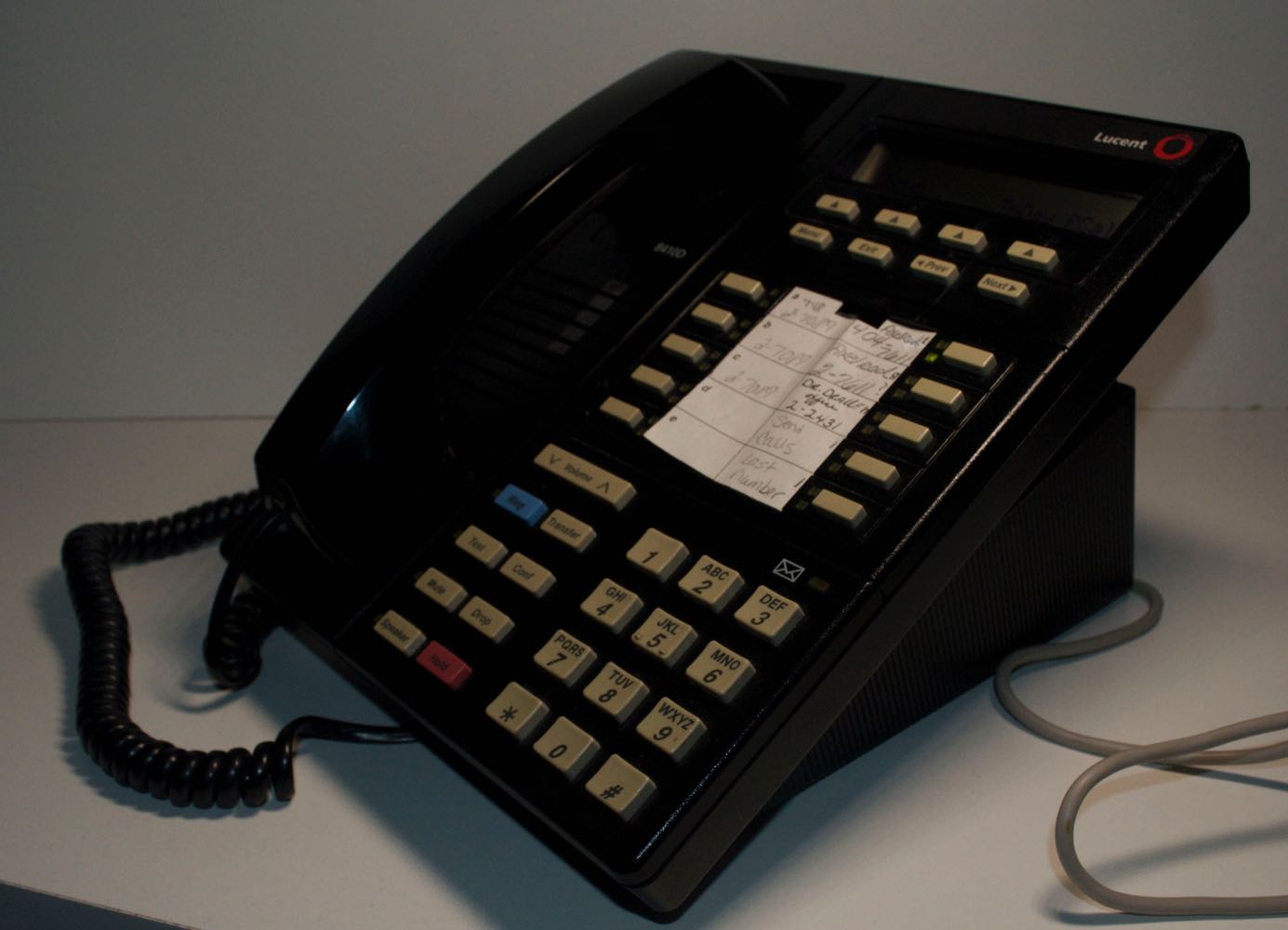
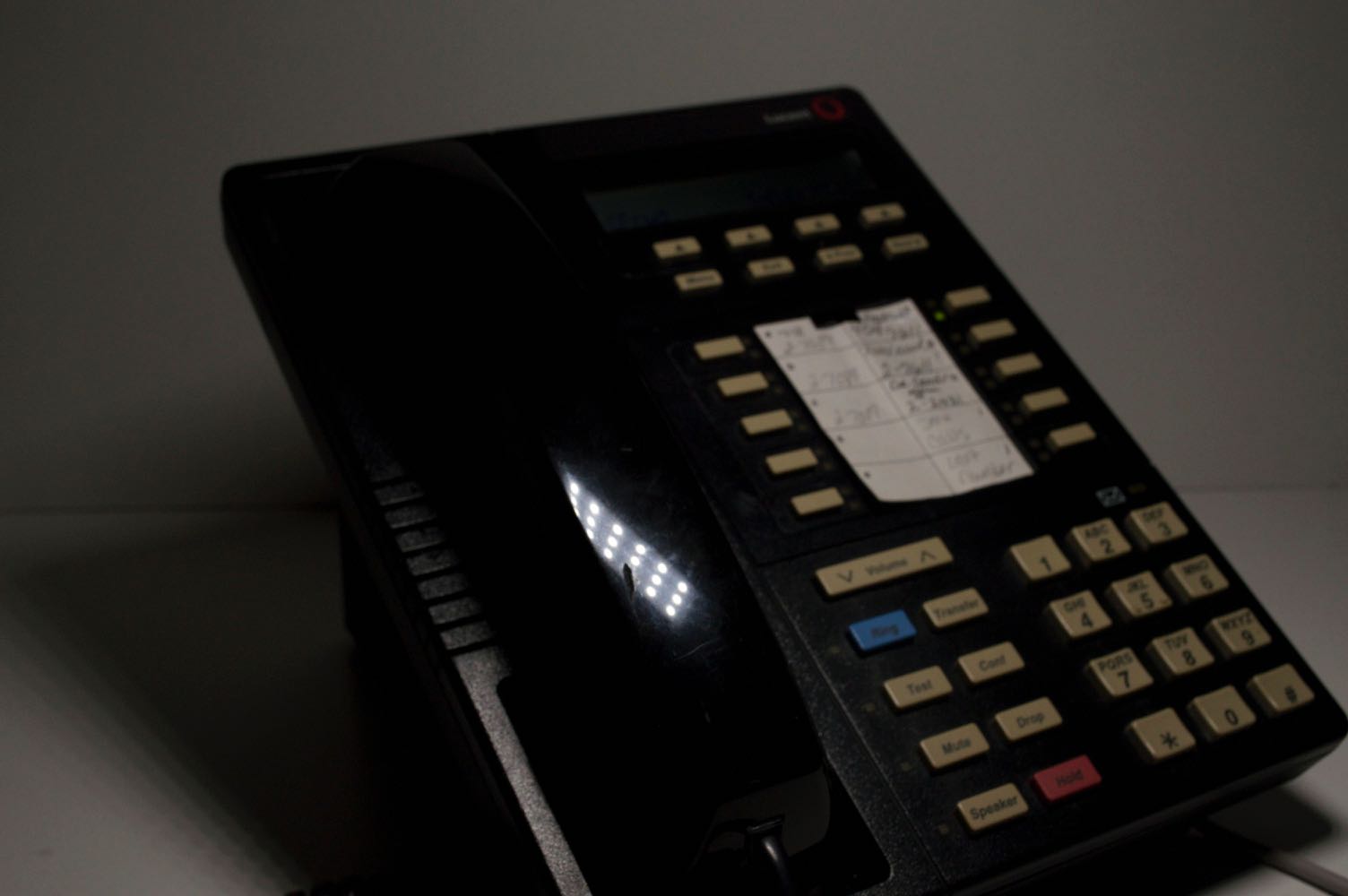
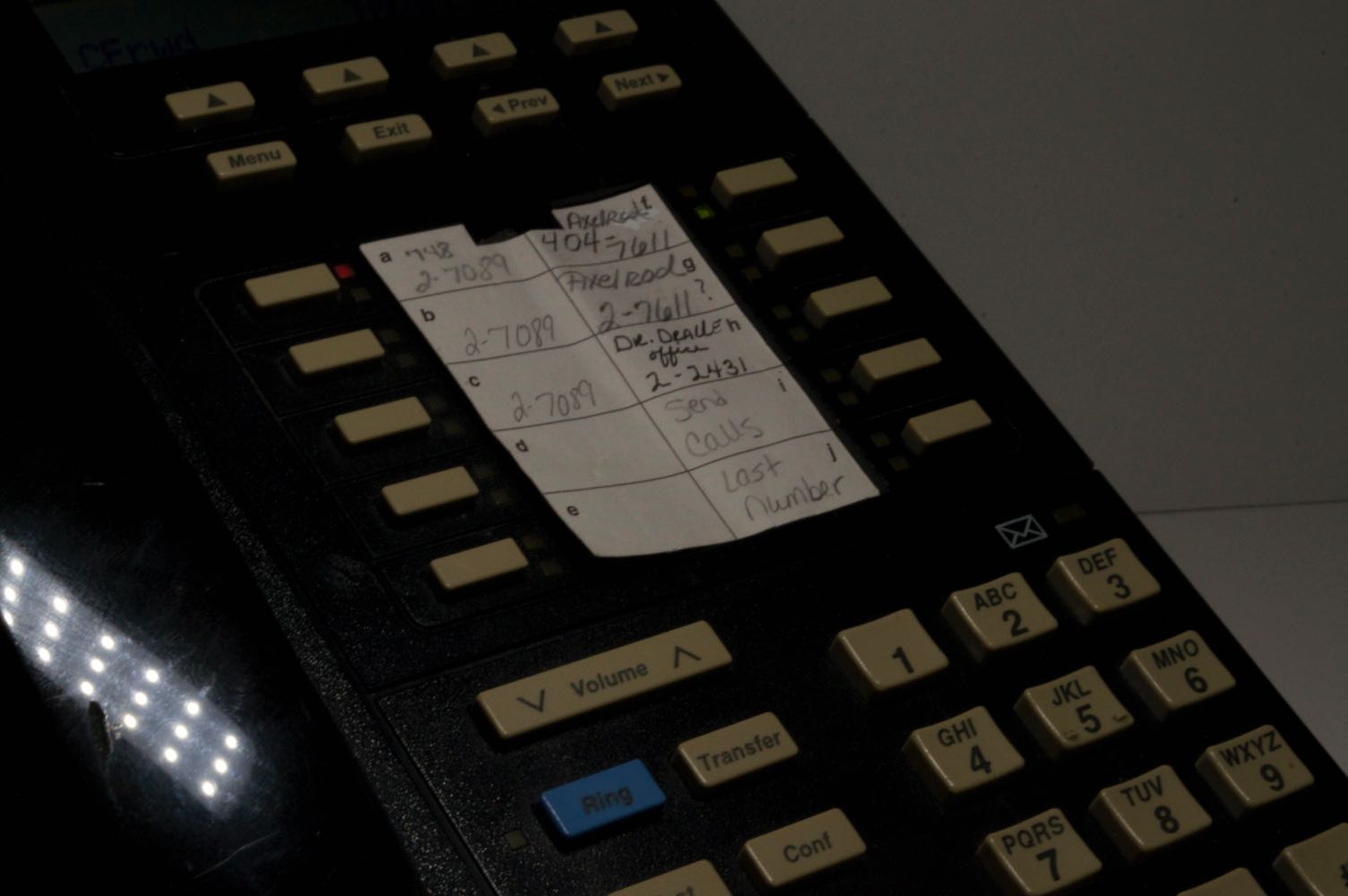
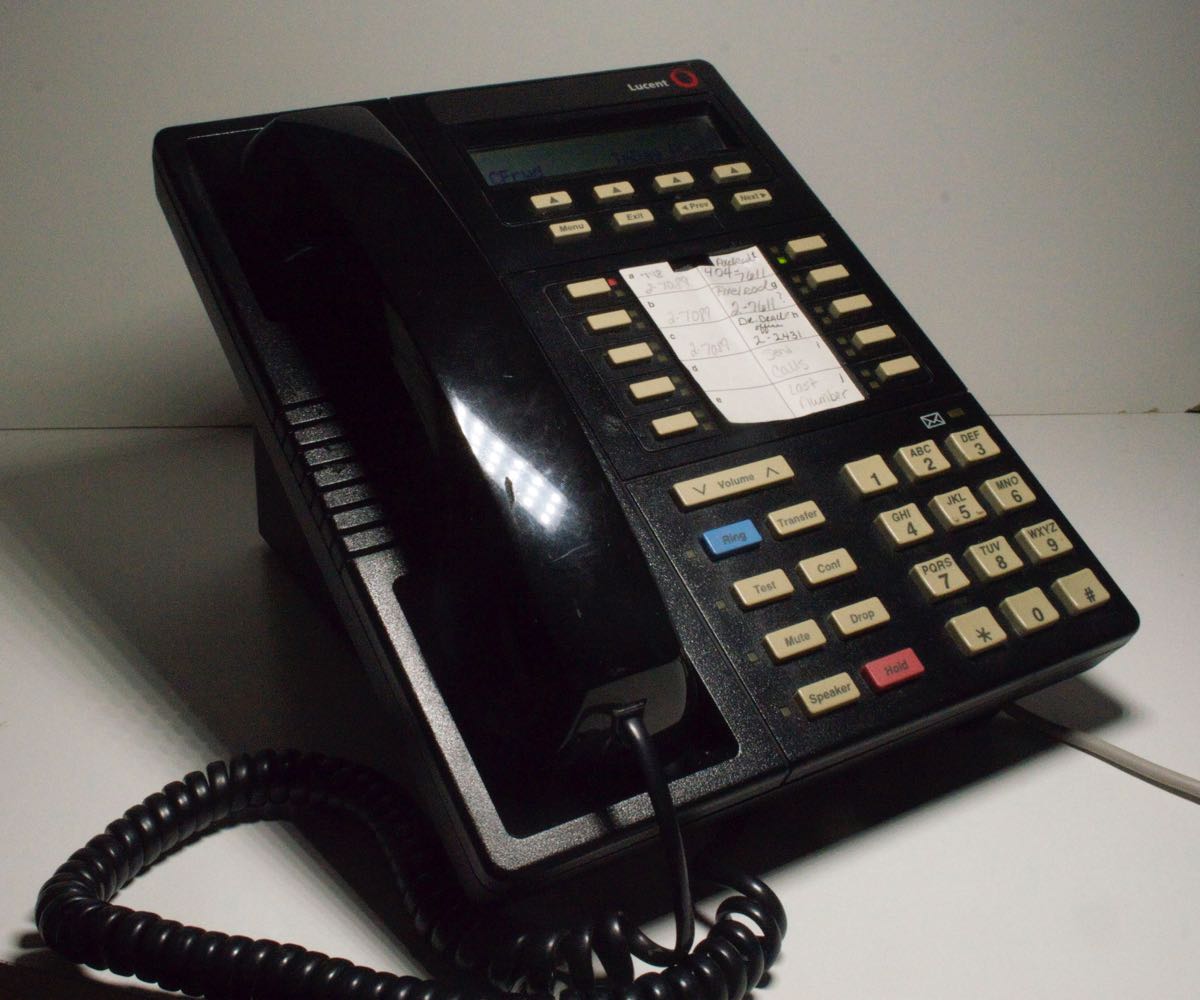
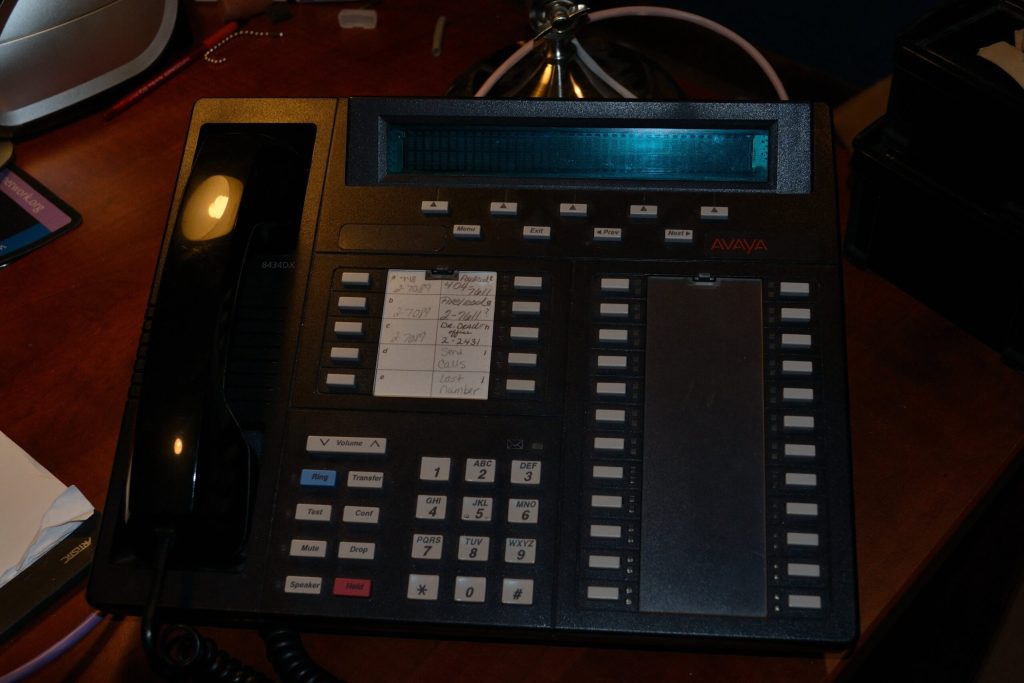
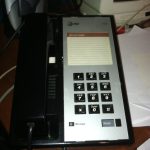
Today I’m showcasing my newest phone (prior to the last post) that is the Avaya 8410 Voice Terminal.
I’m not that creative in naming gadgets in cutesy names like dogs or cats like how people name servers, but I’m calling this one The Donald. As in Donald Trump. That guy was a long time user (to this day) a user of the 8410 terminal. What’s funny is the phone still has an AT&T label. He also uses his Spokesman speakerphone adjunct to have clear handsfree communication, even though the integrated microphone does well too.
This was courtesy from Jason, who gave me his old Definity PBX. The terms of the transfer did not include an 8410 set, which came to my surprise. He told me through email that he threw it in because there was space in the large package. More on this at a later time.
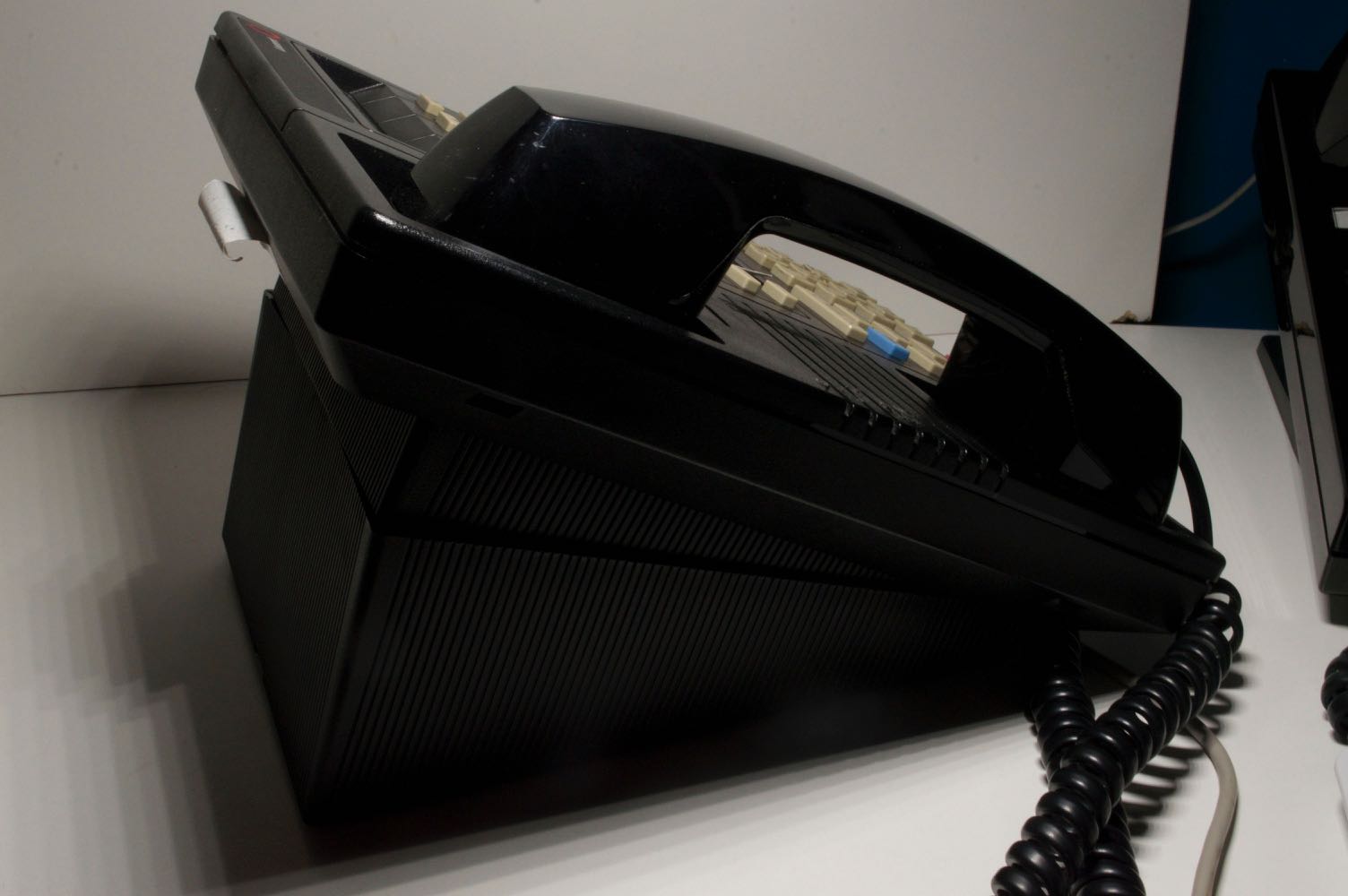
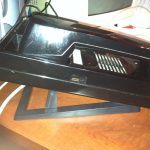
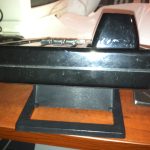
The side view with the option to adjust the desk mount a degree higher/lower
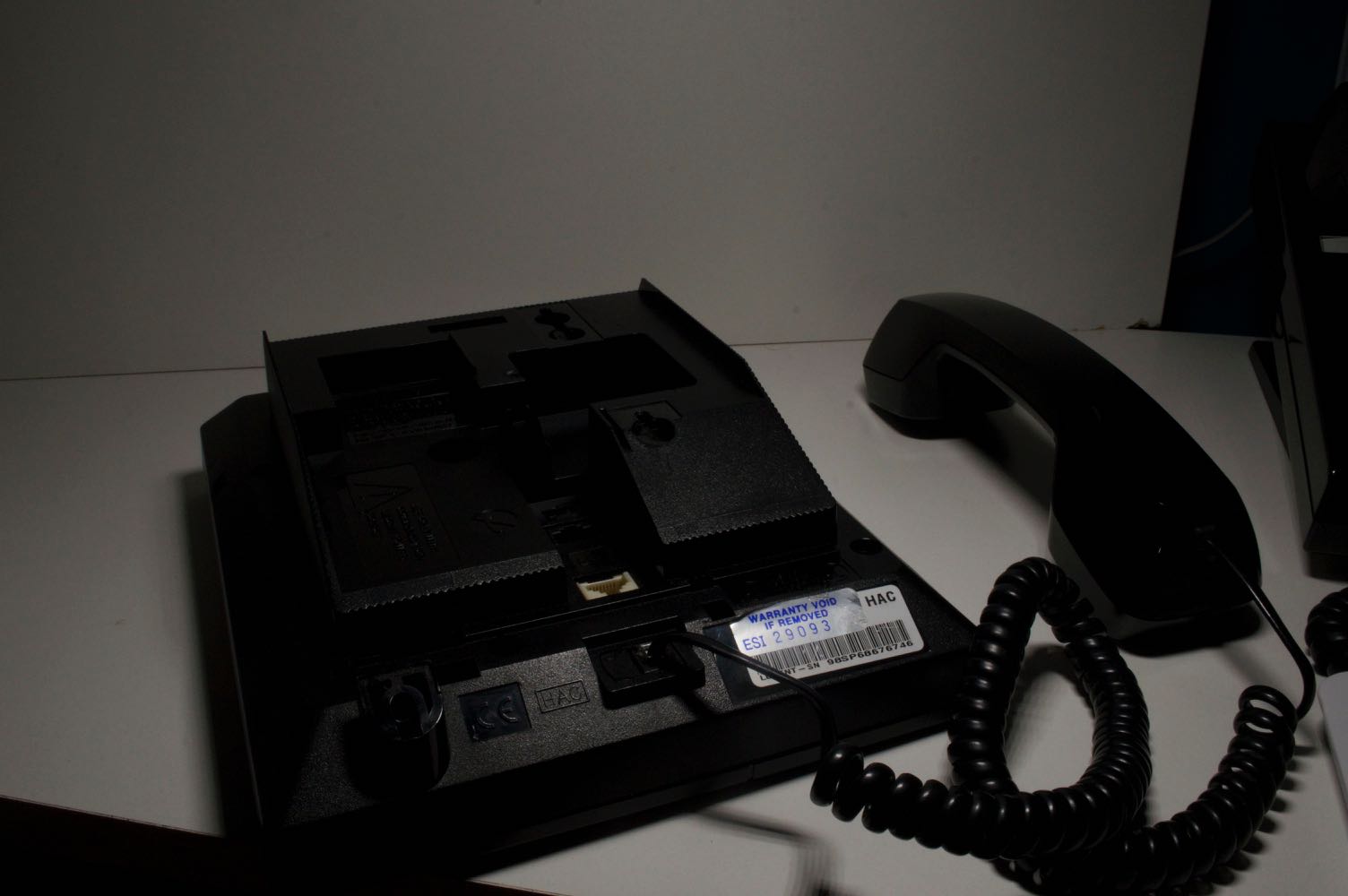
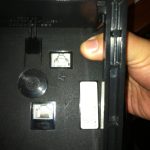
The 8405 and 8410 had integrated wall mounting with no additional mounts. Screw openings were exposed in the center part of the set. the microphone (exposed) can be seen on the bottom left of the set.
A closeup to that mic.
8410s were originally sold by AT&T, then sold by Lucent and then to Avaya. First generation sets were made in the States (likely at the Shrieveport Works – where most of the enterprise sets were made); when the End of Sale was issued by Avaya around 2003, the terminals were made in Mexico, despite plastic molding stating it was made here.
Avaya (now my most hated telecom company, or should I say hated “telecom” company) is continuing to loose their roots. The very liberal, and extremely progressive technological company (that will never go public again) is now comparing office phones to “cord cutting”.
As he defines it “the practice of canceling or forgoing cable television subscription or land line telephone connection in favor of an alternative Internet-based or wireless service.” Try putting salt in the wounds of victims of Hurricane Sandy or Irene who wanted their copper service because the damn thing works, without having to install UPS to technically inapt people. While this publisher admits POTS and copper service can be expensive, user choice should be an option. But options are limited as “the consumerization of IT” allegedly gives the user better choices (read inferior quality.)
Don’t shoot the messenger (that is me!) This is what their marketing people believe in.
Avaya Thinks your 8434’s cord should be cut, or so says Steve Forcum!
On a Linked In post, a “systems engineer” (whatever that means in today’s standards) makes weird claims that 89% of employees mobile devices connect to the corporate network, and another claim at a third of enterprises will no longer provide devises for their employees by the year 2016.
Another disturbing thing this alleged engineer says the following:
A lot of ink has been spilled proclaiming the death of the desk phone. Most of the authors of these obituaries proclaim that the new hub for business communications is the desktop computer. But this approach flies in the face of the reality that the time spent at our desks is declining. The devices employees are choosing to use are not their personal computers, but mobile phones and /or tablets. In a recent survey, 70% of responding employees preferred to use their mobile phone in place of their desk phones. Employees WANT to cut the cord. – Steve Forcum’s Linked In page.
Really?
I don’t want to cut my cord.
Ask every employee in this country and come back to me.
Stop with the lies.
Again this marketer type is giving some really weird numbers. My high school job was working at a semiconductor company supplying chips for the iPhone, doing accounts payable. I cannot, and say cannot do such work on my iPhone let alone my own laptop. There are laws like Sarbanes Oxley and other rules where we really need a PC. The phone on the other hand wan’t used often, so maybe eliminate a phone in that department could be plausible.
I think the Politically Incorrect approach, is how companies have no understanding or caring about the working class people. People need phones or PCs in some environments, whether its a fab or a place that does clerical work. Avaya’s out of touch marketing factor with an extreme anti-establishment, anti business agenda is murdering the desk phones for no reason. Avaya’s corporate ancestors (Lucent and AT&T) had strongly innovated for and by the end user. Nortel and others required a PhD to administer their PBX or even their deskset. This company is quickly getting destroyed all in the name to be hip and relevant.
I’m no longer on both the Avaya and Nortel list, but those list represent the majority. Some want the hip features, some like the cost effectiveness and some use it to make calls. Again their marketing department is tone deaf.
I am making a stand to boycott Avaya forever! I never thought in a billion years, I’d give up on one of my favorite office phone vendors, but Avaya lost us, they are too into sl*tifiing their company instead of being a utilitarian IT provider. And lot of this is part of the Nortel Enterprise unit, of the alleged innovation, progressive and destruction of the same ol. There is more job losses in Avaya Red (native) than Avaya Blue (Nortel.) They should call them for what they are, they are the modern day Nortel enterprise unit.
A detailed review on the 4424 and how it only works on non Enterprise Avayas plus the difference in TUI between the Magix and IPO in a future post in 2025.
This picture shows a phone in my own collection. This is an Avaya 4424 Digital Telephone. This phone was originally used in the Merlin Magix series of KSUs. They look like their other digital phones, the difference is the form factor, where the built in microphone is located (on the lower right where there is two holes), and its ring tones. The “menu” keys may appear to use a similar TUI like in the larger systems, but it works differently.
That’s if you have it tied into an IP Office system, and then it works just like the larger PBXs.
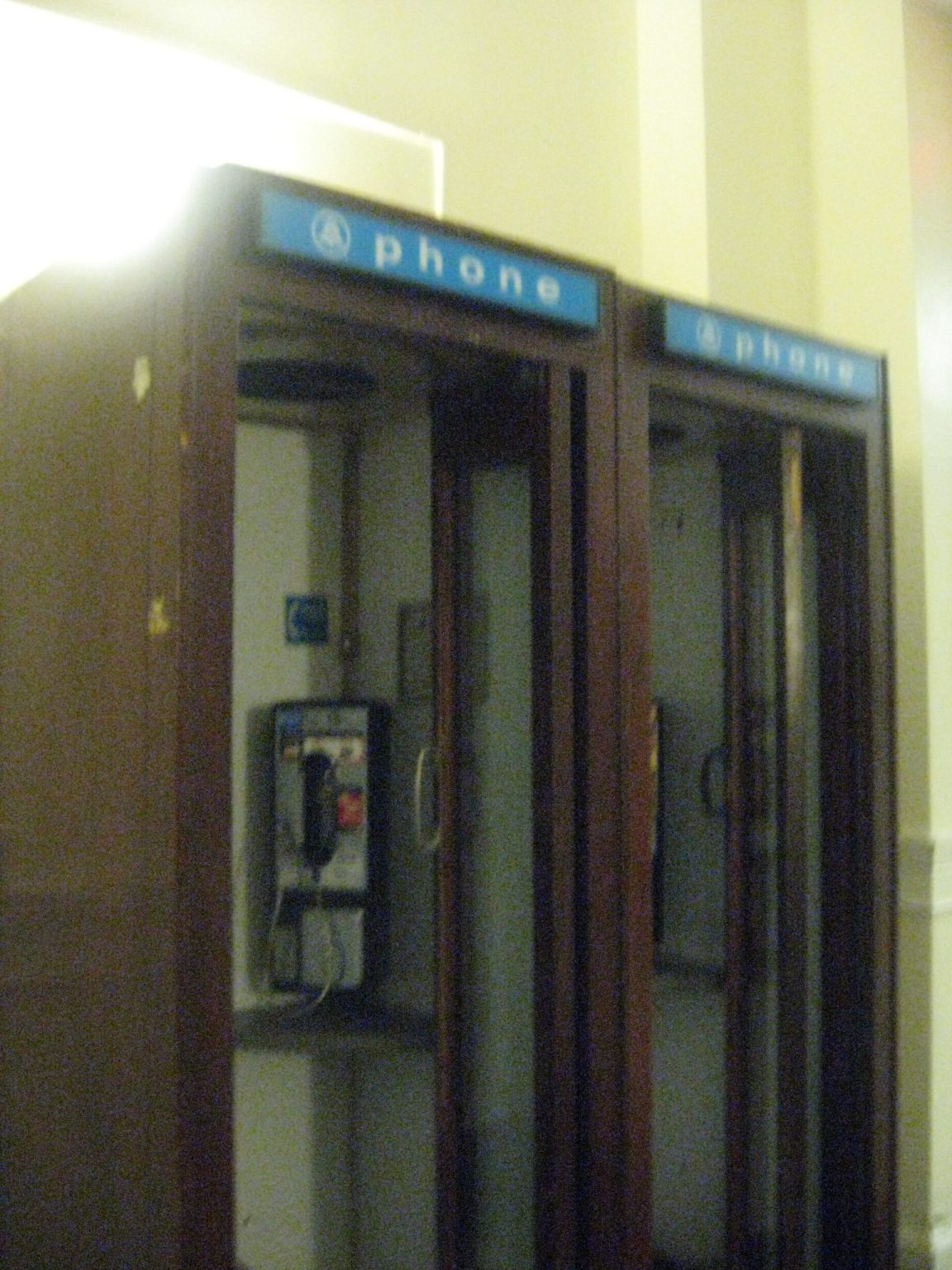
These pictures are a mix from 2009 and an October 2010 visit to this landmark location.
These Bell System payphones are interesting. These phone booths were used back when the Massachusetts Legislature used to be a volunteer form of governing. Back before the end of the 60s (or even later), there were only a handful of politicians that had corner offices of both the Senate and House of their General Court. So the other people that were the rank and file types, had to be mobile, and conduct their business in this micro cubicle called the phone booth.
Early forms of “mobility” of a technology called the “phone booth” from the Phone Company
Since the modernization of technology, such as smartphones, notebook computers, tablet, the government has modernized too by having all politicians and lawmakers to have corner offices, have remote offices in their home districts, and get full time employee benefits, such as probably having their own expensive digital set on their desktops, licenses to use additional features they don’t really need to use, and whole other things that the working stiff would wished to have on their desks! If they even have one
I did go to the Massachusetts State House in October of 2010. After spending a few minutes looking at one of my file shares, of my thousands of pictures, I did manage to get better pictures of the phone booths, as originally posted last night.
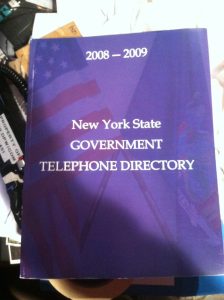
When I visit to local capital cities, I try to get the state government’s printed directories. I know New Hampshire, Maine, Vermont (used to) and maybe a few others in the area I can’t confirm…but I do know Massachusetts firmly doesn’t . I had purchased the New York City’s directory (known as the “Green Book”) online a few years ago, since I haven’t visited the city up until this past April.
The New York State government, however has gone through a massive transformation of government bureaucracy thanks to the leadership of Andrew Cuomo. I had visited Albany last year in April, and I was planning to get the directory then. However, the webpage where you find that information was taken down. This was around the same time they had a separate office for the Chief Information Officer and their Information Technology agency. These agencies merged by this point. I do remember briefly, if I went to the Corning Tower maybe on like the 34th Floor, I could see the operator and request the directory. I didn’t know how to get to that floor, only to go to the top and see Upstate New York.
With that said, I found this web page I was trying to look for that April, now they are located on the concourse in the Empire State Plaza (pretty interesting where they relocated this place.) However, I don’t have plans to visit the northern part of NY for a while, so I mailed a check about a week and a half ago, and I got this on Friday. It left Albany the afternoon before!
The book however contains all the departments, and all their employees that work for the state side of the government, as well as other contact information. It is a few years old, and given the economy, the Internet replacing hard copies, and the requirement for the government to be more efficient, it is still available as of this writing. It’s a neat directory for only about $3.00 if you ever happen to stop at the Empire State Plaza complex and buy it directly.
You can say whatever you want about big government or how inefficient it can be, but this was pretty awesome I got this within timely manner (even if I might be the only out of stater that request these thing on seldom occasions!)
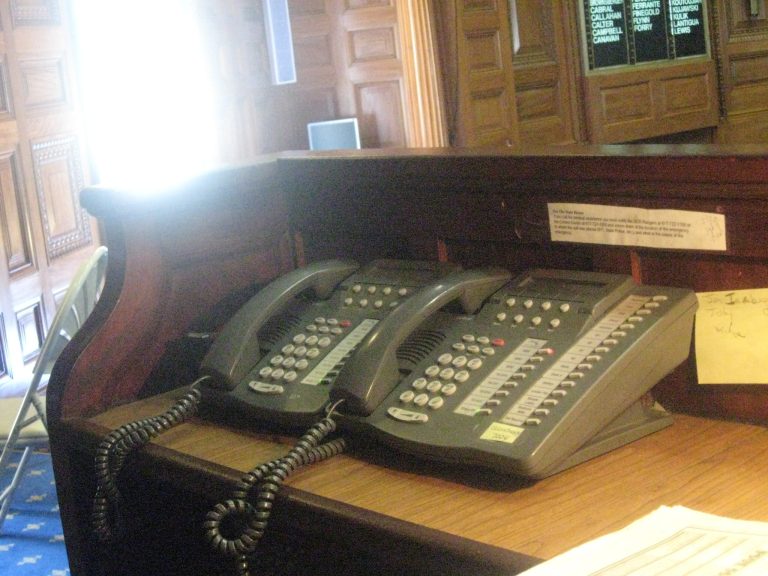
These sets of pictures were taken in 2009 at the Massachusetts State House. The government of Commonwealth of Massachusetts have been long time Avaya users dating back to the late 1980s. If you are a native to that state, you should be proud that your tax dollars were at work from upgrading to the latest and greatest office telephones. However, as of these exposures, I would highly assume they are still use the 6400 series telephones.
An Avaya 6424 and a 6408 Digital telephone at the House Chambers of the Massachusetts State House.
I do not have any clue what is in the backend of the Boston area telephone network. Its a Definity based system but that’s all I know. I don’t know how many nodes, how many unique PBX systems that are located throughout the Boston area. Unlike the state that borders far west, the Commonwealth is often tight lipped about telling anyone anything about the government. I do know Massachusetts has a headcount of maybe just north of 50,000 employees – yeah that’s a lot for a government sector.
A lady making a phone call on ether a 7405 or a 7434 terminal with a florescent screen adjunct in 1991. From YouTube user: MSTS1
Another unknown is how their dialing plan works. I remember going into one of the elevators was a 7 digit telephone number to reach the campus security. The Commonwealth does not publish a government directory, nor do they have an online directory. Nor their western counterpart publishes even a guide to learn their telephones. They are very secretive in that state, and there is no such thing as public knowledge (don’t say its a security issue – that’s an excuse!)
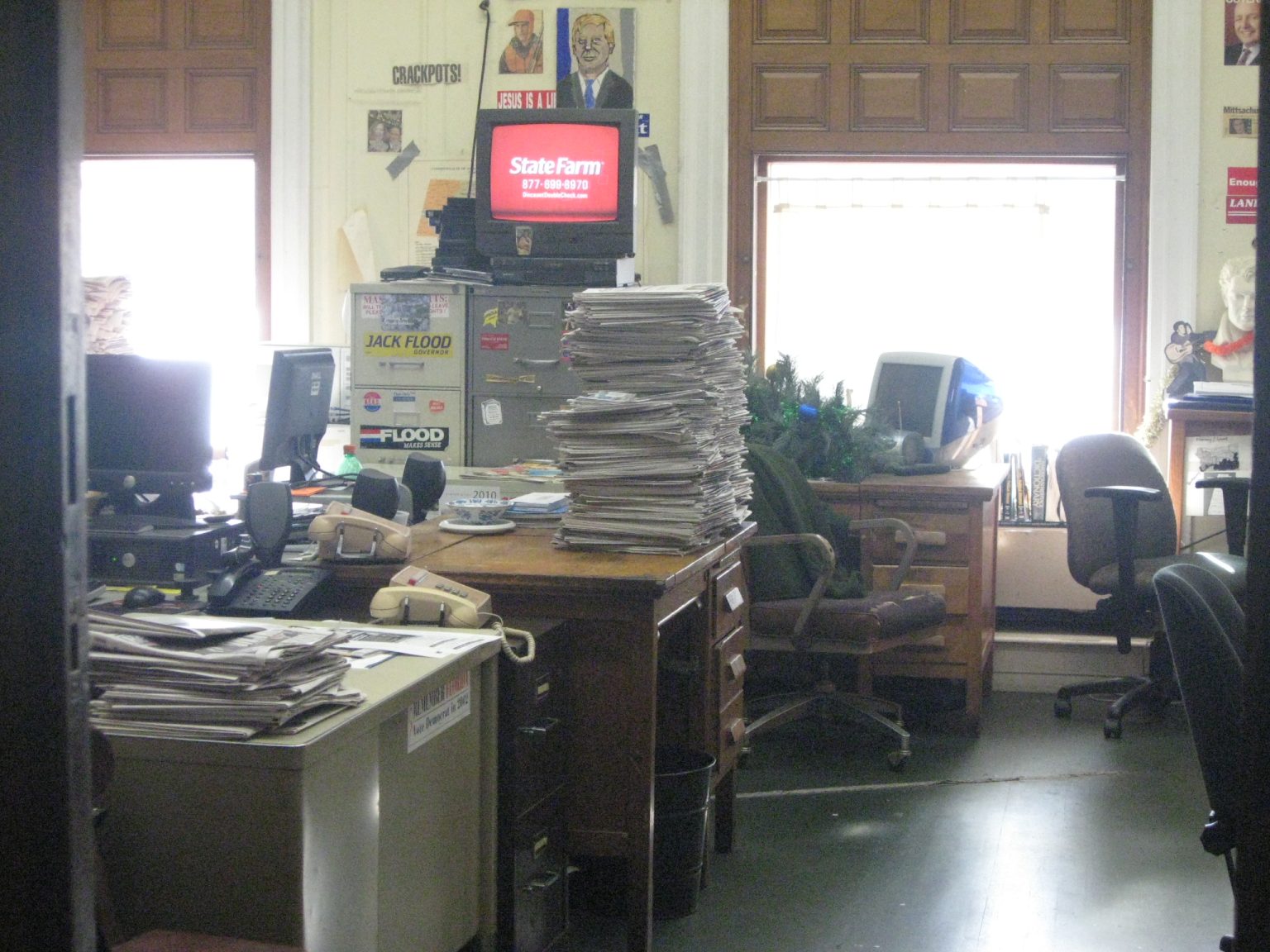
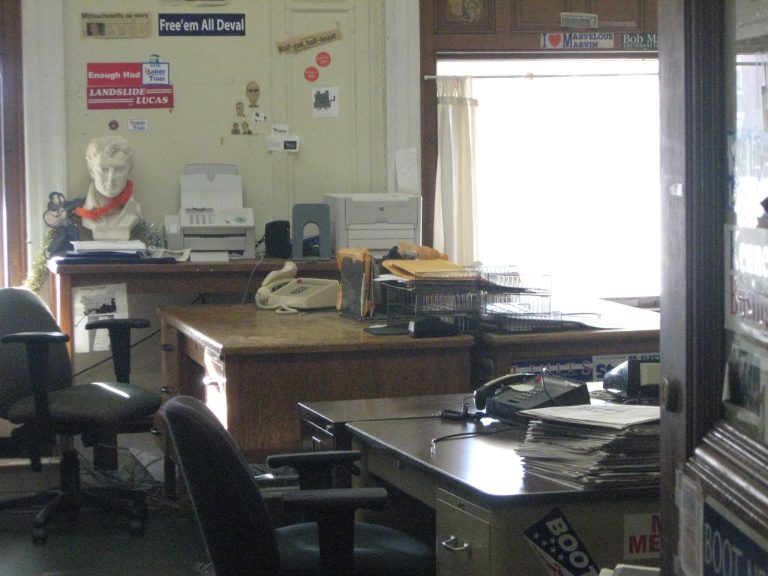
Some pictures taken in 2010 when I visited there in October with some better quality of images of their super-private of private systems.
Another shot of the press office with very dated key telephones.
Here is another private collection of another office telephone. It’s an AT&T (now Avaya) 7102 Analog telephone.
These were made by AT&T in the mid to late 80s, sports the “R” handset (Merlin style) while having a basic featureset with a 12 digit dial pad and a “Recall” (read: Flash) to use additional features of the PBX or “Call Waiting” as this terminal can – in fact – be used for residential landline services.
In fact, the ringer is much like the very old AT&T 1810 digital answering machine/house phone I had at my family’s house. It doesn’t have the sound of the digital telephones unfortunately.
I bought this on eBay a while back, and here is the gallery
It was made in Korea, kinda odd for phones to be made out of the States at that time. Maybe this was built in the same plant as the other consumer phones that AT&T continued to produce leading to the spinoff to Lucent in 1996. I opened the phone and the guts looked like a cheap Asian produced device.
This phone however, is a shell of a BIS-10 (or a 7410 Plus), take the DESI paper off, and you’ll see the empty spots for those buttons. It was kinda surprising to see, but I guess since there was a membrane cover, it didn’t matter. I’ll post that picture (and redo the picture gallery in a neater workspace) at a later time.
I proudly admit I am an AT&T brat. I was born 3 years after the Divesture, so my bias is strong since I never witnessed the old monopoly. Everyone in my crazy life knows how I live and pray upon any of the equipment coming from the old AT&T and its zillions of spinoffs since.
I’d still give these systems a strong plug even when Avaya has essentially taxed companies with excessive License and Right to Use dues, as Cisco has been known to do. If you can afford it, its the best. It’s the Rolls Royce of phone systems.
In the late 80s (just probably before 1990, when they renamed their systems), AT&T ran an ad campaign actually running commericals of their enterprise PBX systems, known at the time Systems 75 and System 85. (System 25 was built upon the Merlin code so its ilrelevent for that reference.) The System 85 was built upon code from the Dimension PBX that was made by Western Electric, and was distributed by the Ma Bell’s operating companies for businesses to lease. The System 75 was based on fully on digital telephony, the ability to use ISDN, the ability to interoperate computer mainframes and run cables on the same line as the dummy terminals. The System 75’s code and its hardware would lead into the 90s and into the last and present decade, with its 16th revision known as Avaya Aura V.6.
In this commercial a train goes into the air, as the announcer says mentions how a communications system “can expand and expand” and ends with
“A new communications system so advance, its litterly impossible to outgrow.”
The Definity name is a contraction of “Definitive Solutions for an Infinite Amount of Possibilities” that Lucent touted in the late 90s on their respected product page.
However after the spinoff from Lucent’s Enterprise Networks division, that became of Avaya, they ruined the name by calling the newer versions of the Definity system after Release 10 “Communication Manager” to “Aura” (which I still am not sure how to pronounce) and maybe in a few years will be another odd name, as Avaya slowly became a modernist, fancy, over stylish company.
Welcome to my latest venture into mutlimedia blogging. This blog will contain pictures of telephones dating from the early 1900s manual powered phones to the latest Voice over IP telephones of today. This blog will feature circuit cards to notable headsets to my personal collection of phones and communications.